Autumn

Posted in Art, Books | Tagged , | Leave a comment

Bookstore Tourism: Portlandia

It’s always good news to discover that a new indie bookshop has opened in the U.S.. But it’s great news when it turns out to be a travel bookstore. Even if you can’t get to Portland, Oregon IRL, you can still peruse the new Postcard Bookshop and order online.

The bookstore dedicated to travel and tourism, opened recently in the Cargo Inc. marketplace at 81 S.E. Yamhill St., Portland, Ore. Owner Patrick Leonard told the Portland Business Journal he wanted to create an educational space for people to access travel guides, international literature, cookbooks and more when learning about a new region and planning trips.

“As a kid, I never did any international traveling so the way I traveled a lot was through reading about other places,” he said. “But when I do travel, I love to pick up a book from that place to hear more first-hand experiences and I feel like I have a newfound interest in this destination.”

Leonard, who had worked for a cookbook publisher in New York City, moved back to Portland in 2016 with the goal of starting a bookstore. His bookstore’s selection of guides, phrase books, cookbooks and other materials is organized by geographical region.

“People are really hungry for those experiences to get back out in the world,” he noted. “People are now wanting to go on food tours, see heritage sites and have the once-in-a-lifetime experiences where they can feel like a local.”

Posted in Books, Bookstore Tourism, Tourism, Travel Writing, USA | Tagged , , | Leave a comment

Bookstore Tourism

The Abecadlo Antiquarian Bookshop is located in a former 19th pharmacy, at 18 Kościuszki Street in Krakow, Poland. Its beautiful interior is made up of antique pharmacy furniture dating back to the 1890s, which the owners managed to save and restore.

After the pharmacy closed in 2016, it was converted into an antiquarian and secondhand bookstore. Medicines and other pharmaceutical preparations have been replaced by a wide range of books, fairy tales, comics, magazines, graphics, posters, postcards, photographs, maps, prints and documents, and even vinyl records and CDs.


Posted in Books, Bookstore Tourism, Europe, History, Tourism | Tagged , , | Leave a comment

Once upon a time, suddenly

“A Sudden Story” by Robert Coover


Once upon a time, suddenly, while it still could, the story began. For the hero, setting forth, there was of course nothing sudden about it, neither about the setting forth, which he’d spent his entire lifetime anticipating, nor about any conceivable endings, which seemed, like the horizon, to be always somewhere else. For the dragon, however, who was stupid, everything was sudden. He was suddenly hungry and then he was suddenly eating something. Always, it was like the first time. Then, all of a sudden, he’d remember having eaten something like that before: a certain familiar sourness… And, just as suddenly, he’d forger. The hero, coming suddenly upon the dragon (he’d been trekking for years through enchanted forests, endless deserts, cities carbonized by dragonbreath, for him “suddenly” was not exactly the word), found himself envying, as he drew his sword (a possible ending had just loomed up before him, as though the horizon had, with the desperate illusion of suddenness, tipped), the dragon’s tenseless freedom. Freedom? the dragon might have asked, had he not been so stupid, chewing over meanwhile the sudden familiar sourness (a memory… ?) on his breath. From what? (Forgotten.)


Posted in Books, Writing | Tagged , | Leave a comment

Train Songs

What would Pachebel’s Canon sound like if played by a series of cacophonous train horns?

To find out, watch this video by Pavel Jirásek, who edited short bits from ACETrainsUK’s horn 7m50s compilation of trains in the United Kingdom with other clips of train horns to create the melody of the famous composition by Johann Pachelbel.


Posted in Europe, Music, Public Transport, Tourism | Tagged , , , , | 3 Comments

Bookstore Lover on the Road

Bob Manson is a retired teacher from Cedar Rapids, Iowa. He’s also a superfan of independent bookstores. So much so that he has now visited over 600 of them across the country.

At each one, he talks with the owners and some regulars and then writes about what makes that particular bookstore special in his ongoing blog, The Indie Bob Spot.

 Bob’s story is about  a small-town regular guy who took a passion and made it his own, is now inspiring book lovers and readers all over America.


Posted in Books, Bookstore Tourism, Tourism, USA | Tagged , , | 2 Comments

Encounters with French culture

Last week, the American Library in Paris announced the winner of their 2024 Book Award, which recognizes titles originally published in English “that best realizes new and intellectually significant ideas about France, the French people, or encounters with French culture.” This year’s winner is Adam Shatz, for The Rebel’s Clinic: The Revolutionary Life of Frantz Fanon.

The 2024 Book Award jury—Andrew Sean Greer (jury chair), Ayelet Waldman, and Jonas Hassen Khemiri—described the book as “an unflinching portrayal of a revolutionary figure torn between his ideals and inner turmoil,” and added:

The personal story Shatz brings to life is remarkable but the book’s real accomplishment is to illuminate the development of Fanon’s ideology, political, intellectual and profoundly personal, even emotional. Shatz has given us a Fanon for all thinkers and readers, captured with freshness and clarity and vitality–a Fanon for our present moment.

Like many idealists from my generation, I was enamored with Fanon’s books, especially The Wretched of the Earth. However, also like many of my contemporaries, I eventually began to challenge the anti-Colonial activist’s notions of acceptable terrorist violence. Still, this award winning biography’s broader view benefits from the six decades of scholarship since Fanon’s suicide.

Posted in Africa, Books, Europe, History, Writing | Tagged , , | Leave a comment

The more things change, etc. etc.

In 1951, British philosopher Bertrand Russell wrote an article titled “The Best Answer to Fanaticism—Liberalism” in The New York Times Magazine.

Sadly, the piece could have easily been written this week. Russell wasn’t advocating for any particular political party or economic system. Instead, he promoted a mindset of intellectual humility, openness to evidence, and tolerance for dissenting views. He saw this approach as humanity’s best defense against fanaticism and authoritarianism.

It concludes with Russell’s “New Decalogue”—ten commandments for a free mind:

1) Do not feel absolutely certain of anything.

2) Do not think it worthwhile to produce belief by concealing evidence, for the evidence is sure to come to light.

3) Never try to discourage thinking, for you are sure to succeed.

4) When you meet with opposition, even if it should be from your husband or your children, endeavor to overcome it by argument and not by authority, for a victory dependent upon authority is unreal and illusory.

5) Have no respect for the authority of others, for there are always contrary authorities to be found.

6) Do not use power to suppress opinions you think pernicious, for if you do the opinions will suppress you.

7) Do not fear to be eccentric in opinion, for every opinion now accepted was once eccentric.

8) Find more pleasure in intelligent dissent than in passive agreement, for, if you value intelligence as you should, the former implies a deeper agreement than the latter.

9) Be scrupulously truthful, even when truth is inconvenient, for it is more inconvenient when you try to conceal it.

10) Do not feel envious of the happiness of those who live in a fool’s paradise, for only a fool will think that it is happiness.


Posted in History, Writing | Tagged , , , | Leave a comment

Things Fall Apart


Turning and turning in the widening gyre
The falcon cannot hear the falconer;
Things fall apart; the centre cannot hold;
Mere anarchy is loosed upon the world,
The blood-dimmed tide is loosed, and everywhere
The ceremony of innocence is drowned;
The best lack all conviction, while the worst
Are full of passionate intensity.
                       —-William Butler Yeats
Posted in Europe, Writing | Tagged , | Leave a comment

Twenty Lessons

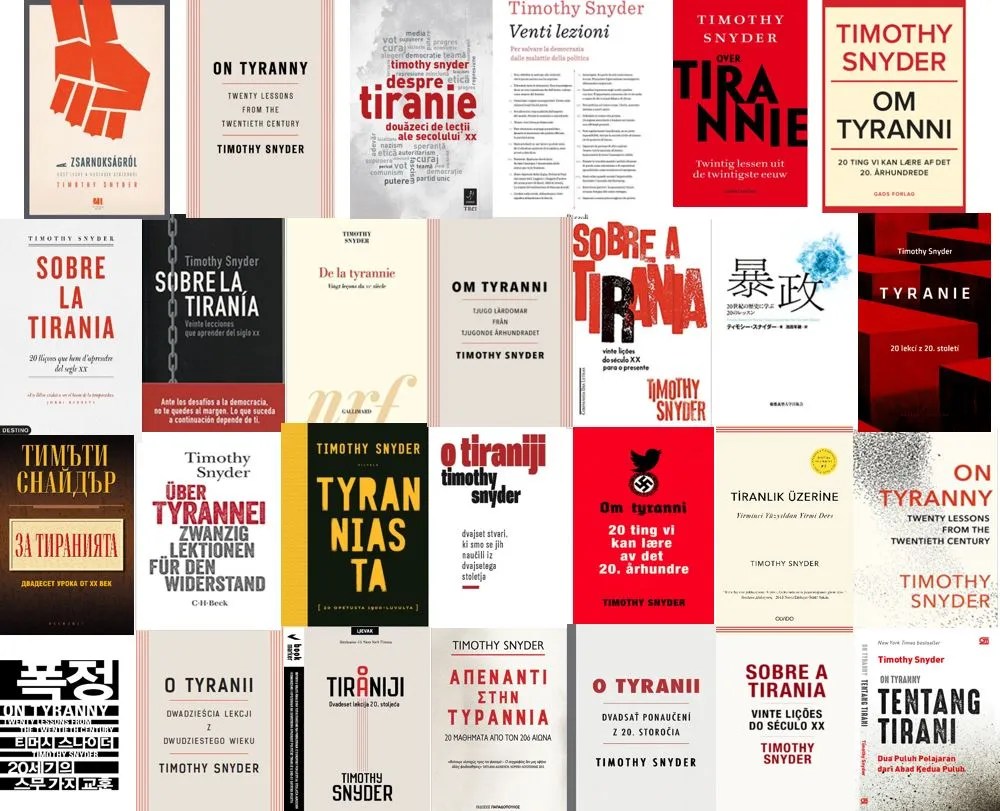
In 2016, Yale history professor Timothy Snyder took to Facebook to share some lessons from 20th century about how to protect our liberal democracy from fascism and authoritarianism. In response to this week’s catastrophic election, I’ve reproduced it in its entirety here.

Americans are no wiser than the Europeans who saw democracy yield to fascism, Nazism, or communism. Our one advantage is that we might learn from their experience. Now is a good time to do so. Here are twenty lessons from the twentieth century, adapted to the circumstances of today.

1. Do not obey in advance. Much of the power of authoritarianism is freely given. In times like these, individuals think ahead about what a more repressive government will want, and then start to do it without being asked. You’ve already done this, haven’t you? Stop. Anticipatory obedience teaches authorities what is possible and accelerates unfreedom.

2. Defend an institution. Follow the courts or the media, or a court or a newspaper. Do not speak of “our institutions” unless you are making them yours by acting on their behalf. Institutions don’t protect themselves. They go down like dominoes unless each is defended from the beginning.

3. Recall professional ethics. When the leaders of state set a negative example, professional commitments to just practice become much more important. It is hard to break a rule-of-law state without lawyers, and it is hard to have show trials without judges.

4. When listening to politicians, distinguish certain words. Look out for the expansive use of “terrorism” and “extremism.” Be alive to the fatal notions of “exception” and “emergency.” Be angry about the treacherous use of patriotic vocabulary.

5. Be calm when the unthinkable arrives. When the terrorist attack comes, remember that all authoritarians at all times either await or plan such events in order to consolidate power. Think of the Reichstag fire. The sudden disaster that requires the end of the balance of power, the end of opposition parties, and so on, is the oldest trick in the Hitlerian book. Don’t fall for it.

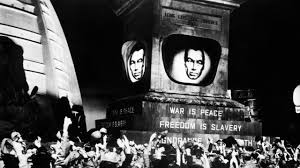
6. Be kind to our language. Avoid pronouncing the phrases everyone else does. Think up your own way of speaking, even if only to convey that thing you think everyone is saying. (Don’t use the internet before bed. Charge your gadgets away from your bedroom, and read.) What to read? Perhaps “The Power of the Powerless” by V’aclav Havel, 1984 by George Orwell, The Captive Mind by Czeslaw Milosz, The Rebel by Albert Camus, The Origins of Totalitarianism by Hannah Arendt, or Nothing is True and Everything is Possible by Peter Pomerantsev.

7. Stand out. Someone has to. It is easy, in words and deeds, to follow along. It can feel strange to do or say something different. But without that unease, there is no freedom. And the moment you set an example, the spell of the status quo is broken, and others will follow.

8. Believe in truth. To abandon facts is to abandon freedom. If nothing is true, then no one can criticize power, because there is no basis upon which to do so. If nothing is true, then all is spectacle. The biggest wallet pays for the most blinding lights.

9. Investigate. Figure things out for yourself. Spend more time with long articles. Subsidize investigative journalism by subscribing to print media. Realize that some of what is on your screen is there to harm you. Bookmark PropOrNot or other sites that investigate foreign propaganda pushes.

10. Practice corporeal politics. Power wants your body softening in your chair and your emotions dissipating on the screen. Get outside. Put your body in unfamiliar places with unfamiliar people. Make new friends and march with them.

11. Make eye contact and small talk. This is not just polite. It is a way to stay in touch with your surroundings, break down unnecessary social barriers, and come to understand whom you should and should not trust. If we enter a culture of denunciation, you will want to know the psychological landscape of your daily life.

12. Take responsibility for the face of the world. Notice the swastikas and the other signs of hate. Do not look away and do not get used to them. Remove them yourself and set an example for others to do so.

13. Hinder the one-party state. The parties that took over states were once something else. They exploited a historical moment to make political life impossible for their rivals. Vote in local and state elections while you can.

14. Give regularly to good causes, if you can. Pick a charity and set up autopay. Then you will know that you have made a free choice that is supporting civil society helping others doing something good.

15. Establish a private life. Nastier rulers will use what they know about you to push you around. Scrub your computer of malware. Remember that email is skywriting. Consider using alternative forms of the internet, or simply using it less. Have personal exchanges in person. For the same reason, resolve any legal trouble. Authoritarianism works as a blackmail state, looking for the hook on which to hang you. Try not to have too many hooks.

16. Learn from others in other countries. Keep up your friendships abroad, or make new friends abroad. The present difficulties here are an element of a general trend. And no country is going to find a solution by itself. Make sure you and your family have passports.

17. Watch out for the paramilitaries. When the men with guns who have always claimed to be against the system start wearing uniforms and marching around with torches and pictures of a Leader, the end is nigh. When the pro-Leader paramilitary and the official police and military intermingle, the game is over.

18. Be reflective if you must be armed. If you carry a weapon in public service, God bless you and keep you. But know that evils of the past involved policemen and soldiers finding themselves, one day, doing irregular things. Be ready to say no. (If you do not know what this means, contact the United States Holocaust Memorial Museum and ask about training in professional ethics.)

19. Be as courageous as you can. If none of us is prepared to die for freedom, then all of us will die in unfreedom.

20. Be a patriot. The incoming president is not. Set a good example of what America means for the generations to come. They will need it.


Posted in Books, Europe, Freedom of Speech, History | Tagged | 4 Comments