Exactly forty years ago on this day I was tent camping in the Swiss alps. It’s one of those indelible travel memories that tends to stick out among all of the many trips. Filmmaker Reinis Kaspars spent two weeks hiking alone in the Swiss Alps, and managed to shoot a gorgeous short film about the experience as he went along. Kaspars delivers a quiet monologue throughout the film that manages the neat trick of being inspirational without seeming cloying or clichéd. Watch on full screen.
As a fire axe waits in its little shop window
As a tongue returns raw to the lozenge
It’s not your fault you’re like this, but you are
As consternation at the departure gate
As drinking water to find it creamy
As the linseed head of an ant might contain
a social code in play
As suffering comes home from work
with the same names as yesterday
As you forget to taste
As you borrow a sigh from the same cubic meters of air
As a too-slow handshake might signal sarcasm
It’s not who you are but who you are and can’t undo
As you shit in a room without water
As you cry in a room without light
We send our love
We send an invoice attached as requested
As if everything were intended for you
“The most regretful people on earth are those who felt the call to creative work, who felt their own creative power restive and uprising, and gave to it neither power nor time.”
― Mary Oliver
The photo above includes a rental library inside a general Store. A rental library (also know as lending library ) was a commercially operated library that lent books at a fixed charge per book per day. In 1923, of 1,100 cities in the US, only 200 had free public libraries. Rental Libraries were a popular solution and they changed bookselling. The now defunct chain Waldenbooks started as a Rental Library chain in 1933 by Lawrence W. Holt and Melvin T. Kafka. By 1948, they had 250 rental libraries doing a brisk business, as well as many leased book departments in stores selling books. In 1962 the first “Walden Book Store” was launched and by the late 1989 there were over 1200 stores across the county.
There was once a society of scoundrels, or rather not scoundrels per se, just ordinary, average people. They always stuck together. When one of them had perpetrated some rascally act, or rather, nothing really rascally, just averagely bad, he would confess it to the others, and they investigated it, condemned it, imposed penalties, forgave him, etc. This wasn’t corrupt — the interests of the individual and the society were kept in balance and the confessor received the punishment he asked for. So they always stuck together, and even after their death they didn’t abandon their society, but ascended to heaven in a troop. It was a sight of childlike innocence to see them flying. But since everything at heaven’s gate is broken up into its component parts, they plunged down like so many rocks.
In The Book Hunter (1863), John Hill Burton identifies five types of “persons who meddle with books”:
“A bibliognoste, from the Greek, is one knowing in title-pages and colophons, and in editions; the place and year when printed; the presses whence issued; and all the minutiae of a book.”
“A bibliographe is a describer of books and other literary arrangements.”
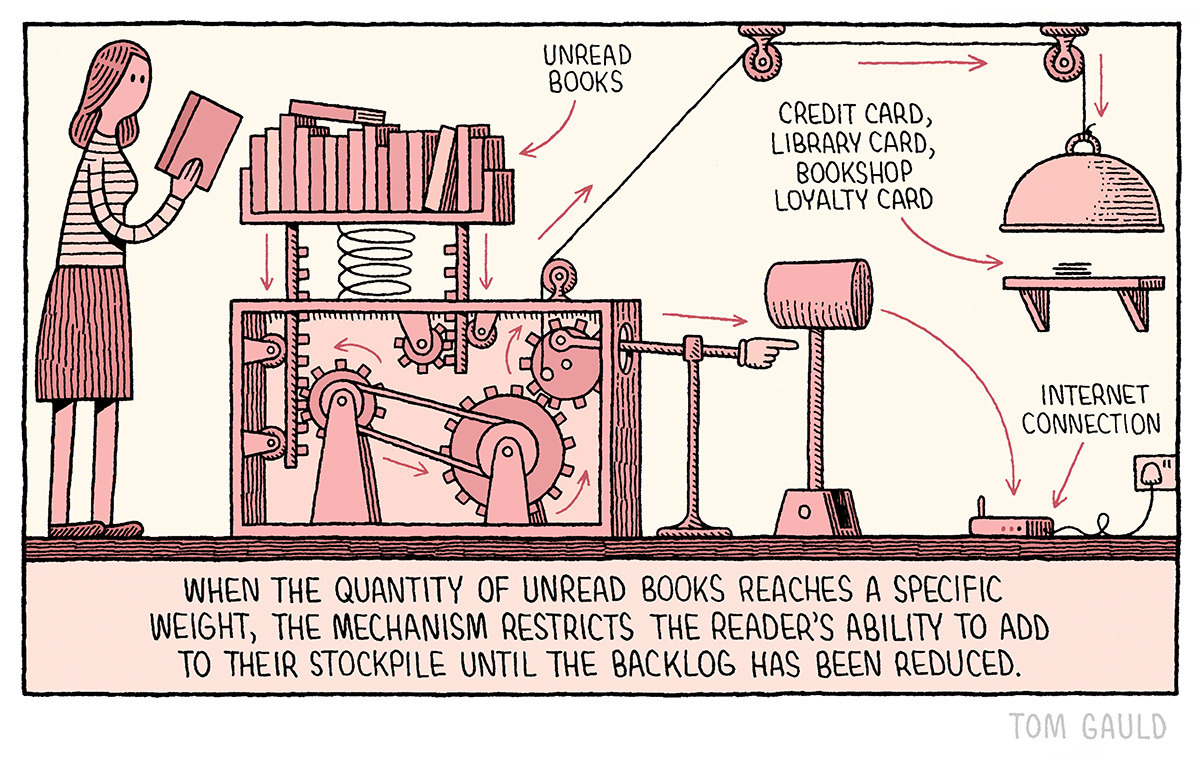
“A bibliomane is an indiscriminate accumulator, who blunders faster than he buys, cock-brained and purse-heavy.”
“A bibliophile, the lover of books, is the only one in the class who appears to read them for his own pleasure.”
“A bibliotaphe buries his books, by keeping them under lock, or framing them in glass cases.”
These groups seem to have been proposed by French librarian Jean Joseph Rive. Bibliographer Gabriel Peignot added four more:
bibliolyte, a destroyer of books
bibliologue, one who discourses about books
bibliotacte, a classifier of books
bibliopée, “‘l’art d’écrire ou de composer des livres,’ or, as the unlearned would say, the function of an author.”
“She had a body that reached out and slapped my face like a five-pound ham-hock tossed from a speeding truck.” 2024 Grand Prize Winner
Founded in 1982 at San Jose State University in California, the Bulwer-Lytton Fiction Contest challenges entrants to compose opening sentences to the worst of all possible novels.
The BLFC was the brainchild of Professor Scott Rice. Sentenced to write a seminar paper on a minor Victorian novelist, he chose the man with the funny hyphenated name, Edward George Bulwer-Lytton. Best known for The Last Days of Pompeii, his novel Paul Clifford began with the famous opener that has been plagiarized repeatedly by the cartoon beagle, Snoopy.
Crime & Detective
Winner
She was poured into the red latex dress like Jello poured into a balloon, almost bursting at the seams, and her zaftig shape was awesome to behold, but I knew from the look on her face and the .45 she held pointing at me, that this was no standard client of my detective agency, but a new collection agency tactic to get me to pay my long-overdue phone bill.
You can find all of this year’s groaners, I mean winners, right here.
As I have previously mentioned, the novels and short stories of Ray Bradbury played an important role in my early love of reading. I recently ran across this marvelous brief video of Bradbury from fifty years ago discussing the importance of art and literature in our lives, as well as a bit about his personal creative process.
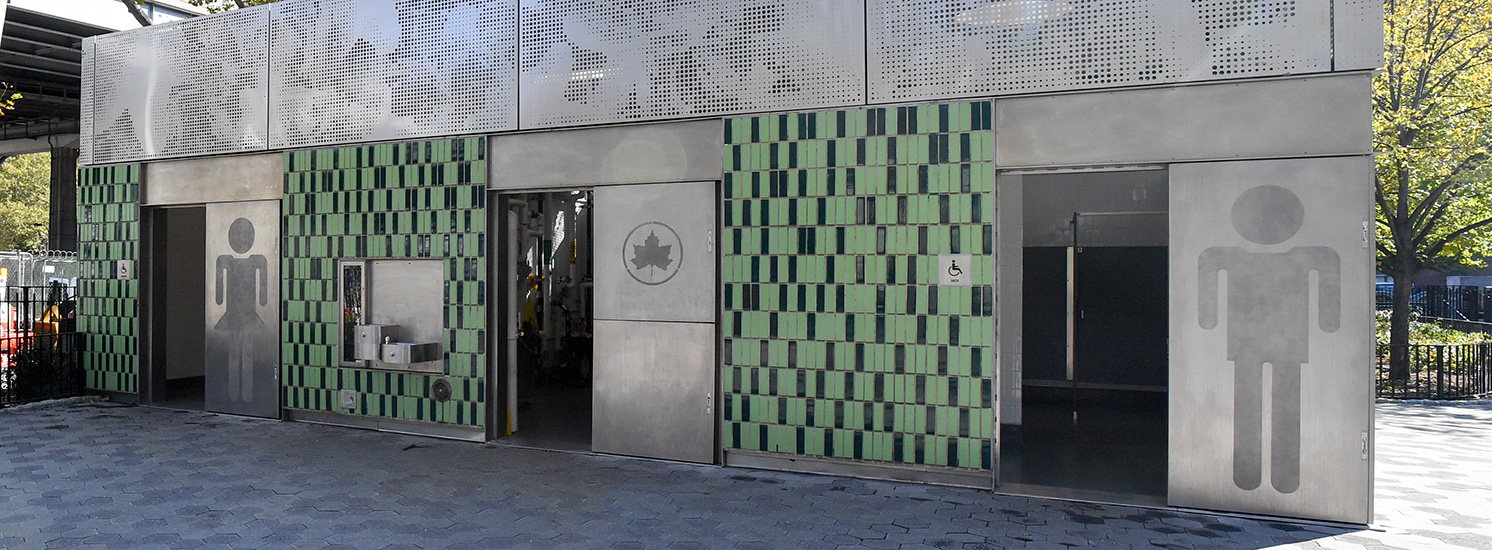
During a recent visit to New York City, I became hyper aware of the disappearance of public restrooms. There’s no polite way to put this: going to the bathroom in New York is a big hassle. Public restrooms in the city are hard to find and are often either out of order or require you to buy something at a store or café to be able to use. The problem is so bad that individuals have created their own resources for finding public restrooms.
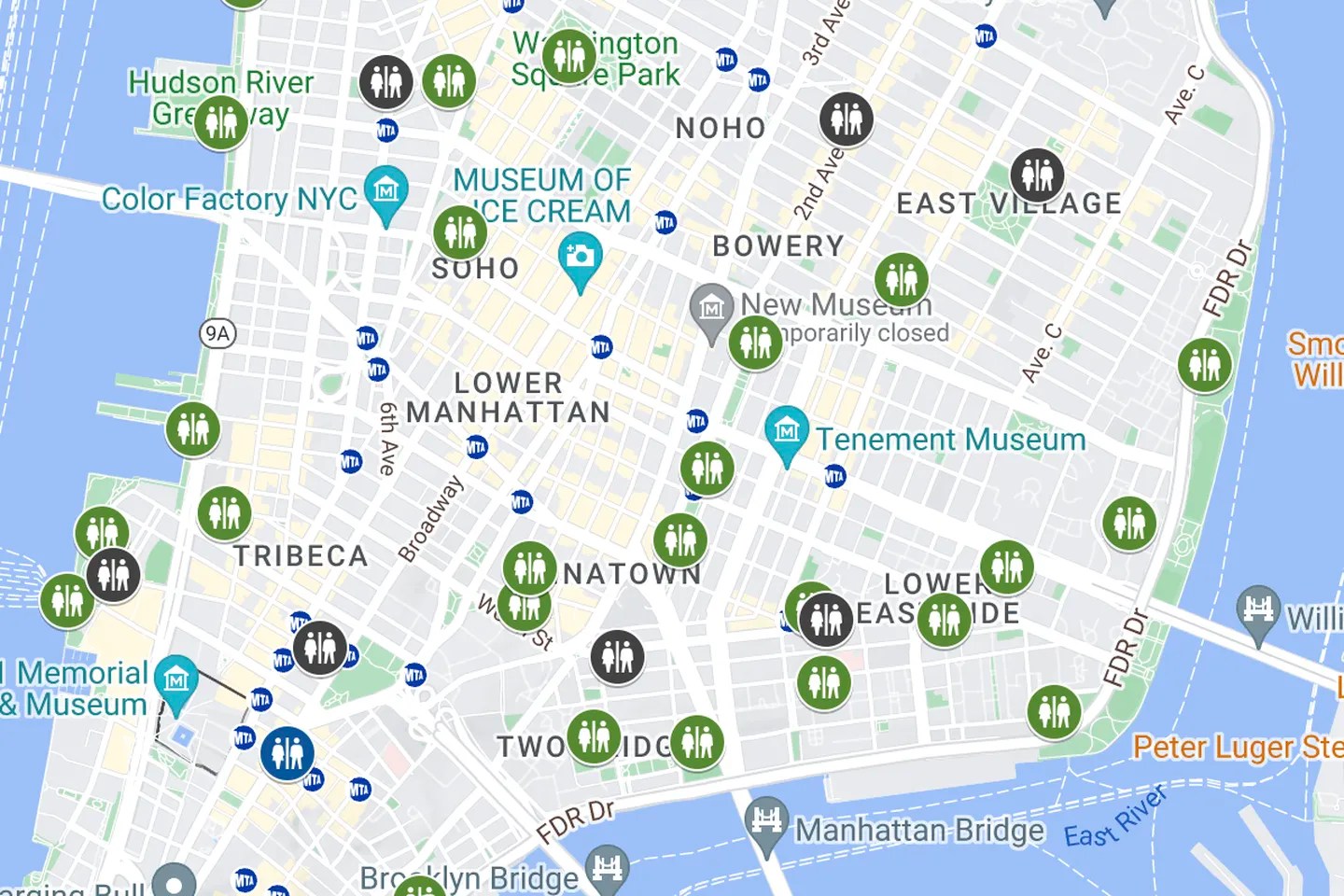
A new Google Maps layer introduced by the city attempts to tackle this issue. As part of a new program called “Ur in Luck,” the city has introduced a Maps view dotted with 1,000 public restrooms across the five boroughs. Users can view the map on their phones and locate the closest restroom that’s accessible to the public. It’s sounds good, but a recent WNYC public radio show revealed that more than 100 of the advertised facilities is out of order on any given day. And, at least 100 more are only open part of the day and closed on weekends.
The new map will be somewhat helpful, but it’s a drop in the bucket of need.. One thousand bathrooms for 8 million New Yorkers is woefully insufficient. Not to mention the 62 million annual visitors to the city.
Still, if you’re planning a visit, check out the video below on the project:











 Travel Between The Pages