Summer Reads

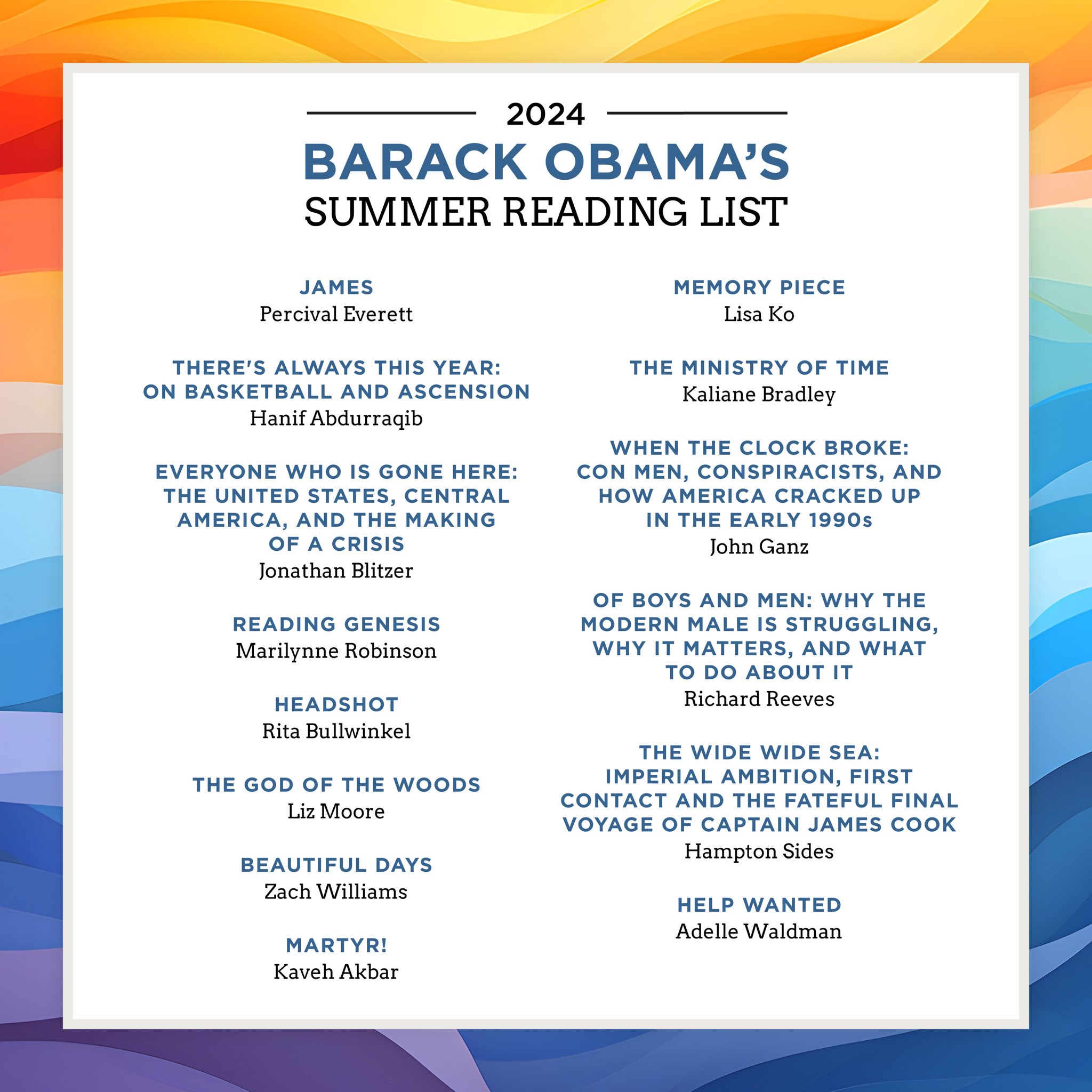
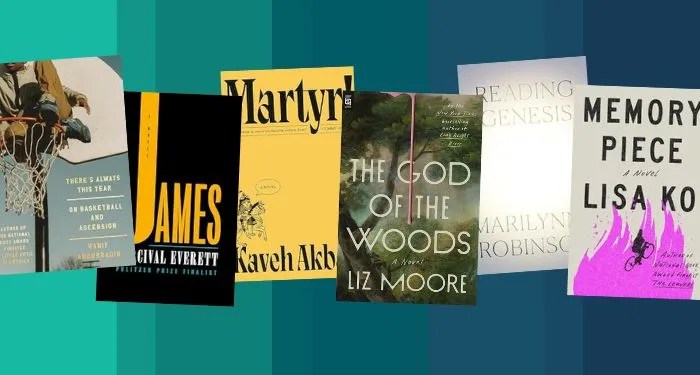
It has become an annual tradition each summer for former President Barack Obama to share his summer reading list on social media. As usual, the list showcases his mix of fiction and nonfiction, and it shows off an interest in both books that have been popular and some that are lesser-known. His 2024 list is one of the longer reading lists in recent years.


Posted in Books | Tagged , | Leave a comment

Through Thick and Thin

I don’t think that I’ve read Chaucer since high school, but I was still fascinated when I ran across an article on the many commonly used English phrases that he  coined (or popularized) a lot of phrases that we still regularly use today, and the folks at Medievalists.net assembled 35 of them! They include …

  • Through Thick and Thin — Found in The Canterbury Tales: “And forth with wehee, thurgh thikke and thurgh thenne.”
  • To Wet One’s Whistle — Found in The Canterbury Tales: “So was hir joly whistle wel ywet.”
  • Piping Hot — Found in The Canterbury Tales: “And wafres, pipyng hot out of the gleede.”
  • To Hang in the Balance — Found in the short poem Womanly Noblesse: “Considryng eke how I hange in balaunce.”

Go check out the rest; cool beans.


Posted in Books, Europe, History, Writing | Tagged | Leave a comment

Respect the law of consequences

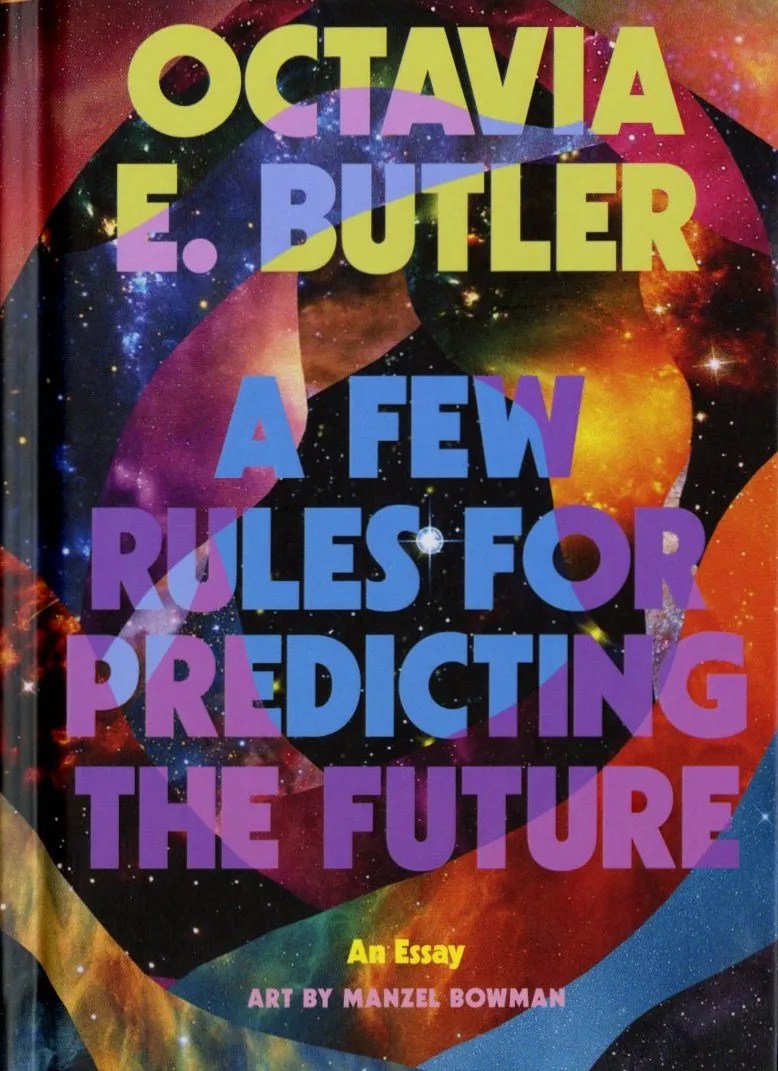
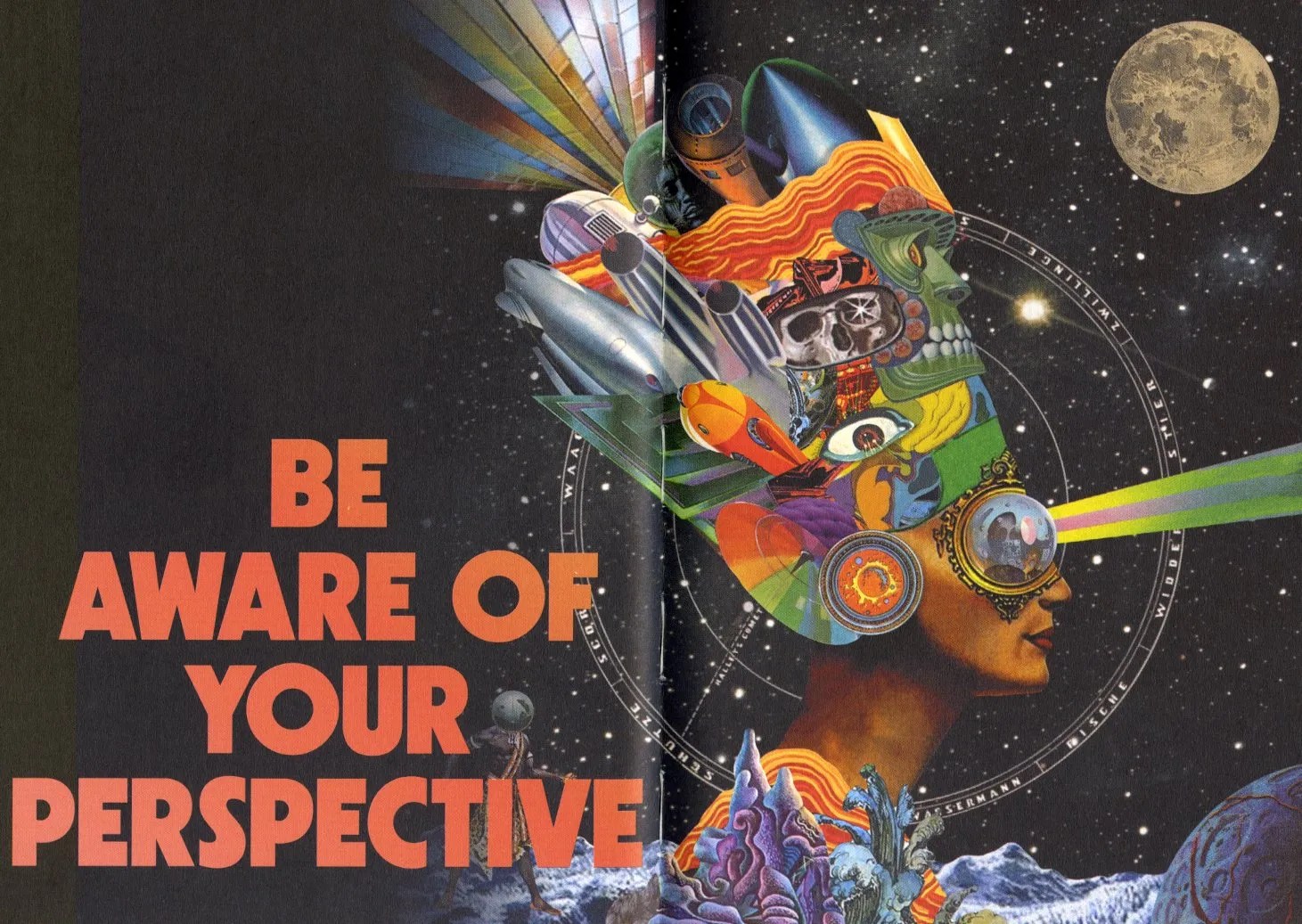
Those of you who stop by TBTP on a regular basis know that I am an evangelist for the work of Octavia E. Butler . The first widely read Black science fiction author and Afro-Futurist pioneer was also a perspicacious social critic. Her brilliant essay “A Few Rules for Predicting the Future,” published in 2000 for Essence magazine, was recently republished  by Chronicle Books, featuring exciting futurist collages by Manzel Bowman.

Butler’s essay was written in respondence to a student’s question, “Do you really believe that in the future we’re going to have the kind of trouble you write about in your books?” The question referred to Butler’s warnings about increasing drug addiction, illiteracy, global warming and untold seeds of doomsday scenarios. “I didn’t make up the problems,” she noted, “all I did was look around at the problems we’re neglecting now and give them about 30 years to grow into full-fledged disasters.”

Queried if there was a solution to the problems, Butler replied there is not one, but many—and “the very act of trying to look ahead to discern possibilities and offer warnings is in itself an act of hope.”


Posted in Art, Books, USA, Writing | Tagged , , | Leave a comment

The Mark on the Wall


The Mark On The Wall” is based on Virginia Woolf’s short story of the same name, which opens with the mysterious line—”Perhaps it was the middle of January in the present year that I first looked up and saw the mark on the wall.”— before sinking into a stream-of-consciousness style monologue of speculation and intrigue. The film by Anderson Wright emulates Woolf’s signature form as the narrator visualizes all the joyful, harrowing, and disturbing possibilities that caused a dark spot to appear within her home. Spoiler alert: It’s not what she thinks.

Watch “The Mark On The Wall” on Vimeo, where you can find more of Wright’s films.

Posted in Books, Europe, Film, Writing | Tagged , , | Leave a comment

On The Beach

I was surprised to stumble on the complete version of the Stanley Kramer film On The Beach posted on YouTube. The 1959 American post-apocalyptic science fiction drama had an enormous impact on me when I first saw the movie on television when I was a young teenager. The film is based on Nevil Shute’s powerful 1957 novel of the same name. The story is set in a world devastated by nuclear war, and it explores the lives of a group of people in Australia as they await the inevitable arrival of deadly radiation that will reach them soon. The film features an ensemble cast led by Gregory Peck, Ava Gardner, Fred Astaire, and Anthony Perkins. As the characters face their impending doom, they grapple with the existential questions of life, love, and the consequences of human actions. “On the Beach” is known for its poignant portrayal of the impact of nuclear war and the inevitability of the end of humanity. The movie received critical acclaim for its powerful performances and thought-provoking themes. It remains a significant work in the genre of post-apocalyptic cinema.

Although it views the world through the lens of the 1950s U.S., it’s well worth a watch if you have two hours to spare.


Posted in Books, Film, movies, USA | Tagged , , , | 2 Comments

Penguins

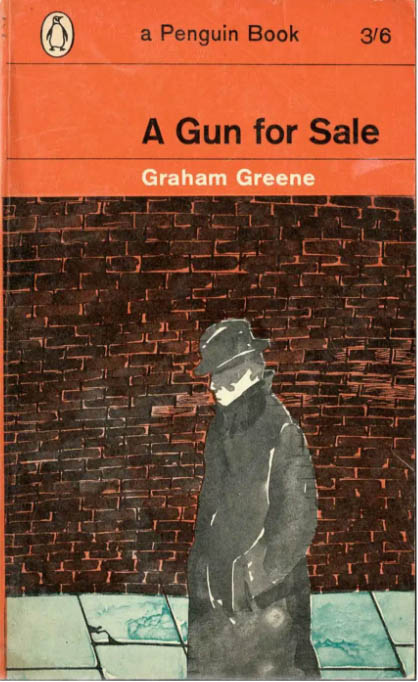
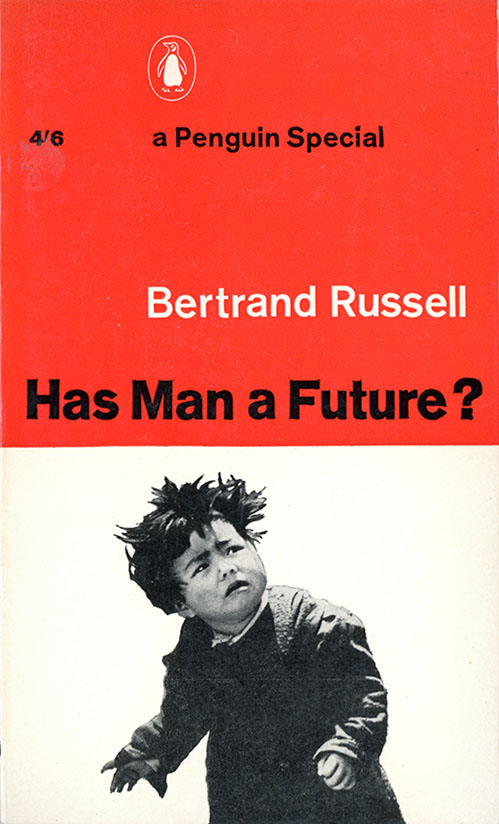
Any self-respecting book cover geek needs to take a gander at this website dedicated to the cover art of Penguin paperbacks, curated by Australian design instructor  Greg Neville .

“Penguin Books has had numerous categories in its long history: fiction, crime, sci-fi, poetry, theatre, classics, non-fiction, education etc. Alongside these broad categories more specific printings have been made with particular themes. For example, an edition of a particular author’s works, a specially priced series, a focus on regional authors, or series based on food, travel or romance. These editions of related books, where the art direction and design is co-ordinated in a single aesthetic with variations on a theme, is the subject of this site.” As you’d expect there is some gorgeous cover design on display here.


Posted in Art, Books | Tagged , , , , | Leave a comment

Definitely Not Hoarding


Posted in Art, Books | Tagged , , | Leave a comment

Walk This Way

The ancient Roman Appian Way road network has become Italy’s newest UNESCO World Heritage Site. The  Via Appia Antica, or Appian Way,  the oldest and most significant road built by the ancient Romans, has been named a Unesco world heritage site, making Italy the nation with the world’s highest number of locations on the list at sixty sites.

Sometimes called the Regina Viarum, or Queen of Roads, it connected Rome with the port of Brindisi in the south and marked a revolution in the construction of roads.

The first section of highway was built in 312BC by the Roman statesman Appius Claudius Caecus and served as a strategic corridor for military purposes. Until then, the only roads outside ancient Rome were Etruscan and went towards Etruria in central Italy.

The first 17km (10 miles) of the cobblestone path remains and is preserved within the Appia Antica archeological park in the south of Rome. Popular with history buffs, walkers and cyclists, the perfectly intact road is flanked by what remains of ancient Roman aqueducts and villas. Beneath the path is a sprawling network of catacombs where Christian converts were buried.

I’ll never forget my first wander on the Appia Antica more than four decades ago. Visiting the catacombs and sites such as the Tomb of St. Cecilia at the catacomb of St. Callixtus really brought ancient Rome to life for me.


Posted in Architecture, Europe, History, Maps, Public Transport, Tourism | Tagged , | Leave a comment

Literary London

As a great international capital, once at the hub of an enormous colonial Empire, London has long attracted visits by writers, artists and intellectuals from around the world. University College London is curating how London has been seen through the eyes of Europe’s cultural luminaries by mapping some of these observations of the city.

‘Lost & Found: A European Literary Map of London’ is peppered with a series of colorful markers, each bearing the name of a European writer, artist or intellectual who has visited the city. Click on a marker and you can read an excerpt from the named cultural icon describing their impressions of London. The excerpts are taken from novels, letters and biographies, so contain a mix of fictional and non-fictional descriptions of the capital.
The map’s curators acknowledge that at the moment there is “an over-representation of white, male writers” on the map – so they welcome ideas for new passages which can be added to the map, particularly from under-represented groups. You can submit “descriptions of different sites/encounters with London, written in European languages beyond English” by completing a short form.
Posted in Architecture, Art, Europe, History, Maps, Theater, Tourism, Writing | Tagged , | Leave a comment

We are all wingnuts to somebody and other trivia

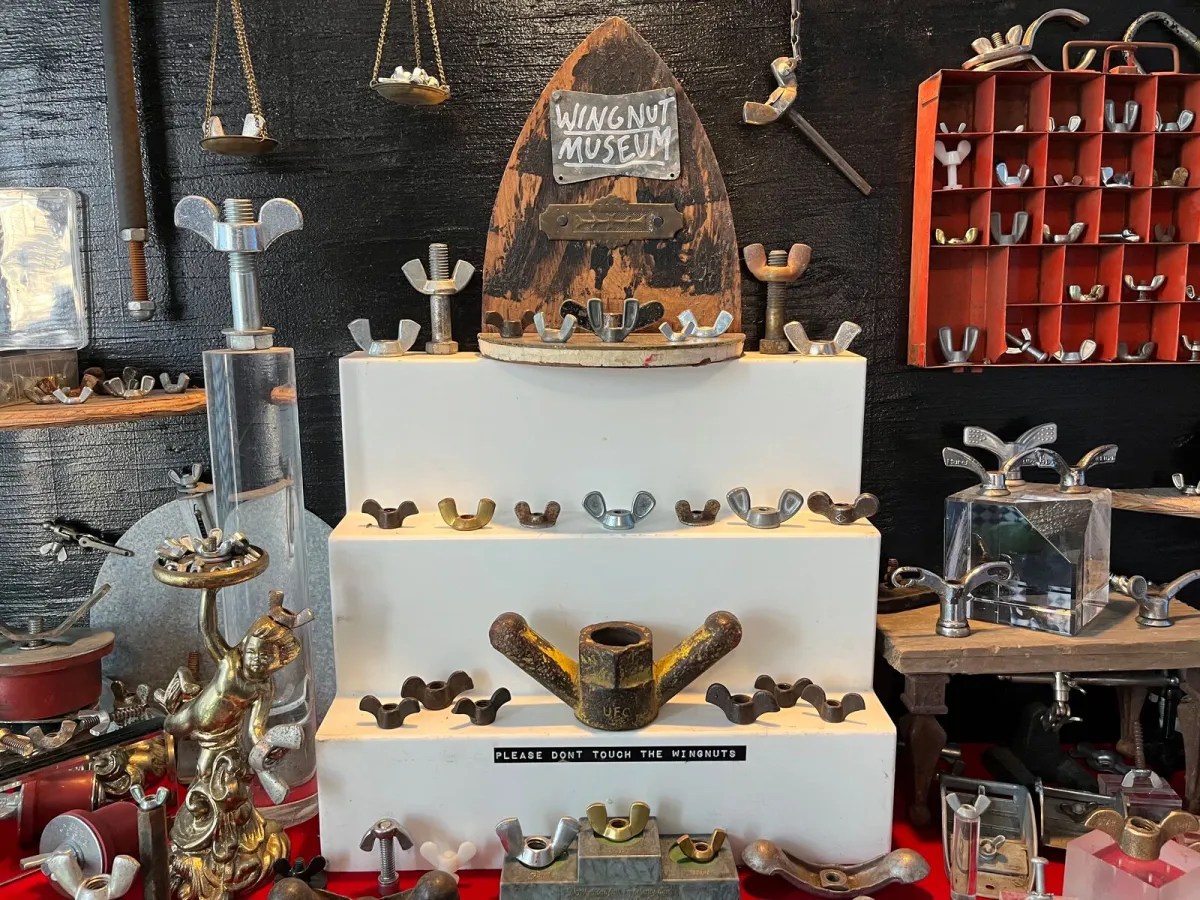
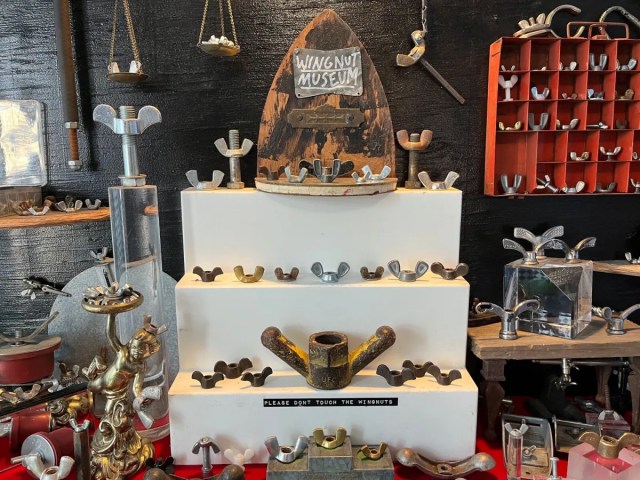
Berkeley, CA now has a Wingnut Museum. “The wingnut was invented in the first half of the 19th century and quickly became an indispensable piece of hardware. It lets users fasten bolts by hand, without tools, using little wings jutting out from the nut. Over time the term became slang, applied pejoratively to mentally unsound people, to political extremists, to freaks, eccentrics and weirdos. But in the Bay Area especially, it’s come to take on a more positive connotation, describing a certain type of creative tinkerer with a DIY, outsider ethos. The wingnut, in all its many guises, is being celebrated at the Wingnut Museum, which opened in July at Grand Opening, the art salon in Berkeley’s Gilman District that is also home to the Illusion Room. ”
A weird, whimsical game is hiding in the bookshelves at Los Angeles Public Library LA Times: “Imagine that your local public library is inhabited by an undiscovered race of tiny people. They’ve hidden themselves in the racks, tucked behind books and magazines, amidst history and fiction, new media and old.”
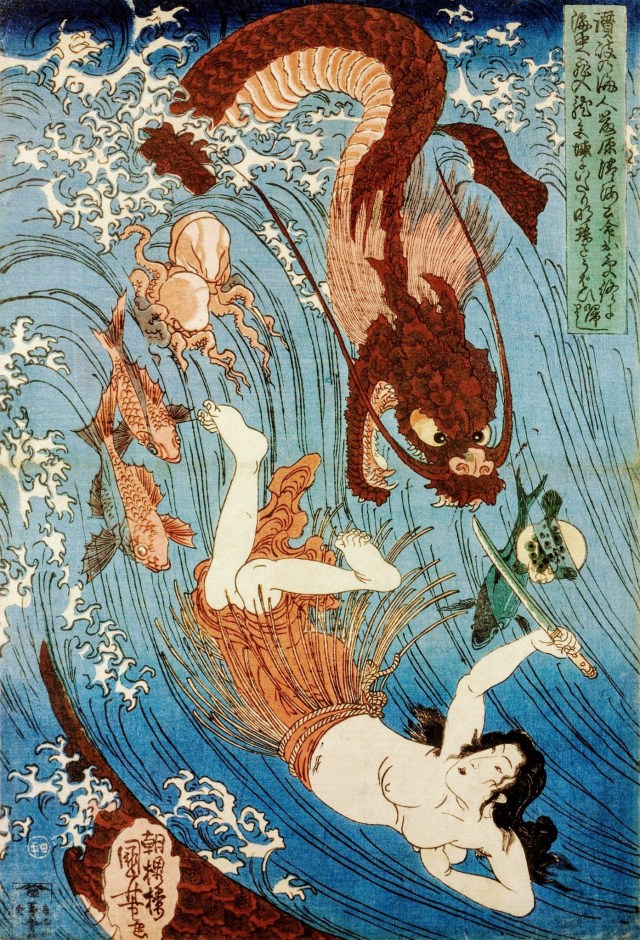
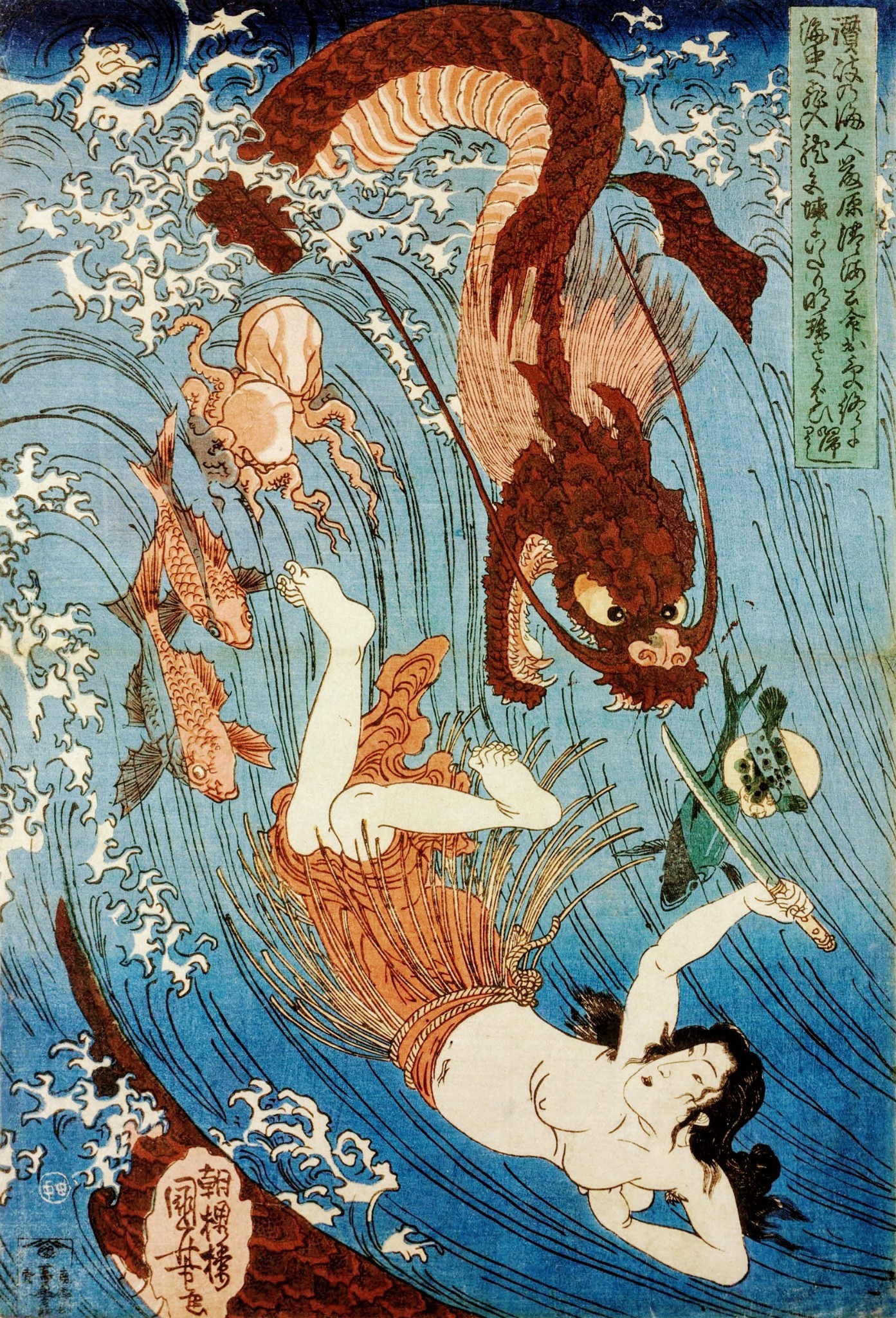
Utagawa Kuniyoshi Princess Tamatori Escaping From the Dragon God. 1853. Woodcut print.
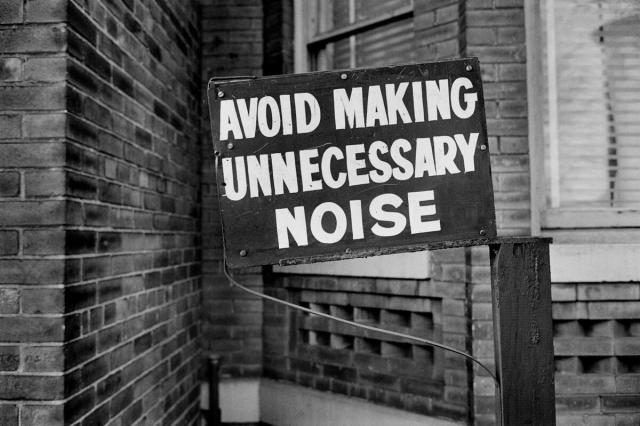
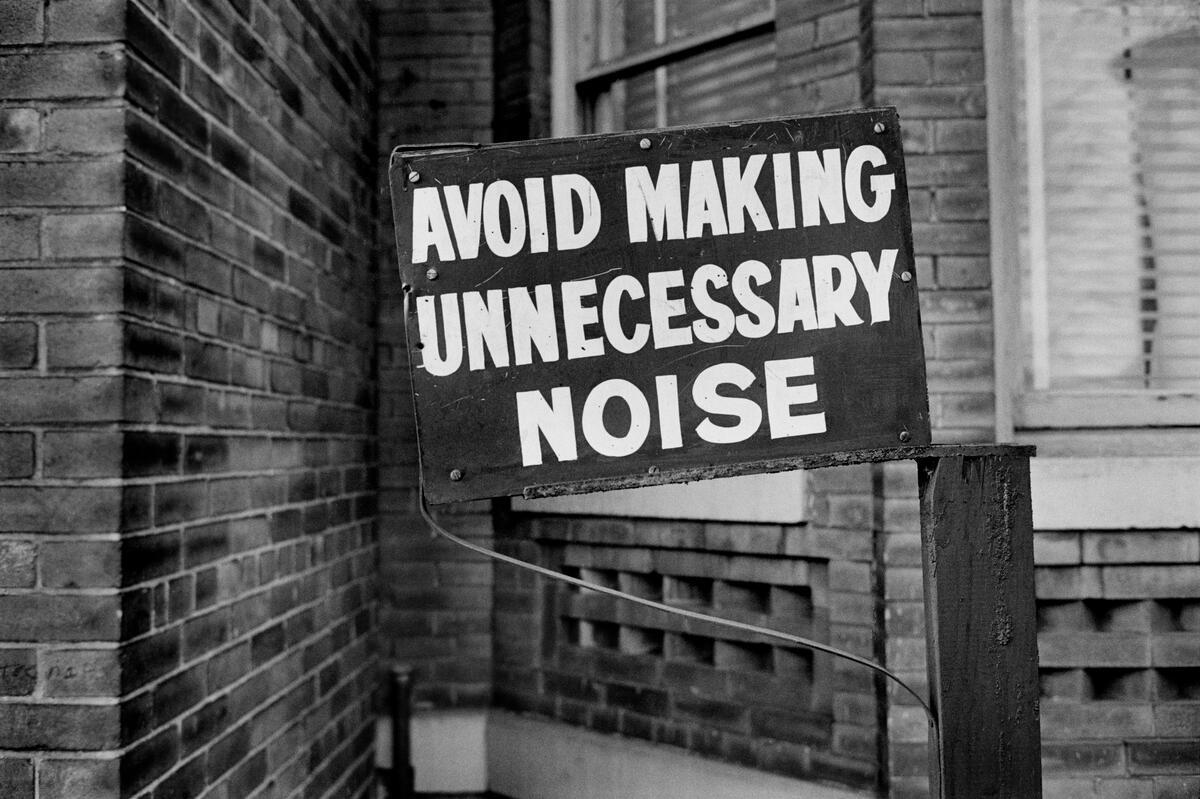
Photo © Richard Kalvar, 1969. This was in my family’s neighborhood in Brooklyn. I can guarantee that it was completely ignored.
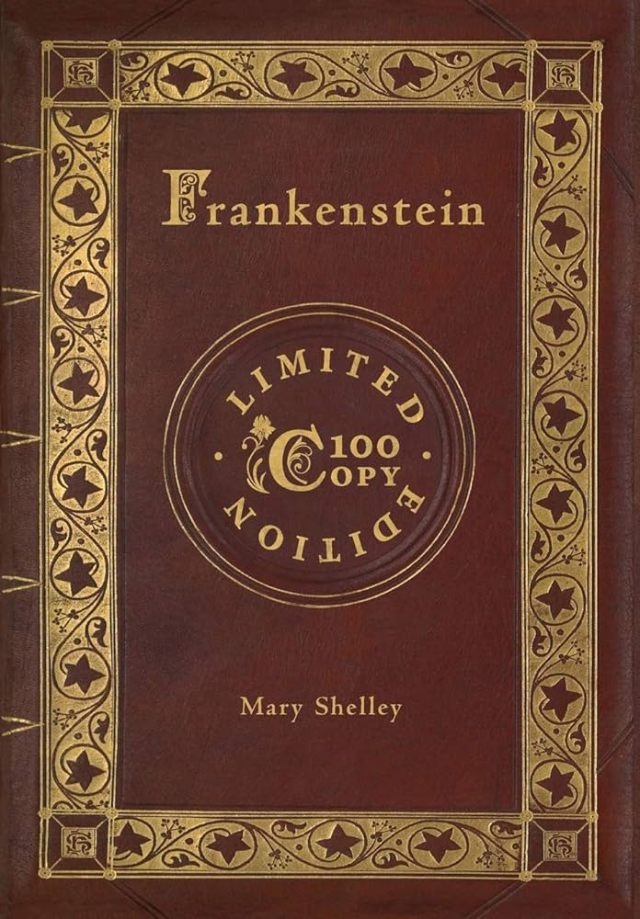
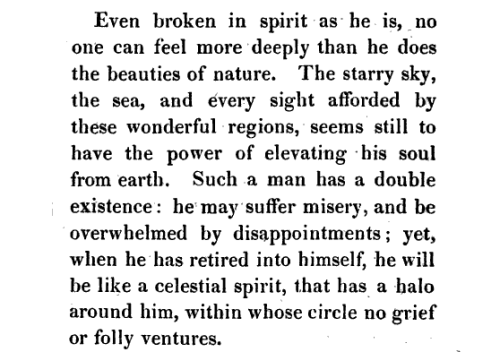
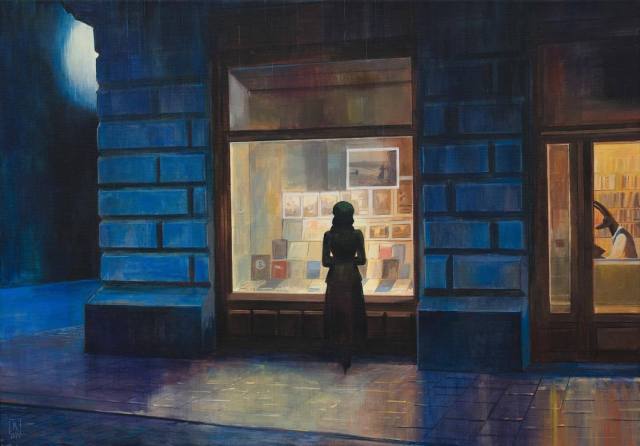
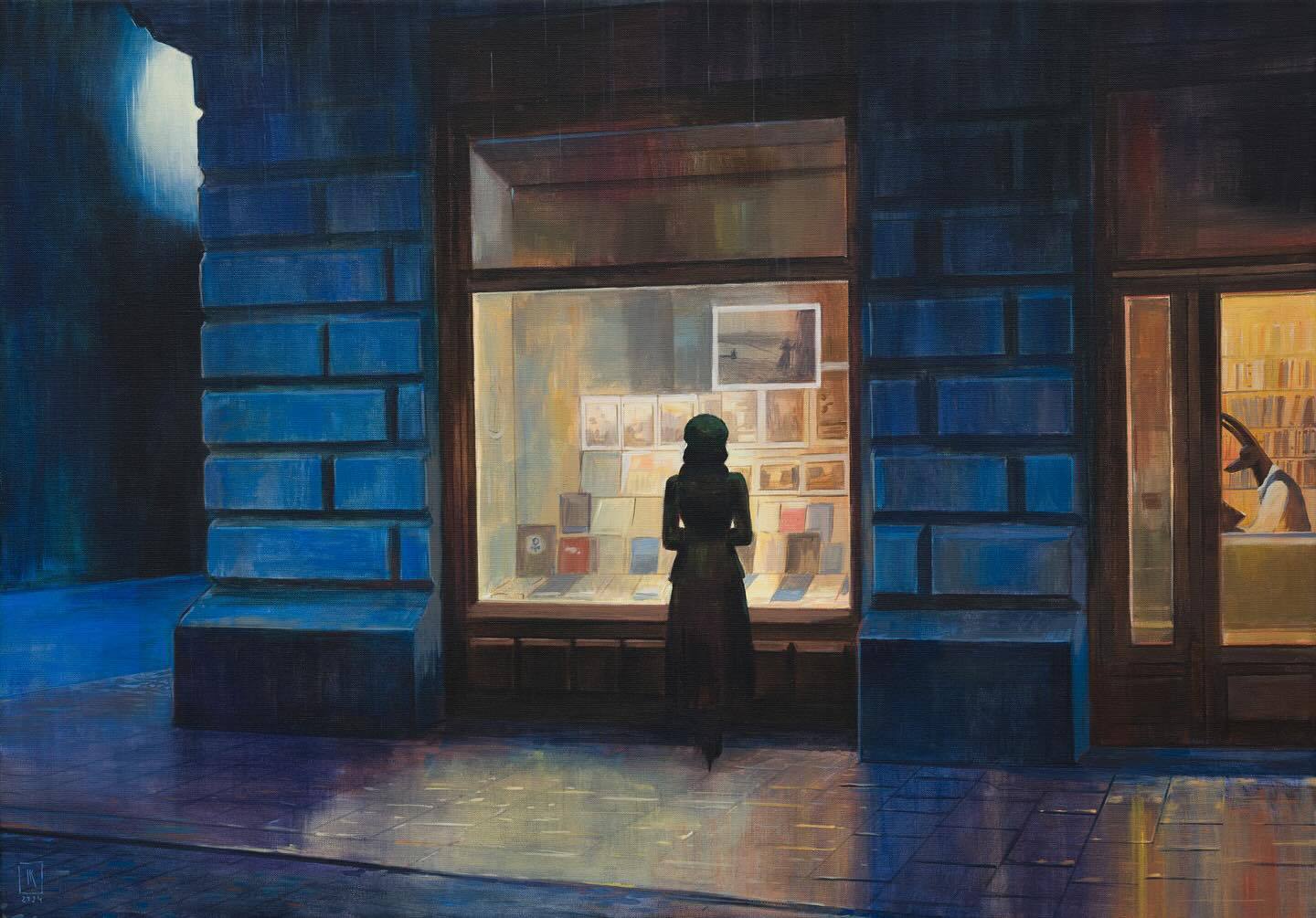
Joanna Karpowicz — Antiquary Bookstore (acrylic on canvas, 2024)
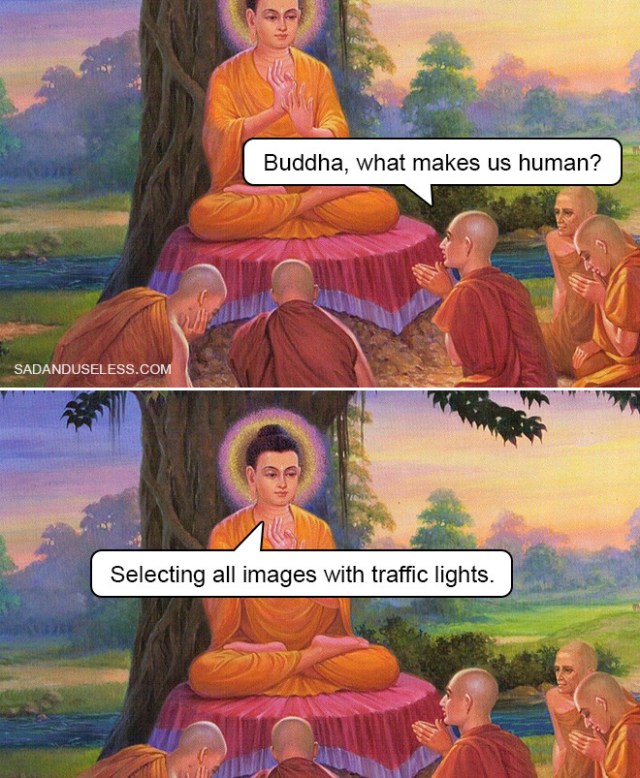
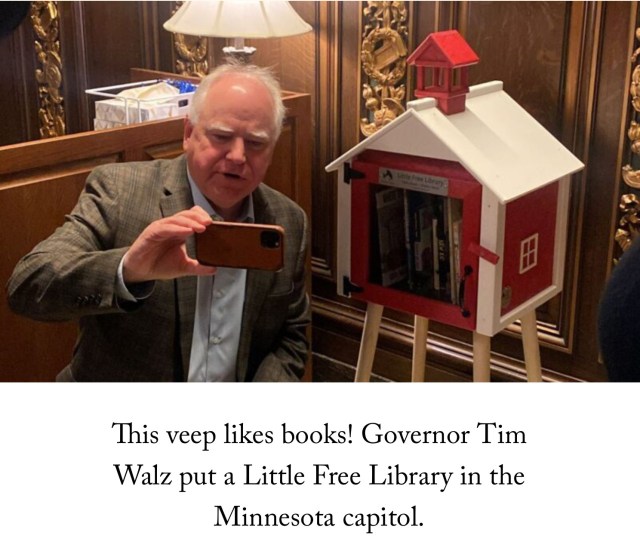
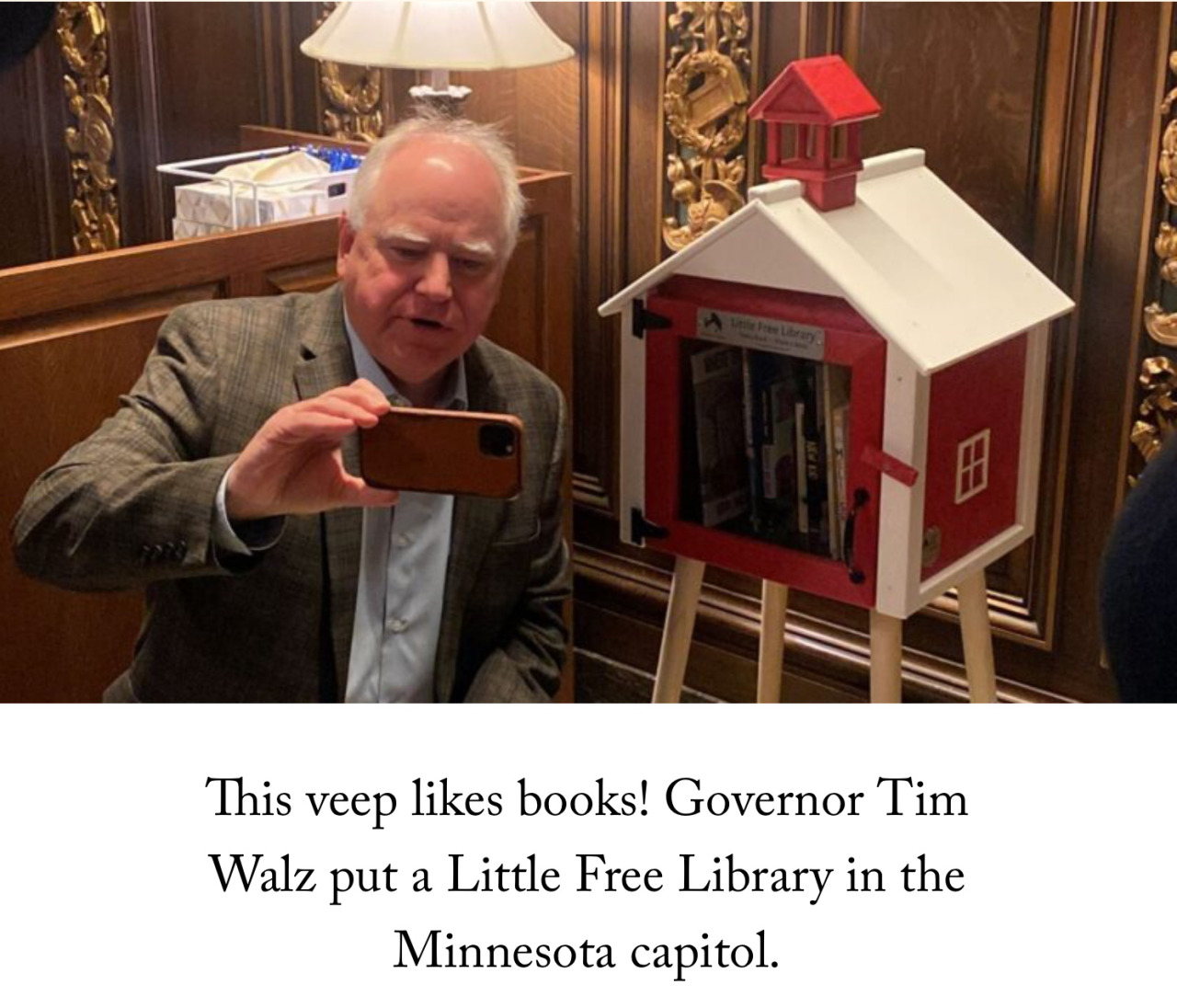
The governor’s little, free symbol foreshadowed a big, free policy change. In May, Walz signed a Minnesota law “banning K-12 schools, colleges, and public libraries from complying with [book] removal requests… based solely on the viewpoint, content, message, idea, or opinion conveyed.” The act meaningfully protects LGBTQ+ books from the crosshairs of conservative censors.

While unveiling the Little Free Library, Walz affirmed his commitment to free reading. “In Minnesota, we are focused on investing in education, our future, and children and families across the state. We’re not in the business of taking books away from kids and schools and we certainly don’t believe in banning books that tell our history,” he told reporters.
Posted in Art, Books, USA, Writing | Tagged , , , | 1 Comment