Shakespeare’s First Folio

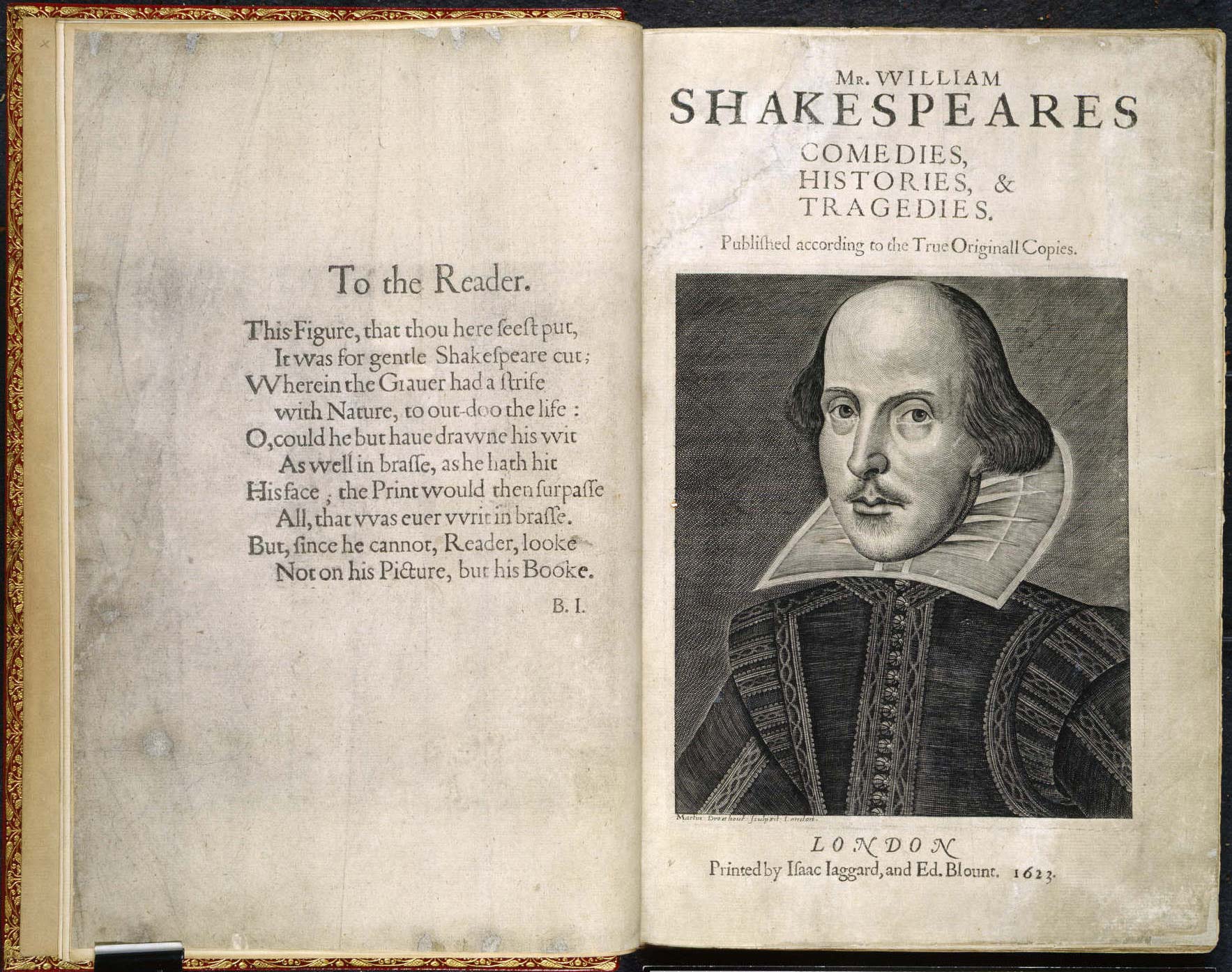
There have been many celebrations marking the 400th anniversary of the publication of Shakespeare’s First Folio, including the open access website First Folios Compared.

First Folios Compared has brought together more than 50 digitized copies of the First Folio owned by numerous institutions around the world who have contributed their digital version to the project, as well as relevant metadata. This means the folios can be explored and compared.
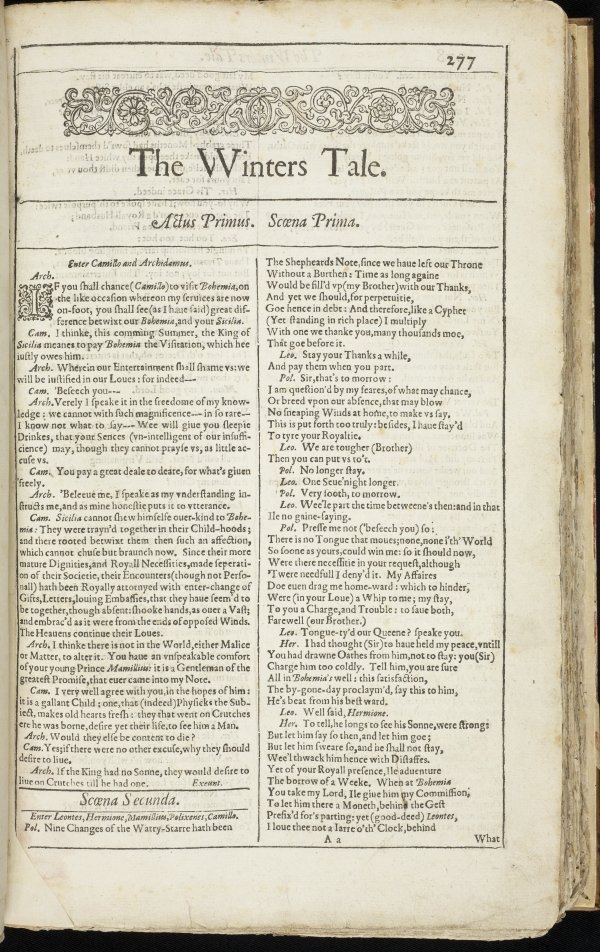
“We don’t often compare the same book in different copies,” said Professor Emma Smith, Professor of Shakespeare Studies at Hertford College, University of Oxford, and author of The Making of Shakespeare’s First Folio. “First Folios Compared allows you to see that no extant copy is perfect; all are idiosyncratic in one way or another.”

The site offers various ways to compare including by corrections (the stage direction for Lear’s death exists in three different versions), print-shop marks and marks of use, the Martin Droeshout portrait engraving on the title-page, names and bookplates, damage as evidence of later reception, and front matter. Other sections look at how the First Folio was printed and how the digitization process for the site was organised.
Posted in Books, History, Libraries, Writing | Tagged , | Leave a comment

Dialing for poets

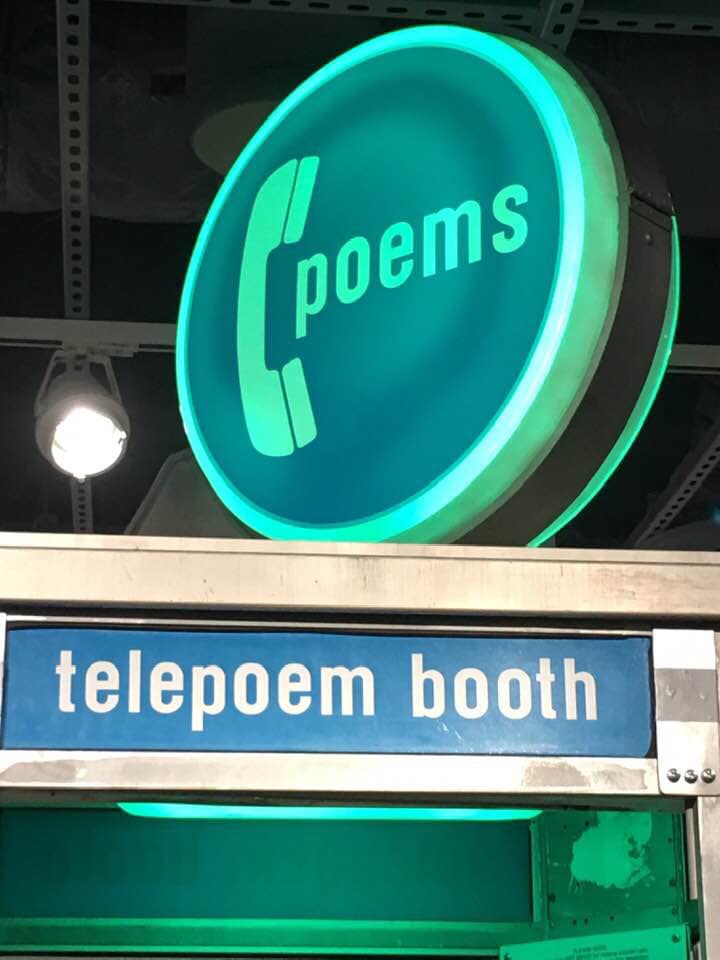
I recall similar projects, but none as widespread as the Telepoem Booth. This  brilliant interactive project is built around installations made from vintage phone booths. Users simply dial a number and listen to poetry. Even if you are not able to make a “local call” from one of the Telepoem Booths, you can use these directories to access over a thousand poems written and recited by regional, national, and international poets.

The project creators include Elizabeth Hellstern, fabricator and sculptor Owen William Fritts, and computer programmer David Earl Smith. The telepoem booth website offers this description of the installations:

– A multi-sensory community gift: visual, haptic and aural, multi-genre and multi-media. ADA accommodations provide poetry for all users, of all physical abilities.

-Poetry, art and music pieces that engage participation and feature community poets. Performance vehicle for voices of many kinds. Co-created with community.

The website also provide this history of the project:

The Telepoem Booth® art installation was created by writer and artist Elizabeth Hellstern, who currently resides in Santa Fe County, NM. We repurpose and re-enchant decommissioned (and disappearing) telephone booths to give back to communities in multi-sensory ways: visual, haptic and aural. Telepoem Booths are multi-genre and multi-media, using poetry, art and recordings to impact users. Most importantly, they are engaging art pieces that require the audience’s participation.

Telepoem Booths are provocative, exciting installation art pieces that place poetry in the public realm. They deliver an impactful emotional insight to each listener. Hearing poetry read can be cathartic and healing, providing a multi-sensory way for the public to access poetry and the human experience. Telepoem Booths give a performance vehicle for voices of many kinds.

Telepoem Booths are absolutely unique as they require the user to complete the creative cycle by interactively selecting a poem of their choice and physically dialing a phone. They are three-dimensional literary magazines that provide a contextual historical platform for poets and writers to (literally) be heard. And they activate, in every instance, a communal experience and excitement within the literary community where the booth has been placed.


Posted in Art, Tech, USA, Writing | Tagged , , , | 3 Comments

Making Do

“Making Do”

by

Italo Calvino

translated by Tim Parks


There was a town where everything was forbidden.

Now, since the only thing that wasn’t forbidden was the game tip-cat, the town’s subjects used to assemble on meadows behind the town and spend the day there playing tip-cat.

And as the laws forbidding things had been introduced one at a time and always with good reason, no one found any cause for complaint or had any trouble getting used to them.

Years passed. One day the constables saw that there was no longer any reason why everything should be forbidden and they sent messengers to inform their subjects that they could do whatever they wanted.

The messengers went to those places where the subjects were wont to assemble.

‘Hear ye, hear ye,’ they announced, ‘nothing is forbidden any more.’

The people went on playing tip-cat.

‘Understand?’ the messengers insisted. ‘You are free to do what you want.’

‘Good,’ replied the subjects. ‘We’re playing tip-cat.’

The messengers busily reminded them of the many wonderful and useful occupations they had once engaged in and could now engage in once again. But the subjects wouldn’t listen and just went on playing, stroke after stroke, without even stopping for a breather.

Seeing that their efforts were in vain, the messengers went to tell the constables.

‘Easy,’ the constables said. ‘Let’s forbid the game of tip-cat.’

That was when the people rebelled and killed the lot of them.

Then without wasting time, they got back to playing tip-cat.


Posted in Books, Europe, Writing | Tagged , , | Leave a comment

As the poems go

As the Poems Go

as the poems go into the thousands you
realize that you’ve created very
little.
it comes down to the rain, the sunlight,
the traffic, the nights and the days of the
years, the faces.
leaving this will be easier than living
it, typing one more line now as
a man plays a piano through the radio,
the best writers have said very
little
and the worst,
far too much.

by Charles Bukowski


Posted in Books, USA, Writing | Tagged , | Leave a comment

Crisis in the Library


Posted in Art, Books, Libraries | Tagged , | Leave a comment

Being Flighty Can Be Good

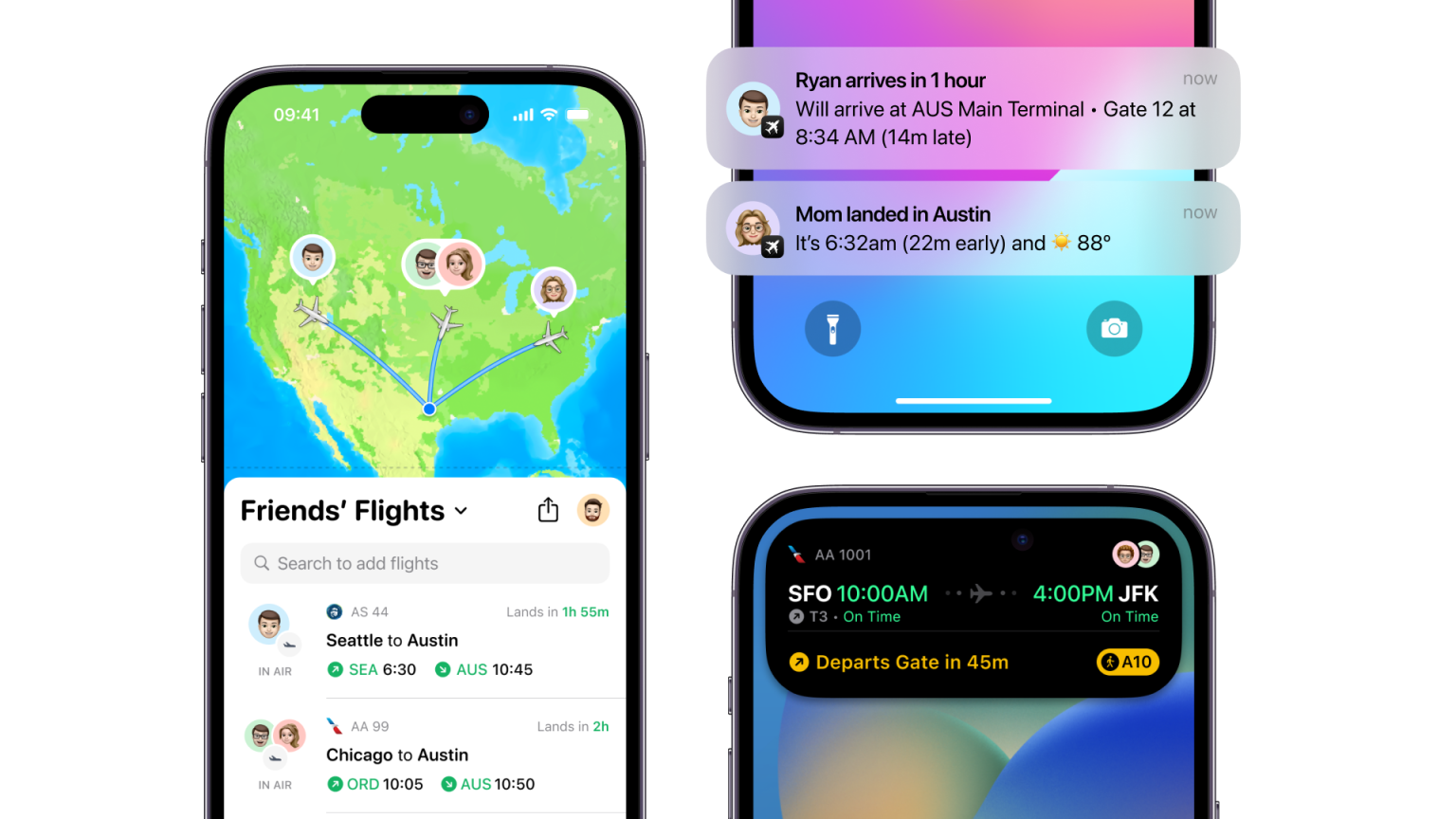
For travelers it’s sometimes a hassle to keep family, friends and other interested parties informed about flights. Flighty is a helpful flight tracking app that’s been around for years and now it has released  their 3.0 version that addresses the challenge of flight sharing and tracking among our chosen groups with the Flighty Friends feature.

Flighty Friends allows users to share their flight details once with their friends or family, and automatically provides ongoing updates. Now, the folks who need to know can easily track your travel status without asking for flight details or waiting for updates about delays or cancellations. Individual flight sharing has been a feature of Flighty for awhile but with this new release you only need to add someone to your Flighty once and they’ll always be up to date on your current and future travels.

Posted in Air Travel, apps, Public Transport, Tech, Tourism | Tagged , | 1 Comment

Café Americano

Two of my favorite things are coffee and Italy. So, I loved this charming, but a little silly, video about the search for the perfect cup of coffee in Italy by bike. Filmmaker Joey Schusler followed mountain biker Shawn Neer on a whirlwind quest from Rome to the Dolomites. The film is a subtle ad for Yeti bikes, but I’m OK with that.

If the video fails to open, please click here.


Posted in Europe, Film, Tourism | Tagged , , , , | Leave a comment

Take the Train

The New 20th Century Limited, 1939. Leslie Ragan (1897-1972).

In the 1930s, technology began to reflect the sleek, aerodynamic lines of the Art Deco movement, and the New 20th Century Limited, designed by Henry Dreyfuss, was the pride of the New York Central Line.

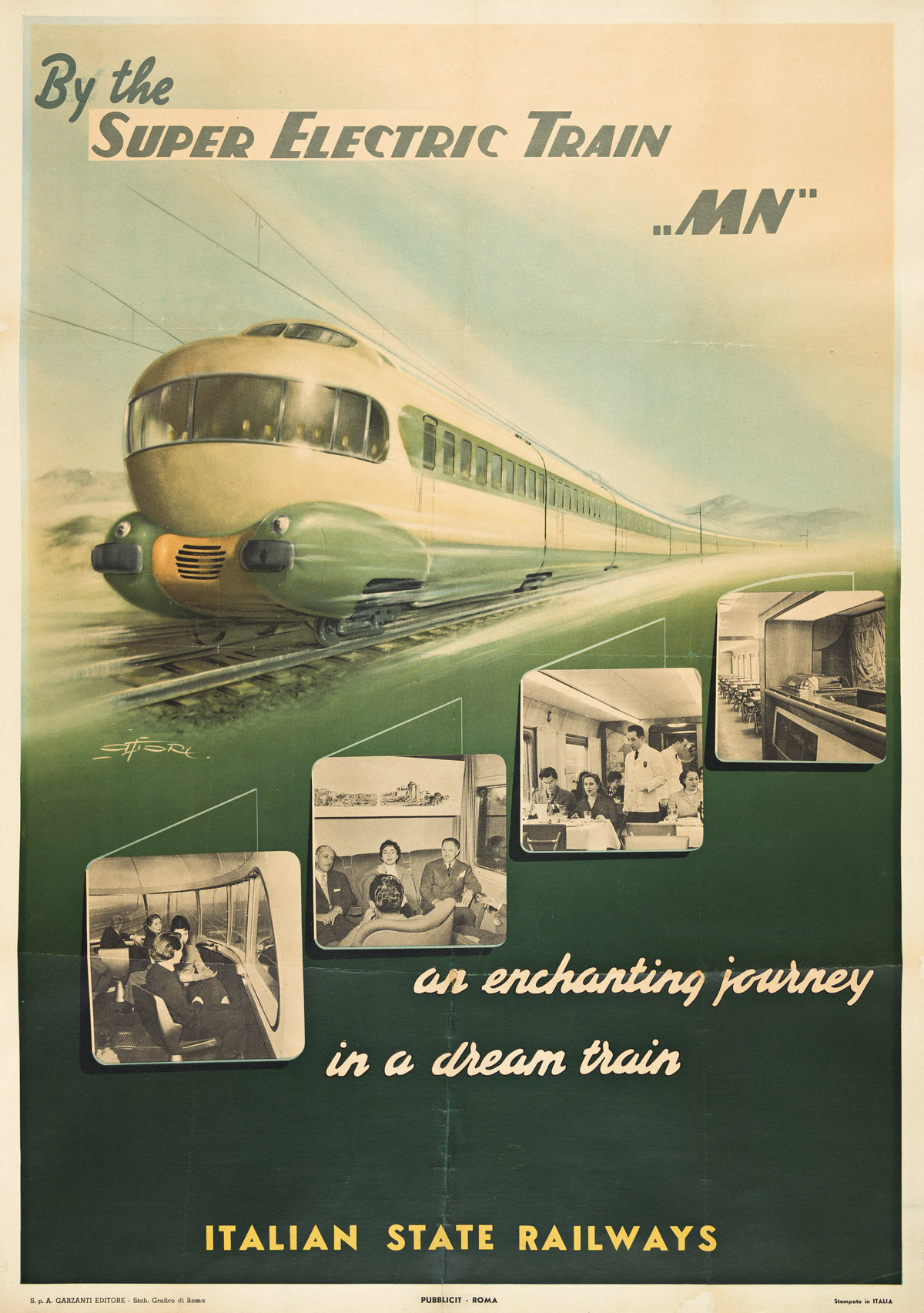
BY THE SUPER ELECTRIC TRAIN “MN” / ITALIAN STATE RAILWAYS. C.1960.

Amelto Fiore, 1920-2008. Original poster.

LIVORNO. 1910. F. Brignola. Poster.

“1910 Italy, inaugurating the Livorno-Cecina railway and expanding the port. Mercury, the god of financial gain and commerce, glows under the setting sun as he draws our attention to the various modes of transit offered to us earthly beings.”

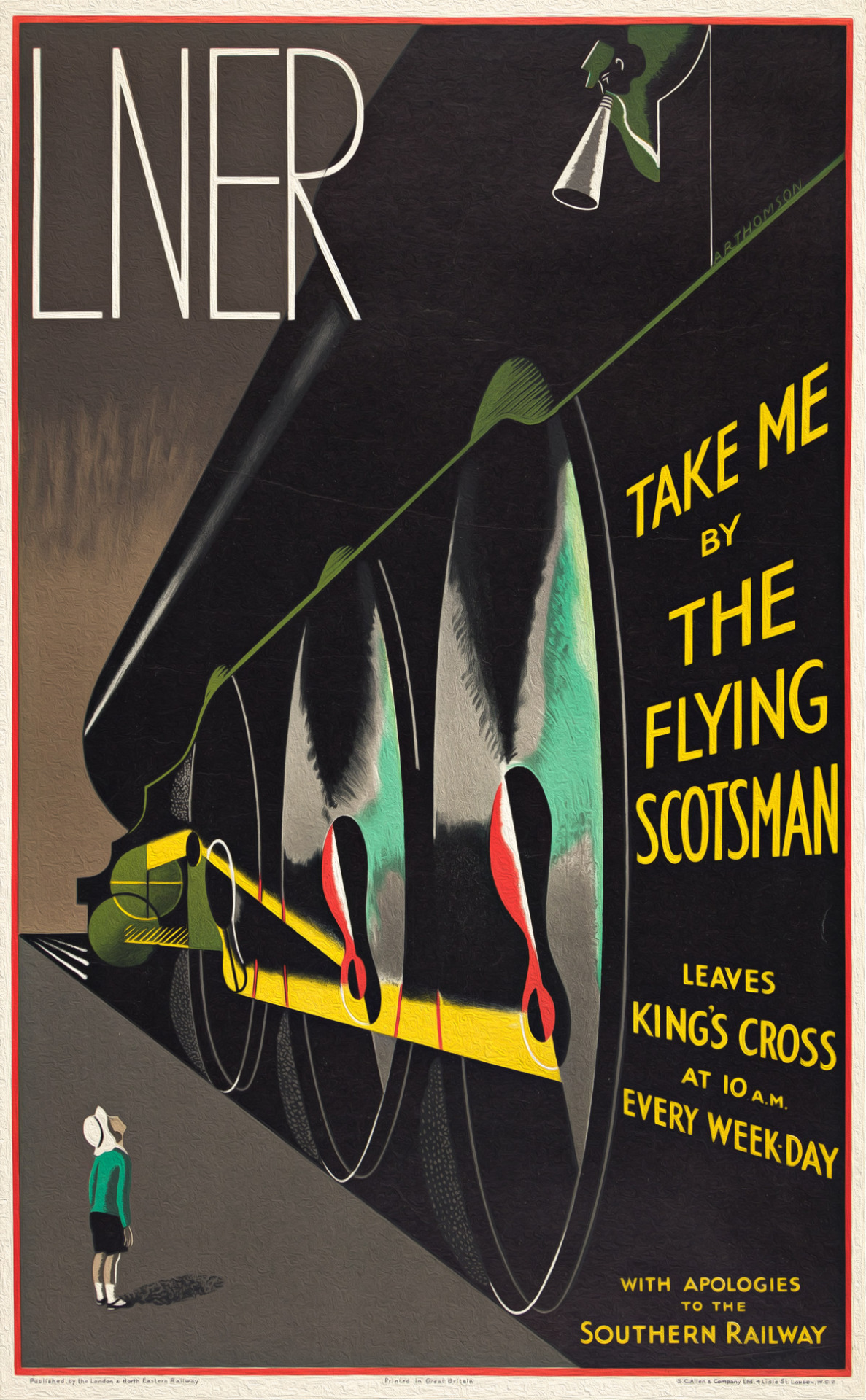
LNER / TAKE ME BY THE FLYING SCOTSMAN. C. 1936.

ALFRED REGINALD THOMSON (1895-1979).

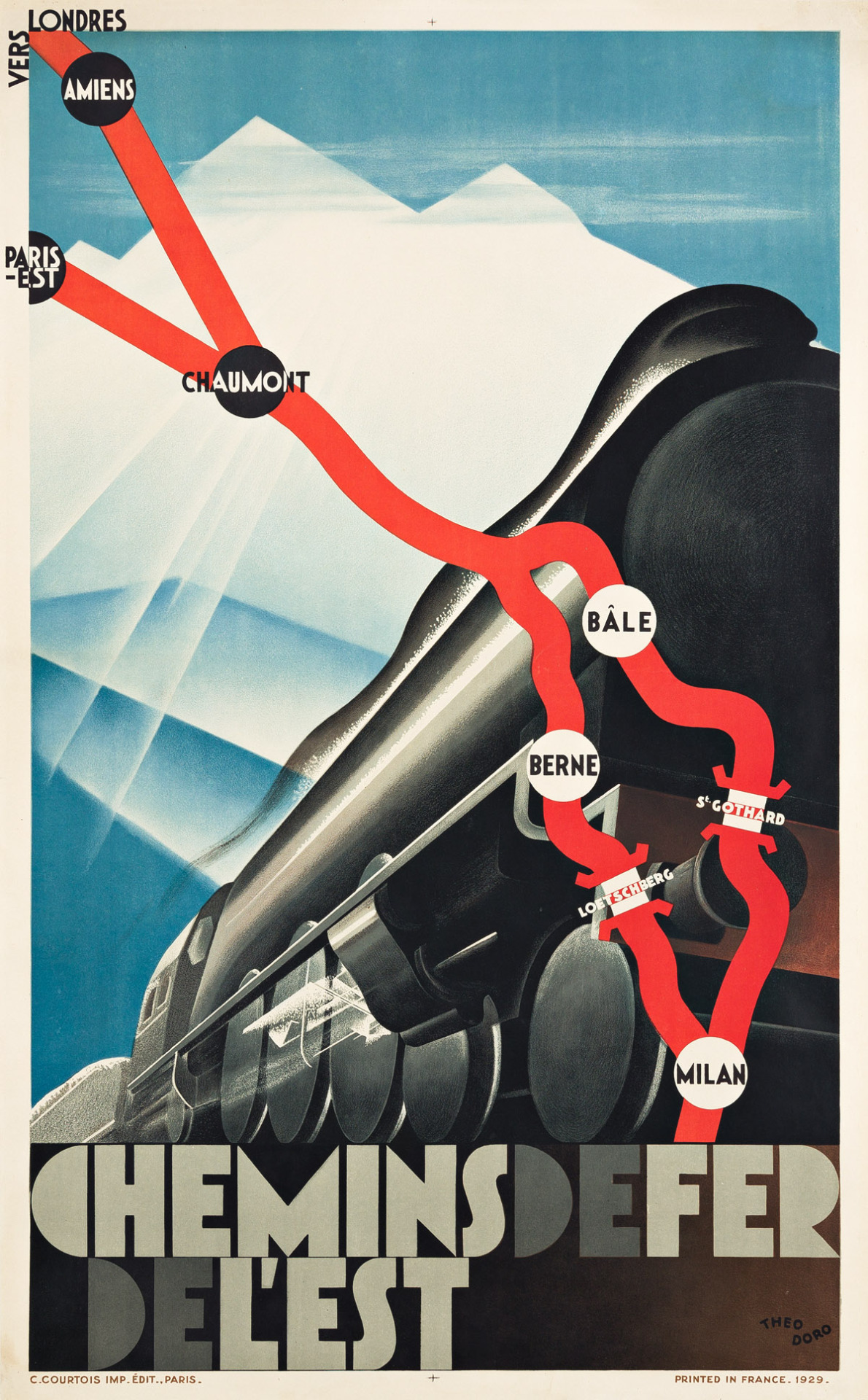
Chemins de fer de l’est, 1929. Theodoro (Theodore Pfeifer, 1896-1973

39 ¾ Hours to Chicago!/City of San Francisco, 1936. Unknown designer.

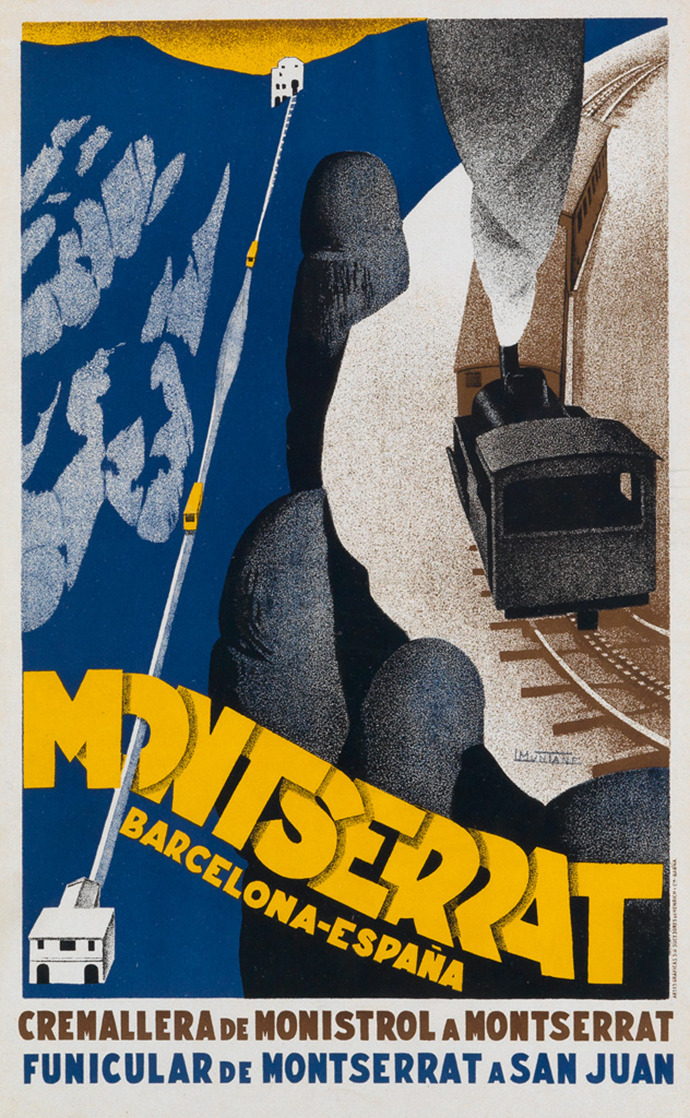
Montserrat by train, travel poster, 1930s.


Posted in Art, Europe, History, Public Transport, Tourism | Tagged , | Leave a comment

A Secret London

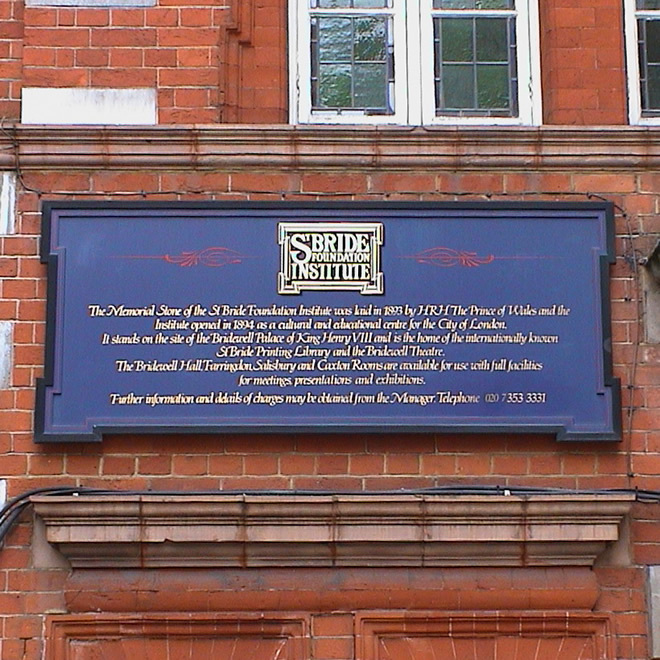
No matter how well you may think that you know London there are always more marvelous places to discover. Travelers interested in books and printing are well advised to seek out the fascinating St Bride Foundation and Library in the City of London.

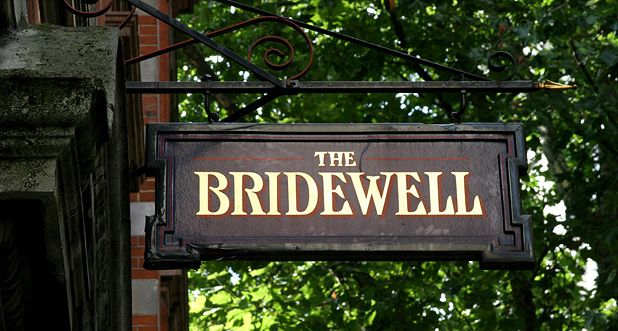
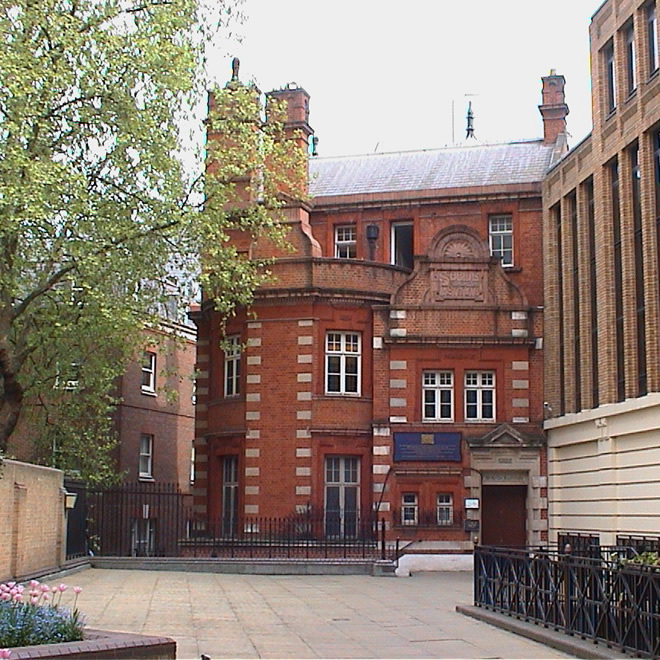
St Bride Library (formerly known as St Bride Printing Library and St Bride Typographical Library) is a library in London primarily devoted to printing, book arts, typography and graphic design. The library is housed in the St Bride Foundation Institute in Bride Lane, a small street leading south of Fleet Street near its intersection with New Bridge Street. The Library is named after the nearby church, St Bride’s Church.

St Bride Library opened on 20 November 1895 as a technical library for the printing school and printing trades. The library remained, as the school relocated in 1922 to become what is now known as the London College of Communication. The library’s collection has grown to incorporate a vast amount of printing-related material numbering about 65,000 books and pamphlets.

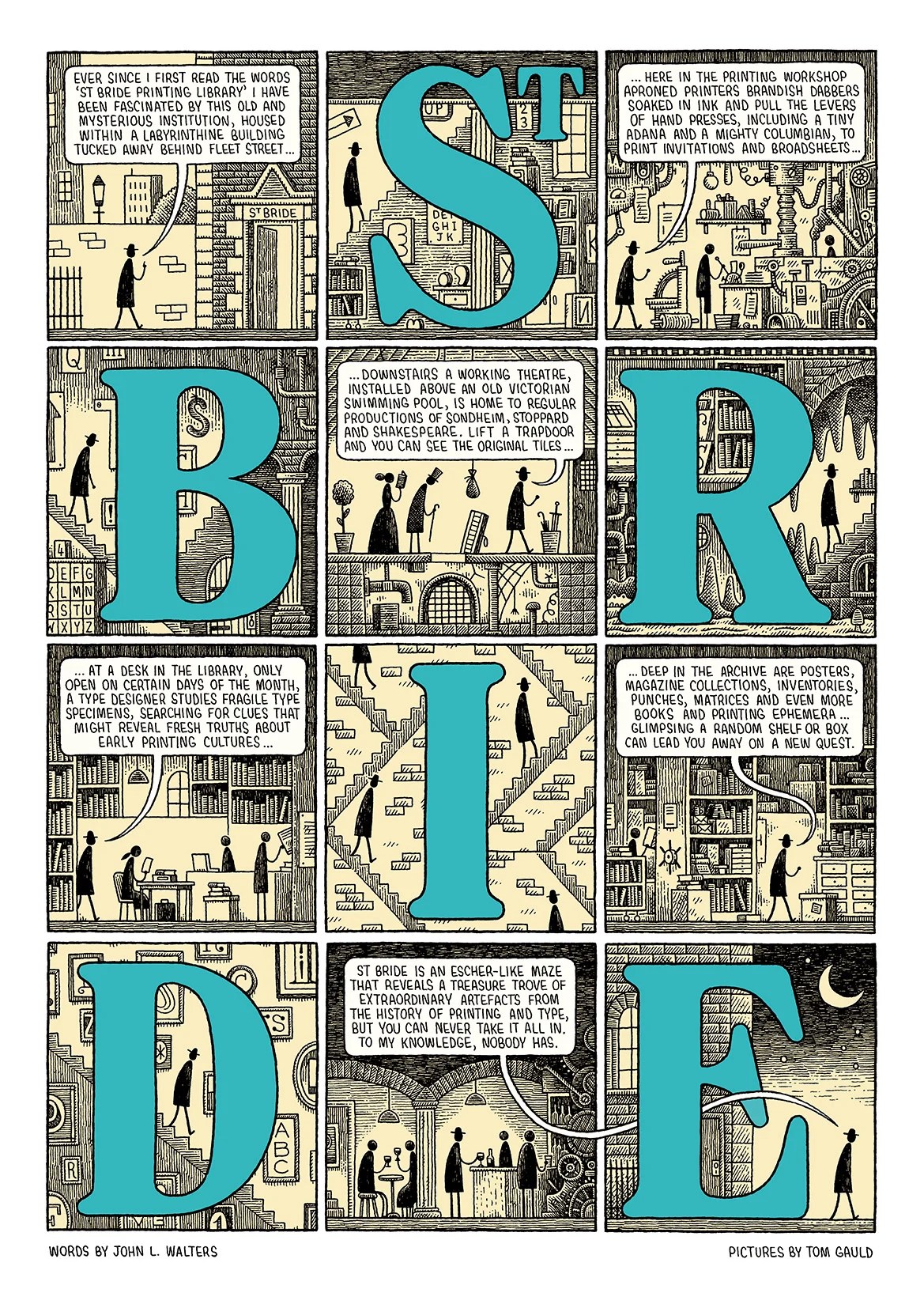
The Library recently announced that a new edition of a poster created exclusively for the St Bride Foundation by John L. Walters and Tom Gauld will be available this month. All proceeds from the sale of this poster will help fund the upkeep of the listed Victorian building, management and conservation of our unique and irreplaceable library collections and running of our print workshop and learning program.


Posted in Books, History, Libraries, Tourism | Tagged , , | Leave a comment

Who Made That

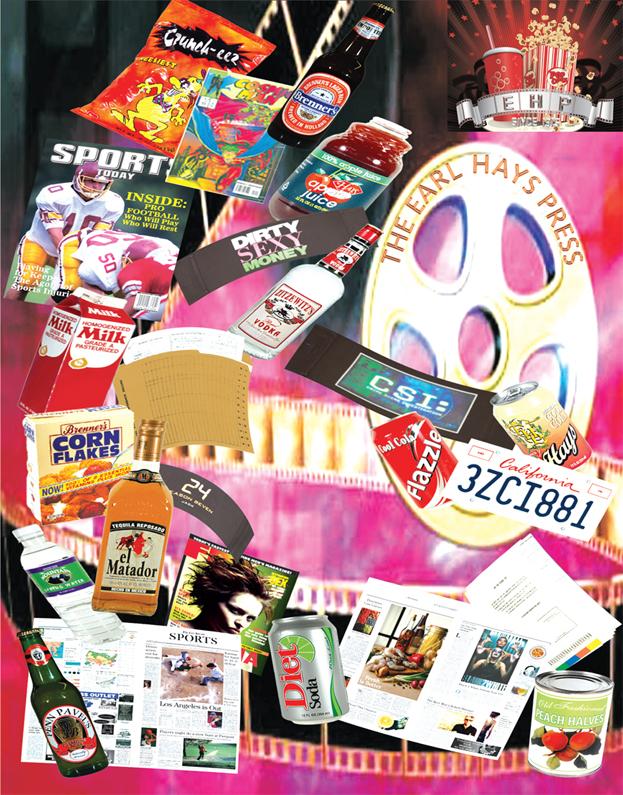
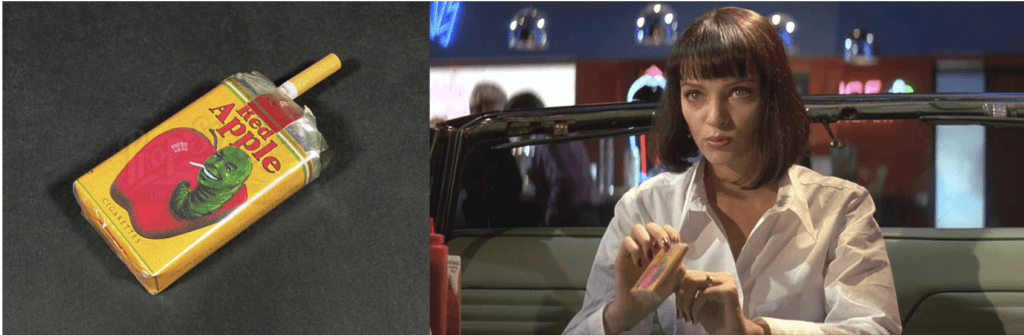
Many years ago, as I was watching one of my all time favorite films Pulp Fiction, I noticed that many of the charcters were smoking a peculiar brand of cigarette called Red Apple. For a moment I wondered who created the prop packaging and then promptly forgot about it. I recently ran across a marvelous video that explains how all of those fake products, documents, signs, and periodicals get produced.

If the video fails to open, please click here.


Posted in Art, movies | Tagged , , | 1 Comment