DIMINISHED GALLERIES
Keith Waldrop
1932-2023
DIMINISHED GALLERIES
Keith Waldrop
1932-2023
Dozens of indie bookshops in Philadelphia, Pa., are taking part this Saturday, August 26, in the first-ever Philly Bookstore Crawl, Philly Voice reported.
The bookstore crawl will feature appearances from local authors, discounts, giveaways, and plenty of special activities. Iffy Books, for example, will have a coding workshop for children and adults, while A Novel Idea will host florist pop-up Books & Blooms.
Harriett’s Bookshop, which has been closed while the owner has operated a pop-up in Paris, will reopen during the crawl, and the new bookstore Healing While Black will host a grand opening celebration.
More details about the event, an interactive map, and a full list of participating stores, can be found here.
I was happily surprised to learn that Penguin Modern Classics has revived its crime and espionage series with titles by the likes of Josephine Tey, John le Carré, Len Deighton and Chester Himes, published with an updated version of their “bottle-green” covers.

After being discontinued almost 30 years ago, the revived series, which is published in 10-book tranches, is being curated by author and Penguin Press publishing director Simon Winder. The publisher said the revival of Penguin Crime and Espionage “has seen Simon dig deep into the archives, reading hundreds of books to determine which of our existing titles should make the list, and which titles, previously not published by Penguin, should have been included years ago.”

The first 10 titles to be published will be: Call for the Dead by John le Carré; SS-GB by Len Deighton; Maigret and the Headless Corpse by Georges Simenon; In a Lonely Place by Dorothy B Hughes; Cotton Comes to Harlem by Chester Himes; The Franchise Affair by Josephine Tey; Beast in the Shadows by Edogawa Rampo; Journey into Fear by Eric Ambler; The Drowning Pool by Ross Macdonald; and The Night of the Hunter by Davis Grubb.
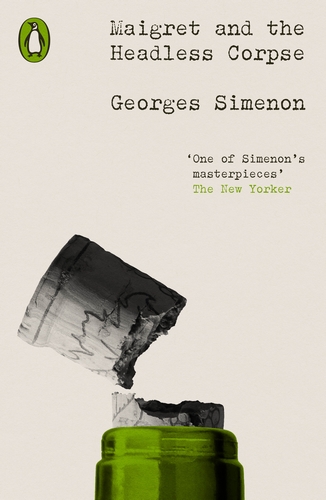
Winder said: “Penguin Modern Classics is one of the great publishers of crime and suspense fiction. I thought it would be enjoyable to pick out some highlights, add some new titles and revive the wonderful green livery Penguin used to use for all its crime fiction.
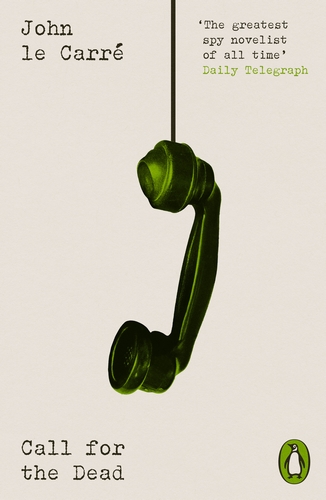
“These books are united by atmosphere, anxiety, a strong sense of time and place, and an often appalling ingenuity, both on behalf of the authors and their characters. They have also all aged very well, gaining an additional pleasure from shifts in manners, clothes, wisecracks, politics, murder weapons and potential alibis.
“The novels were designed to be entertainments, albeit sometimes of a very dark kind, and they all plumb extremes. Fear of fascism or communism, fear of the anonymous city or of a fetid swamp, fear of vast global conspiracies or of just one rather odd family member with a glint in his eye.”
The publisher added: “For lifelong crime lovers, who will no doubt be as excited as we are for the return of the bottle-green jackets as well as the previously unpublished titles, to new readers unsure where to start with the formidable back catalogues of Georges Simenon, Eric Ambler, or Len Deighton, the Penguin Crime and Espionage series is a collection of gems showcasing the best of the Golden Age of Crime.”

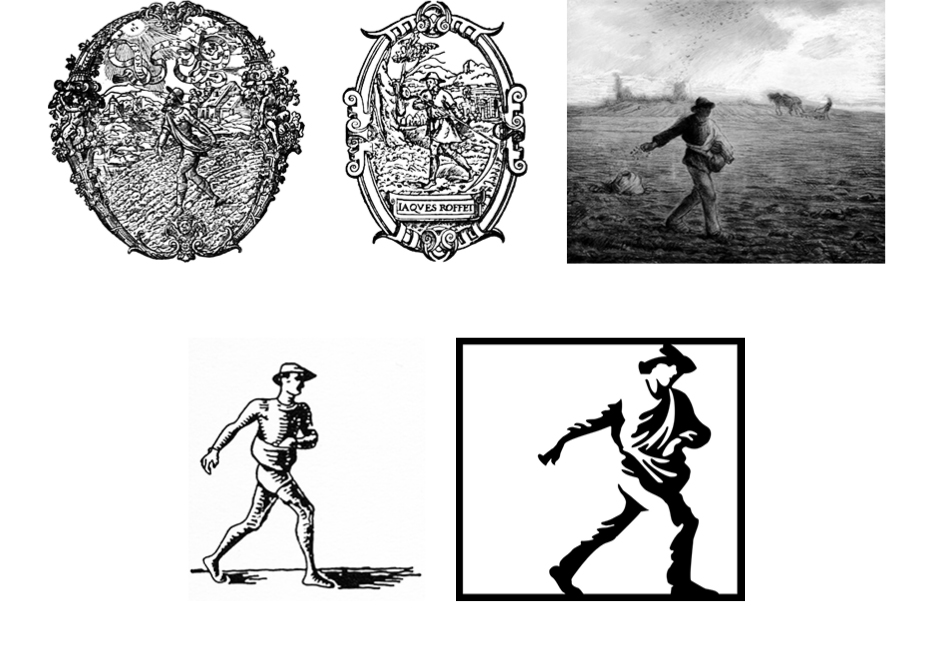
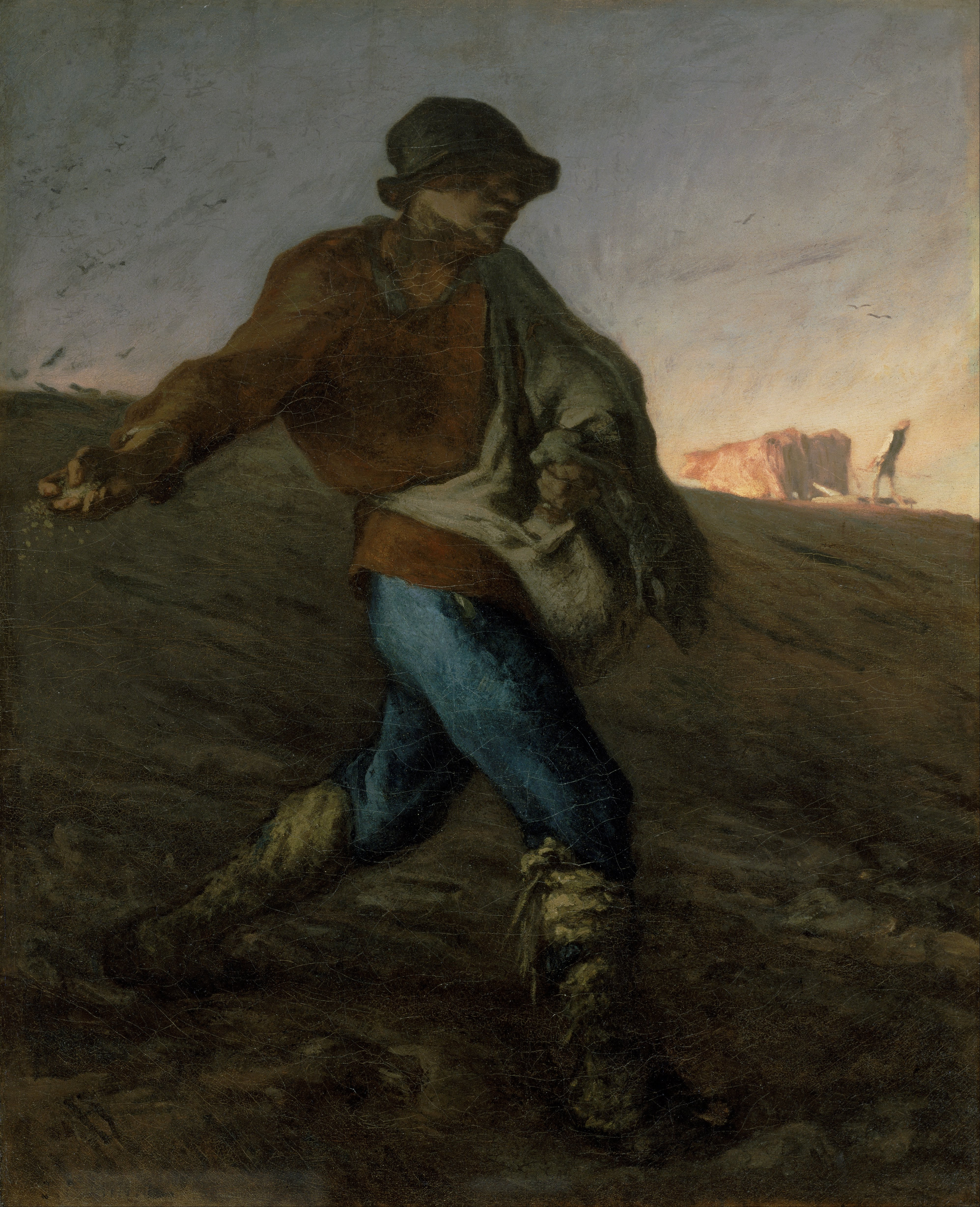
The recent sale of the U.S. publishing house Simon & Schuster to some soulless private equity company that will probably sell it for parts reminded me of the story of the creation of the firm’s colophon. Richard Simon and Lincoln Schuster stumbled upon “The Sower,” a painting by Jean François Millet, as they strolled through a gallery during their first week of publishing. It occurred to them that the image of a man sowing grain was the perfect publishing metaphor for “planting seeds of wisdom.” So they hired John Everett Millais to render a reproduction of the painting for their colophon. This story suggests that they were possibly unaware of the long tradition of using agricultural symbolism to brand presses, with Jean De Tournes (est. 1542) and J. Roffet (est. 1549) as two examples.
I was recently directed to a film that is likely to appeal only to bibliophiles, writers, and cinephiles. So, of course, I assumed that it was right up your alley as they say in oldtimey America.
Most booklovers that I know dream of someday owning their own bookshop. The Finnish film The Last Bookshop of the World (La Última Librería del Mundo), written and directed by filmmaker Rax Rinnekangas, is a chronicle of a literary odyssey by four European friends, each speaking a different language (French, Finnish, German, Spanish) who set off in a book-filled van, traversing a barren landscape (the Basque desert region) to an isolated destination where they plan to fulfill a shared bookshop.
The Last Bookshop of the World seems to be available only through Kanopy, a digital film service for libraries and public universities, or the free streaming service Tubi. It’s guaranteed to touch the heart of all who dream the bookstore dream.
อย่าข้ามทางรถไฟก่อนหยุดดูซ้าย ขวา
Do not cross the train tracks before stopping to look both ways first
Those of you who stop by Travel Between The Pages on a regular basis are well aware of my fondness for railway and transportation posters. This set of safety posters for Thai Railways puts the graphic in graphic design. Fair warning, they maybe a bit gruesome for some tastes.
อย่าเดินชิดทางรถไฟ
Do not walk close to the train tracks
เดินในย่านสถานีระวังประแจหนีบ
Be careful of the switch rail
อย่าเดินผ่านช่องต่อรถจะถูกรถบีบ
Don’t walk between carriages
อย่านอนบนทางรถไฟ
Do not lie down on the tracks
อย่าขึ้นลงขณะรถกำลังเคลื่อน
Do not get on or off while the train is moving
อย่ายืนชิดขอบชาน จะถูกรถชน
Don’t stand close to the edge of the platform or you’ll be hit by a train
อย่าโดยสารบนหลังคารถ
Do not ride on the roof of the train
ก่อนเดินข้ามสะพานรถไฟดูรถให้ดี
Before crossing a train bridge look out carefully for trains
This Is Just To Say
I have eaten
the plums
that were in
the icebox
and which
you were probably
saving
for breakfast
Forgive me
they were delicious
so sweet
and so cold
-William Carlos Williams
I have been a fan of Terry Pratchett’s Discworld series for decades. Although the books don’t get the attention they deserve in the U.S., the fan base is growing. Maybe the rise of the wacky “flat earth” movement will create more interest in the fantasy series.
Last week, a new Royal Mail stamp collection that celebrates Terry Pratchett’s fantasy Discworld series, and the 40th anniverary of its first book, The Colour of Magic was released. The eight special stamps feature some of Discworld’s favorite characters including Rincewind, The Librarian, Granny Weatherwax, Sam Vimes, and Great A’Tuin, as well as specially commissioned artworks of Death and Mort, Tiffany Aching and Moist von Lipwig – all created by Terry Pratchet’s illustrator of choice, Paul Kidby.
Pratchett has long been regarded as one of the UK’s greatest fantasy writers. His Discworld series encompasses 41 novels that have been translated into over 40 languages, with more than a hundred million copies sold worldwide. If you’re not familiar with Discworld, it’s a flat, circular planet revolving on the shoulders of four giant elephants who stand atop a vast star turtle called the Great A’Tuin. This turtle is 10,000 miles long and of the species Chelys galactica. Its shell is scarred with meteor craters, and its eyes are as big as seas.
Illustrator Paul Kidby is behind the Royal Mail stamp collection that celebrates Terry Pratchett’s Discworld series.