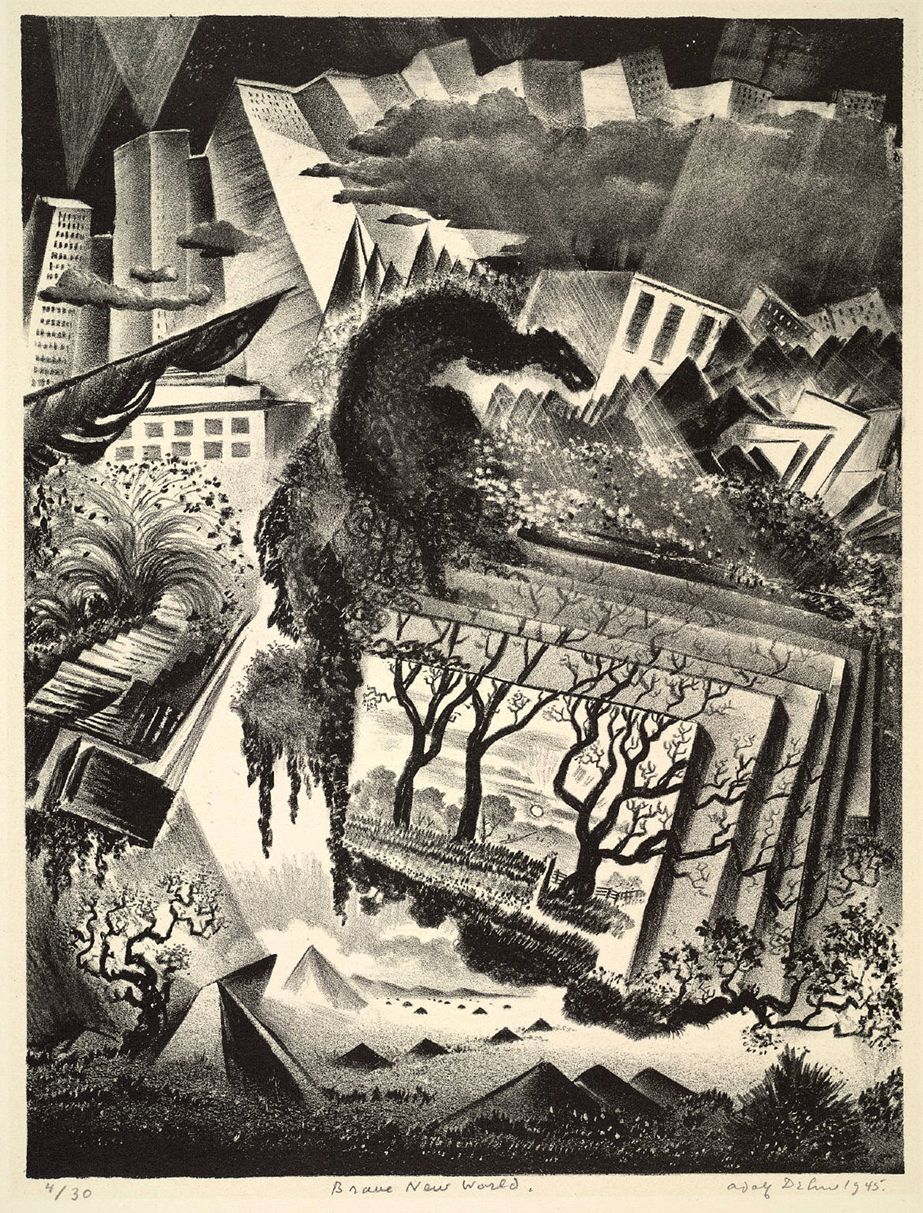
Brave New World, 1945. Adolph Arthur Dehn. Lithograph on wove paper.
“Chronic remorse, as all the moralists are agreed, is a most undesirable sentiment. If you have behaved badly, repent, make what amends you can and address yourself to the task of behaving better next time. On no account brood over your wrongdoing. Rolling in the muck is not the best way of getting clean.”
― Aldous Huxley, Brave New World
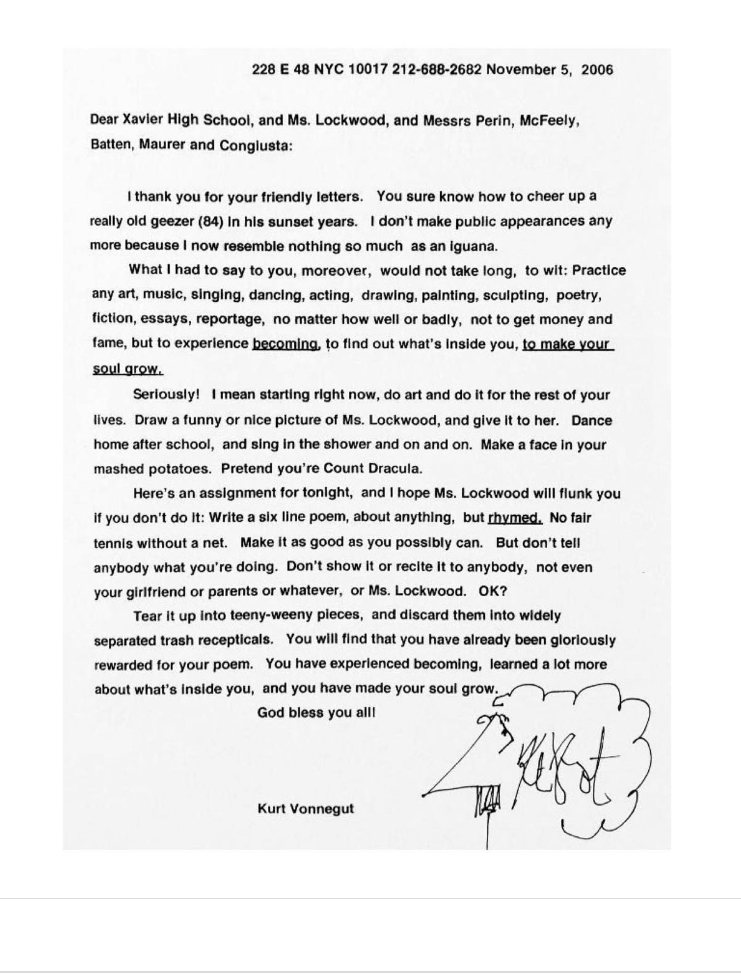
In 2006, Ms. Lockwood, an English teacher at Xavier High School in New York City, gave her students an assignment to write persuasive letters inviting their favorite authors to the school. Five students chose Kurt Vonnegut. Though 84-year-old Vonnegut couldn’t make the visit, he sent a wonderful letter filled with sound advice. He was the only author who responded to the students.
November 5, 2006
Dear Xavier High School, and Ms. Lockwood, and Messrs Perin, McFeely, Batten, Maurer and Congiusta:
I thank you for your friendly letters. You sure know how to cheer up a really old geezer (84) in his sunset years. I don’t make public appearances any more because I now resemble nothing so much as an iguana.
What I had to say to you, moreover, would not take long, to wit: Practice any art, music, singing, dancing, acting, drawing, painting, sculpting, poetry, fiction, essays, reportage, no matter how well or badly, not to get money and fame, but to experience becoming, to find out what’s inside you, to make your soul grow.
Seriously! I mean starting right now, do art and do it for the rest of your lives. Draw a funny or nice picture of Ms. Lockwood, and give it to her. Dance home after school, and sing in the shower and on and on. Make a face in your mashed potatoes. Pretend you’re Count Dracula.
Here’s an assignment for tonight, and I hope Ms. Lockwood will flunk you if you don’t do it: Write a six line poem, about anything, but rhymed. No fair tennis without a net. Make it as good as you possibly can. But don’t tell anybody what you’re doing. Don’t show it or recite it to anybody, not even your girlfriend or parents or whatever, or Ms. Lockwood. OK?
Tear it up into teeny-weeny pieces, and discard them into widely separated trash recepticals. You will find that you have already been gloriously rewarded for your poem. You have experienced becoming, learned a lot more about what’s inside you, and you have made your soul grow.
MIT Press Bookstore bookseller Barry Duncan stumbled onto the book “An Almanac of Words at Play” four decades ago and it changed his life. Duncan discovered that words could go backwards. The realization set him on a course he would follow for years. For fun, and then out of habit, he began reversing words he saw in print, noticing words that took on new meaning when flipped, and writing sentences that could be read backward and forward — palindromes.
Duncan’s palindromes have been featured in galleries, selected anthologies, and are the subject of a documentary. He’s written 800-word epics that don’t lose their meaning when flipped. He’s written reversible poems and tributes that were used as auction prizes. And he’s written countless palindromes to serve as gifts for birthdays, anniversaries, and other occasions. But, mostly, though, Duncan just writes palindromes for fun.
“I hope it gives people an idea of what can be accomplished in two directions,” he says. “Of course, I also hope that people will appreciate them. It’s always better if the person or organization for whom you’ve written a palindrome replies in a positive way. “
“The thing I really want to do is establish palindrome writing as a literary form, to show people you can write palindromes that are beautiful and funny and factual and have real literary merit,” he says.
NB: if the video above fails to launch in your email, please click here.
We'll say unbelievable things
to each other in the early morning—

our blue coming up from our roots,
our water rising in our extraordinary limbs.

All night I dreamt of bonfires and burn piles
and ghosts of men, and spirits
behind those birds of flame.

I cannot tell anymore when a door opens or closes,
I can only hear the frame saying, Walk through.

It is a short walkway—
into another bedroom.

Consider the handle. Consider the key.

I say to a friend, how scared I am of sharks.

How I thought I saw them in the creek
across from my street.

I once watched for them, holding a bundle
of rattlesnake grass in my hand,
shaking like a weak-leaf girl.

She sends me an article from a recent National Geographic that says,

Sharks bite fewer people each year than
New Yorkers do, according to Health Department records.

Then she sends me on my way. Into the City of Sharks.

Through another doorway, I walk to the East River saying,

Sharks are people too.
Sharks are people too.
Sharks are people too.

I write all the things I need on the bottom
of my tennis shoes. I say, Let's walk together.

The sun behind me is like a fire.
Tiny flames in the river's ripples.

I say something to God, but he's not a living thing,
so I say it to the river, I say,

I want to walk through this doorway
But without all those ghosts on the edge,
I want them to stay here.
I want them to go on without me.

I want them to burn in the water.
In 2022, Ada Limón was appointed the United States poet laureate. Born on March 28, 1976, she is originally from Sonoma, California. As a child, she was greatly influenced by the visual arts and artists, including her mother, Stacia Brady. In 2001, Limón received an MFA from the creative writing program at New York University.
Limón’s first collection of poetry, Lucky Wreck (Autumn House Press, 2006), was the winner of the 2005 Autumn House Poetry Prize. She is also the author of The Hurting Kind (Milkweed Editions, 2022); The Carrying (Milkweed Editions, 2018); Bright Dead Things (Milkweed Editions, 2015), which was a finalist for the National Book Award; Sharks in the Rivers (Milkweed Editions, 2010); and This Big Fake World (Pearl Editions, 2006), winner of the 2005 Pearl Poetry Prize. Of Limón’s work, the poet Richard Blanco writes, “Both soft and tender, enormous and resounding, her poetic gestures entrance and transfix.”
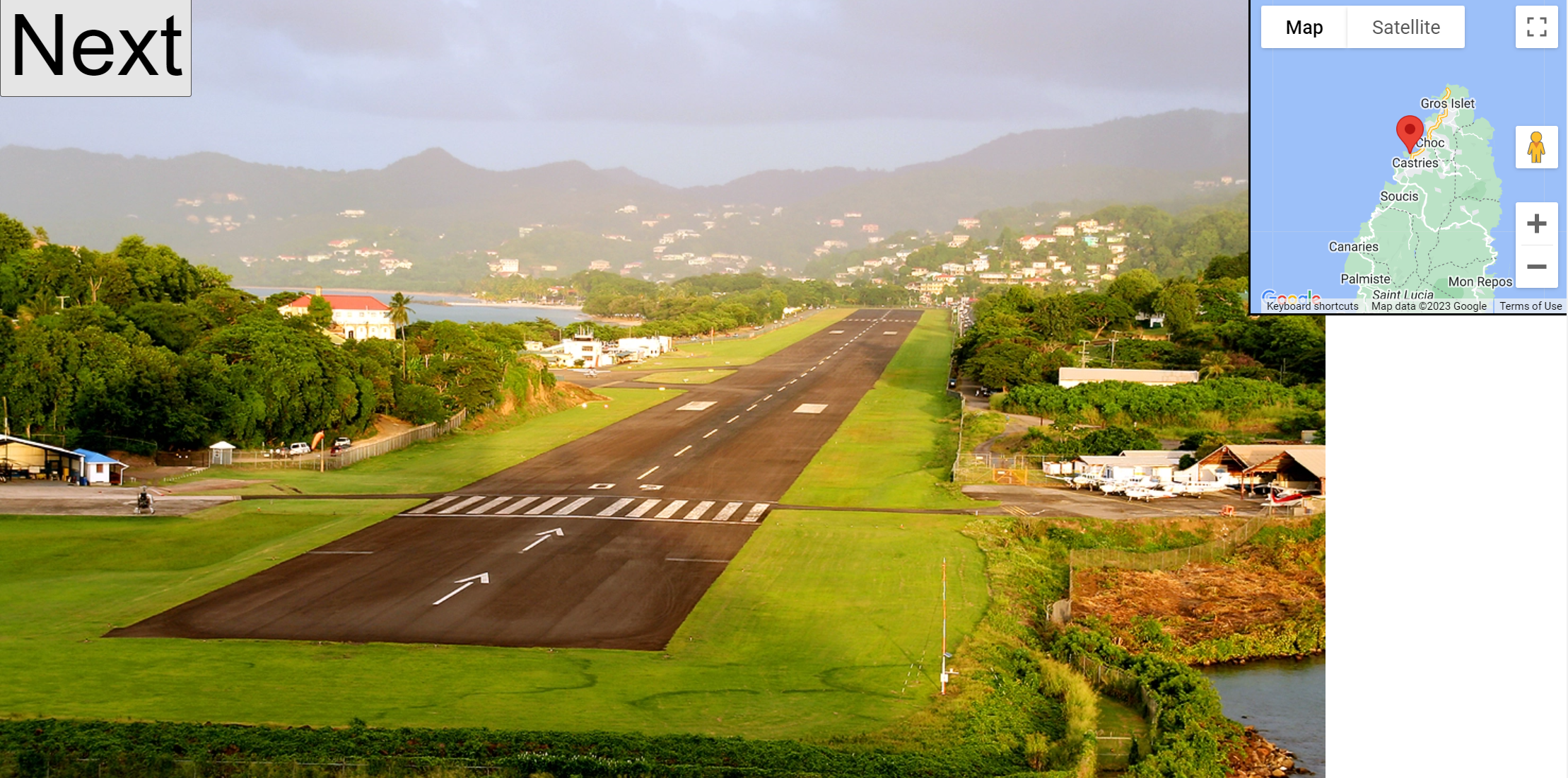
Random Airports: I was recently reminiscing with two of my closest cousins about trips to the airport when we were children. Back in the olden days it was actually possible to enjoy a visit to an airport to pick-up or drop-off a traveler. Now the Random Airports website allows us to see airports, both large and small, with a click of a mouse. It is amazing to see the variety of airports around the world and their sometimes unlikely placement. I’ve landed at some amazing airfields over the years, from a jungle airstrip near Chichen Itza in Mexico to a gravel strip on the island of Naxos. So, I’m loving this website.
One of my longest running travel obsessions has been the extraordinary island nation of Iceland. I’ve been lucky enough to have been visiting there for more than 40 years. In some ways Iceland has experienced amazing changes during the last 4 decades. When I first visited Reykjavik, it was barely a city with a population under 50,000. Now the nation’s capital is a booming cosmopolitan metro region with nearly 250,000 residents. But the entire population of Iceland is still only around 350,000 and once you leave the capital region the country remains wild and undeveloped.
I recently discovered the fantastic video below which was shot by Joshua Turner during the summer of 2021. Locations include Fagradalsfjall volcano, Svinafellsjokull glacier, Hengifoss waterfall, Mulagljufur canyon, Vestmannaeyjar, Seydisfjordur, Haifoss waterfall, Fjaðrárgljúfur canyon, Hvitserkur, Vik, Sólheimajökull glacier, and Selfoss waterfall. The amazing video was shot entirely with the DJI FPV Drone with a gopro Hero 8 mounted on top. It’s just 6 minutes, but is a dazzling experience.
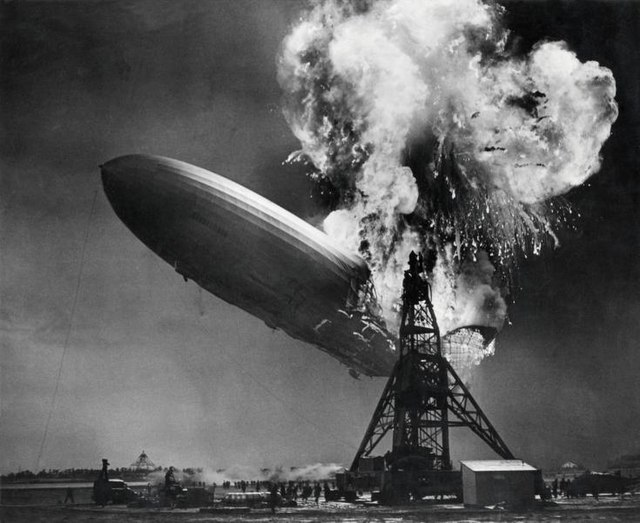
Last week, I ran across three different references to an eye-opening documentary titled A History of the World According to Getty Images. This impressive video created by British filmmaker Richard Misek explores the way that historic films are hidden from public view by paywalls from a few corporations that charge exorbitant fees for access. Much of this historic material is technically in the public domain or was never under copyright.
Misek’s video aims to release these images from “captivity.” Starting with a montage of dramatic historical footage followed by a roundup of the high price-tag they command, Misek then dives into a series of clips one at a time to detail their history, including how visual media companies have exploited them. Ultimately, he makes a compelling argument that this murky practice has major public interest implications that extend far beyond the high price-tag for filmmakers.
From Misek’s website:
‘A History of the World According to Getty Images’ is a short documentary about property, profit, and power, made out of archive footage sourced from the online catalogue of Getty Images. It forms a historical journey through some of the most significant moments of change caught on camera, while at the same time reflecting on archive images’ own histories as commodities and on their exploitation as ‘intellectual property’.
As the largest commercial image archive in the world, Getty Images is particularly worthy of attention here. Many of the defining images of the last century – for example, the Apollo moon landings and the first breach of the Berlin Wall – are owned by Getty. These images live in our heads, and form a part of our collective memory. But in most cases, we cannot access them, as they are held captive behind Getty’s (as well as many other archives’) paywalls.
The film explores how image banks including Getty gain control over, and then restrict access to, archive images – even when these images are legally in the public domain. It also forms a small act of resistance against this practice: the film includes six legally licensed clips, and is downloadable as an HD ProRes file. In this way, it aims to liberate these few short clips from corporate control, and make them freely available for viewing and artistic use.
Good books are friendly things to own.
If you are busy they will wait.
They will not call you on the phone
Or wake you if the hour is late.
They stand together row by row,
Upon the low shelf or the high.
But if you’re lonesome this you know:
You have a friend or two nearby.
The fellowship of books is real.
They’re never noisy when you’re still.
They won’t disturb you at your meal.
They’ll comfort you when you are ill.
The lonesome hours they’ll always share.
When slighted they will not complain.
And though for them you’ve ceased to care
Your constant friends they’ll still remain.
Good books your faults will never see
Or tell about them round the town.
If you would have their company
You merely have to take them down.
They’ll help you pass the time away,
They’ll counsel give if that you need.
He has true friends for night and day
Who has a few good books to read.
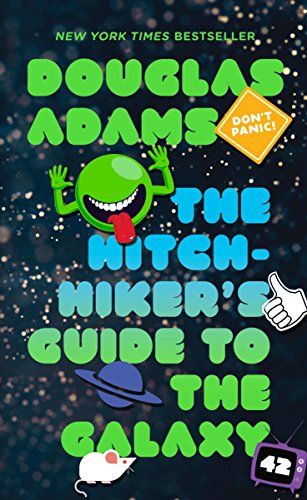
If you read yesterday’s post on a list of the 50 best sci-fi books, you may have noted that it included The Hitchhiker’s Guide to the Galaxy by Douglas Adams. I have been a life-long fan of Adams’ brilliant books and have been known to annoy unsuspecting folks with quotes from “the Guide”. Recently, I ran across a very funny letter that Adams sent to an American publisher who was working on a U.S. comic book version of the Hitchhiker. You don’t have to be a fan to appreciate the humor.
January 13th, 1992
Dear Byron,
Thanks for the script of the novel… I’ll respond as quickly and briefly as possible.
One general point. A thing I have had said to me over and over again whenever I’ve done public appearances and readings and so on in the States is this: Please don’t let anyone Americanise it! We like it the way it is!
There are some changes in the script that simply don’t make sense. Arthur Dent is English, the setting is England, and has been in every single manifestation of The Hitchhiker’s Guide to the Galaxy ever. The ‘Horse and Groom’ pub that Arthur and Ford go to is an English pub, the ‘pounds’ they pay with are English (but make it twenty pounds rather than five – inflation). So why suddenly ‘Newark’ instead of ‘Rickmansworth’? And ‘Bloomingdales’ instead of ‘Marks & Spencer’? The fact that Rickmansworth is not within the continental United States doesn’t mean that it doesn’t exist! American audiences do not need to feel disturbed by the notion that places do exist outside the US or that people might suddenly refer to them in works of fiction. You wouldn’t, presumably, replace Ursa Minor Beta with ‘Des Moines’. There is no Bloomingdales in England, and Bloomingdales is not a generic term for large department stores. If you feel that referring to ‘Marks & Spencer’ might seriously freak out Americans because they haven’t heard of it… we could either put warning stickers on the label (‘The text of this book contains references to places and institutions outside the continental United States and may cause offence to people who haven’t heard of them’) or you could, I suppose, put ‘Harrods’, which most people will have heard of. Or we could even take the appalling risk of just recklessly mentioning things that people won’t have heard of and see if they survive the experience. They probably will – when people are born they haven’t heard or anything or anywhere, but seem to get through the first years of their lives without ill-effects.
Another point is something I’m less concerned about, but which I thought I’d mention and then leave to your judgement. You’ve replaced the joke about digital watches with a reference to ‘cellular phones’ instead. Obviously, I understand that this is an attempt to update the joke, but there are two points to raise in defence of the original. One is that it’s a very, very well known line in Hitch Hiker, and one that is constantly quoted back at me on both sides of the Atlantic, but the other is that there is something inherently ridiculous about digital watches, and not about cellular phones. Now this is obviously a matter of opinion, but I think it’s worth explaining. Digital watches came along at a time that, in other areas, we were trying to find ways of translating purely numeric data into graphic form so that the information leapt easily to the eye. For instance, we noticed that pie charts and bar graphs often told us more about the relationships between things than tables of numbers did. So we worked hard to make our computers capable of translating numbers into graphic displays. At the same time, we each had the world’s most perfect pie chart machines strapped to our wrists, which we could read at a glance, and we suddenly got terribly excited at the idea of translating them back into numeric data, simply because we suddenly had the technology to do it.
So digital watches were mere technological toys rather than significant improvements on anything that went before. I don’t happen to think that’s true of cellular comms technology. So that’s why I think that digital watches (which people still do wear) are inherently ridiculous, whereas cell phones are steps along the way to more universal communications. They may seem clumsy and old-fashioned in twenty years time because they will have been replaced by far more sophisticated pieces of technology that can do the job better, but they will not, I think, seem inherently ridiculous.
‘Disused lavatory’ has been changed to ‘unused lavatory’ and I’m not sure why. To me ‘unused’ suggests that something is new and unsullied, whereas ‘disused’ suggests that it has fallen into disuse and might therefore be in a derelict state, which is what I meant.
I’d be careful of underlining jokes. For instance, there’s a line that ends ‘which is odd, because on the whole it wasn’t the small green pieces of paper that were unhappy.’ All I’m saying there is that the banknotes were not the things that were unhappy. Not that they were positively happy. The point is that the banknotes are actually completely irrelevant. It isn’t their problem. So I’m not sure about having the queen grinning broadly on the notes. (Incidentally, I noticed a few years ago, when we still had £1 notes, that the Queen looked very severe on £1 notes, less severe on five pound notes, and so on, all the way up to £50 notes. If you had a £50 the queen smiled at you very broadly). Another thing to think about here is this: this opening section is about Earth as a whole rather than England, so given that dollars are still the most widely recognised currency on Earth, it makes quite good sense to show a greenback. Also dollars don’t change. English notes are always being redesigned the whole time as they get to be worth less and less.
One other thing. I’d rather have characters say ‘What do you mean?’ than ‘Whadd’ya mean?’ which I would never, ever write myself, even if you held me down on a table and threatened me with hot skewers.
I read quite a lot of science fiction. My reading habits were informed early in childhood by my love of writers such as Ray Bradbury and Isaac Asimov. These days I find myself leaning towards post-apocalyptic sci-fi and space operas. So, I perked up when I saw an article titled “The 50 Best Sci-Fi Books of All Time” on the Esquire website.
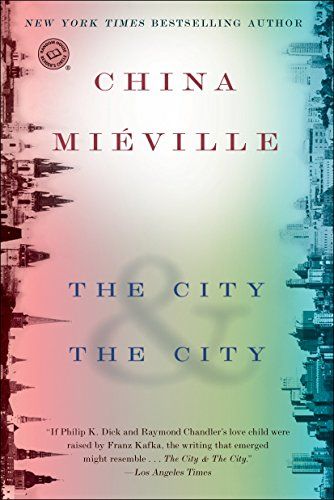
Like most things, reading tastes tend to be very subjective and changeable with time. Therefore I won’t waste your time quibbling with the editor’s choice of novels for this monumental list. I will, however, offer kudos for including some of my favorite iconic books like The Left Hand of Darkness and A Canticle for Leibowitz, and more recent standouts such as Tade Thompson’s award-winning Wormwood Trilogy Rosewater and the mind-blowing Annihilation by Jeff Vandermeer. My absolute top suggestion from the list of a must read is The City & The City, by China Miéville. If you have not yet read this masterpiece, stop everything and get a copy now.
If you have an interest in speculative fiction, do check out the article here and let us know what you think about the list.









 Travel Between The Pages