Calmly we walk through this April’s day

CALMLY WE WALK THROUGH THIS APRIL’S DAY

Delmore Schwartz

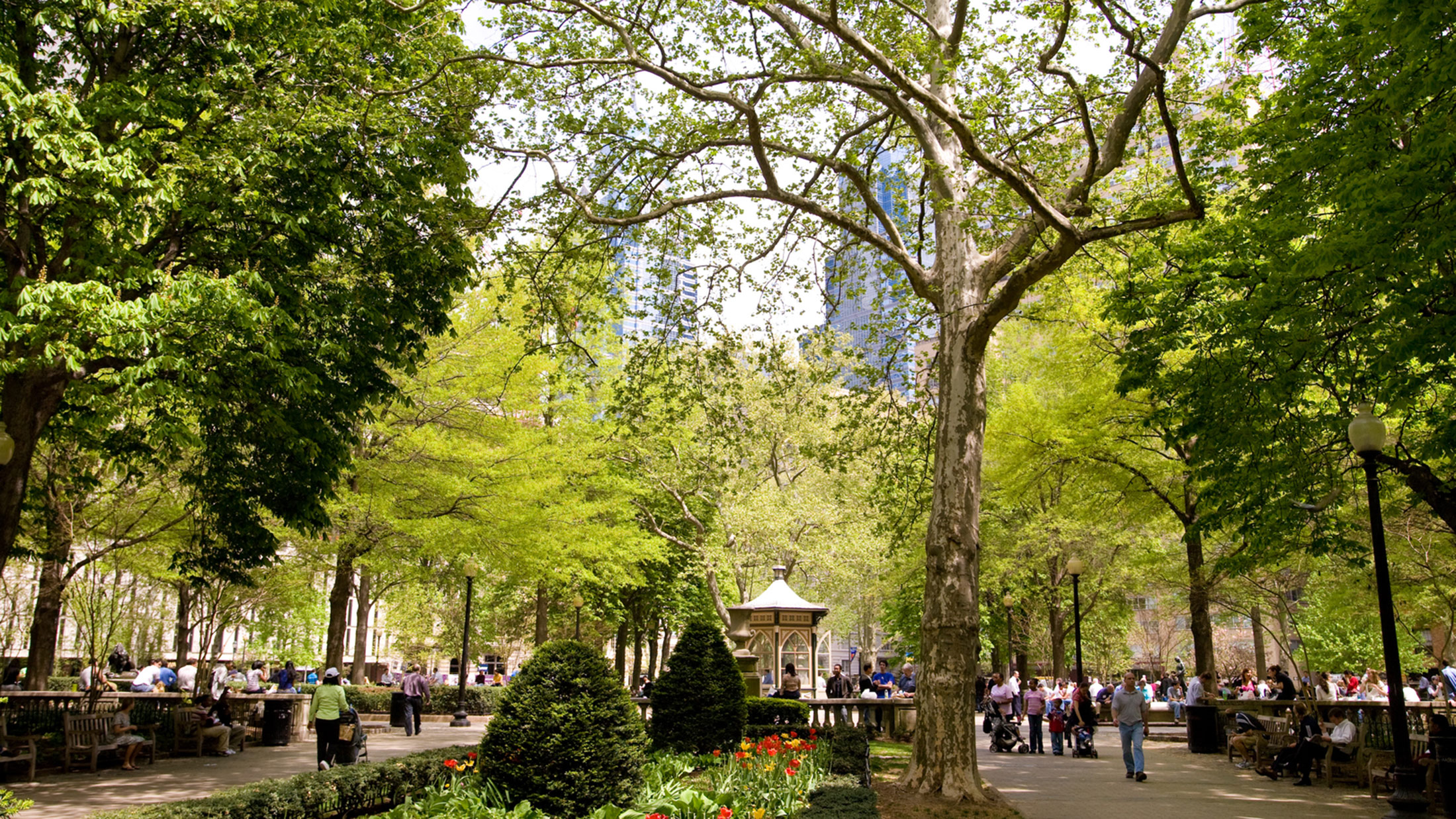
Calmly we walk through this April’s day,
Metropolitan poetry here and there,
In the park sit pauper and rentier,
The screaming children, the motor-car
Fugitive about us, running away,
Between the worker and the millionaire
Number provides all distances,
It is Nineteen Thirty-Seven now,
Many great dears are taken away,
What will become of you and me
(This is the school in which we learn …)
Besides the photo and the memory?
(… that time is the fire in which we burn.)

(This is the school in which we learn …)
What is the self amid this blaze?
What am I now that I was then
Which I shall suffer and act again,
The theodicy I wrote in my high school days
Restored all life from infancy,
The children shouting are bright as they run
(This is the school in which they learn …)
Ravished entirely in their passing play!

(… that time is the fire in which they burn.)

Avid its rush, that reeling blaze!
Where is my father and Eleanor?
Not where are they now, dead seven years,
But what they were then?
                                     No more? No more?
From Nineteen-Fourteen to the present day,
Bert Spira and Rhoda consume, consume
Not where they are now (where are they now?)

But what they were then, both beautiful;

Each minute bursts in the burning room,
The great globe reels in the solar fire,
Spinning the trivial and unique away.
(How all things flash! How all things flare!)
What am I now that I was then?
May memory restore again and again
The smallest color of the smallest day:
Time is the school in which we learn,
Time is the fire in which we burn.
Posted in Books, USA, Writing | Tagged , , | Leave a comment

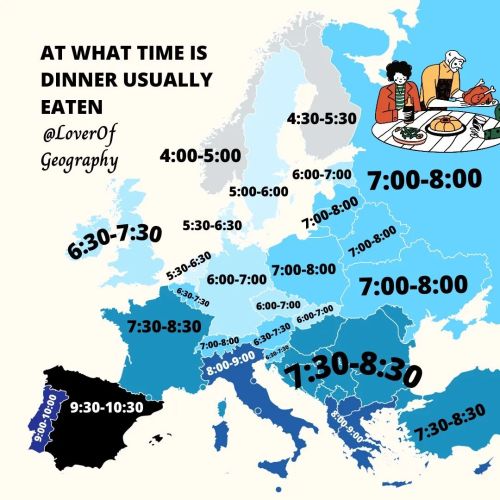
What Time Do We Eat

A big tip of the hat to @loverofgeography for this very helpful and informative map. When I travel I try and adjust meal times to coincide with local eating habits, but I just can’t do the late night dinners in Spain and Greece. I have, however, found that it’s possible to get an evening meal in those countries more conducive to good digestion and still avoid tourist restaurants. The simple secret is to just ask a local. Bon appetit !


Posted in Europe, Restaurants, Tourism | Tagged , , , | 2 Comments

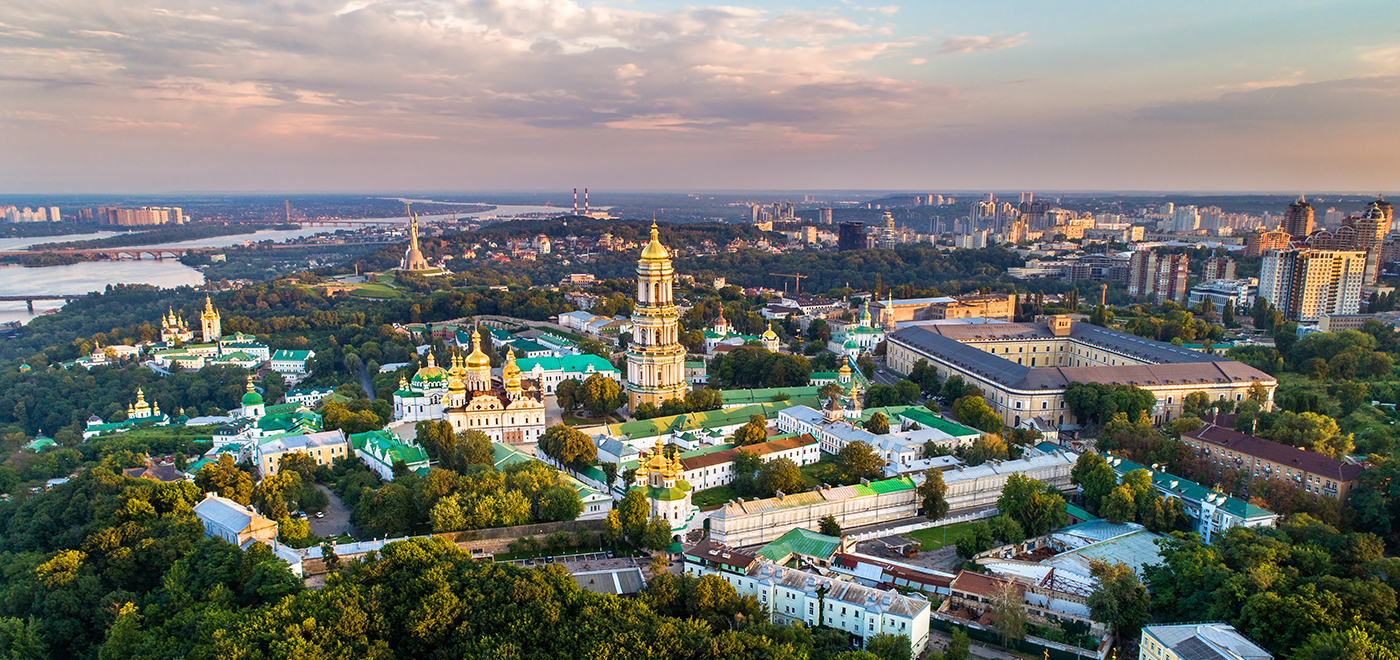
Kyiv Forever

With all of the horrendous news coverage from the Russian invasion of Ukraine and the brutal devastation of its cities and town it’s easy to forget that just a short time ago it was a normal European nation. The wonderful time-lapse, tiltshift video below captures the vibrant charm of Kyiv last summer. The video was created by Joerg Daiber for Little Big World.

NB: If the video fails to play, please click the short url link at the bottom.

Posted in Architecture, Europe, Film, Photography, Public Transport, Tourism | Tagged , , , , | 3 Comments

Personal Anthologies

For the last five years, the writer Jonathan Gibbs has curated a project called A Personal Anthology, where guest editors provide a dozen short story selections. Sometimes the anthologies are Greatest Hits, sometimes they’re personal favorites or central to the development of the editor’s own writing, sometimes they’re themed. Since its launch in 2017 the project has featured over 160 guest editors picking over 2,000 short stories written by over 1,000 different authors.

The most recent Personal Anthology, posted by Jamie Popowich, includes one of my favorite overlooked American writers of the 2oth century, Charles Willeford. Here’s what Popowich has to say about choosing Willeford :

“My oversized opinion of Willeford is that he’s one of the most important American writers of the second half of the twentieth century. Because he was a genre writer who wrote dark, critical, comedies about the male psyche, and because his male protagonists were almost always misogynistic, arrogant, assholes, Willeford was never going to attract the popular readership. But Willeford had the vibe of where America was at the end of WWII and where it was heading in the twenty-first century. For such a long-time reader of Willeford I’ll never forgive myself for not seeing where the US was headed five years ago – being run by a shady Willeford type, a kind of used car salesman in a bad suit and terrible hair.

‘Citizen’s Arrest’ is a perfect example of what Willeford excels at. A guy sees a thief steal a lighter at a department store and tries, and fails, to do have the thief arrested. There’s a great description of the lighter. A conversation with the thief who explains his routine. And a perfect last line of the story as the blame is turned on the narrator when a police officer asks, “Now, sir, what is your name?”

What Willeford excels at is that he has never cheated the last line of any of his books or stories. His last lines are a masterclass in endings. They may not leave you feeling good about the situation you just read but their truth never makes you feel ripped off. They are both a summation, a revelation, and an often bitter truth that the reader wasn’t expecting.”

First published in Alfred Hitchcock’s Mystery Magazine, 1966. Reprinted in The Second Half of the Double Feature, Wit’s End Books, 2003

Posted in Books, USA, Writing | Tagged , , , | Leave a comment

Get a New York Public Library Card (even if you don’t live there)

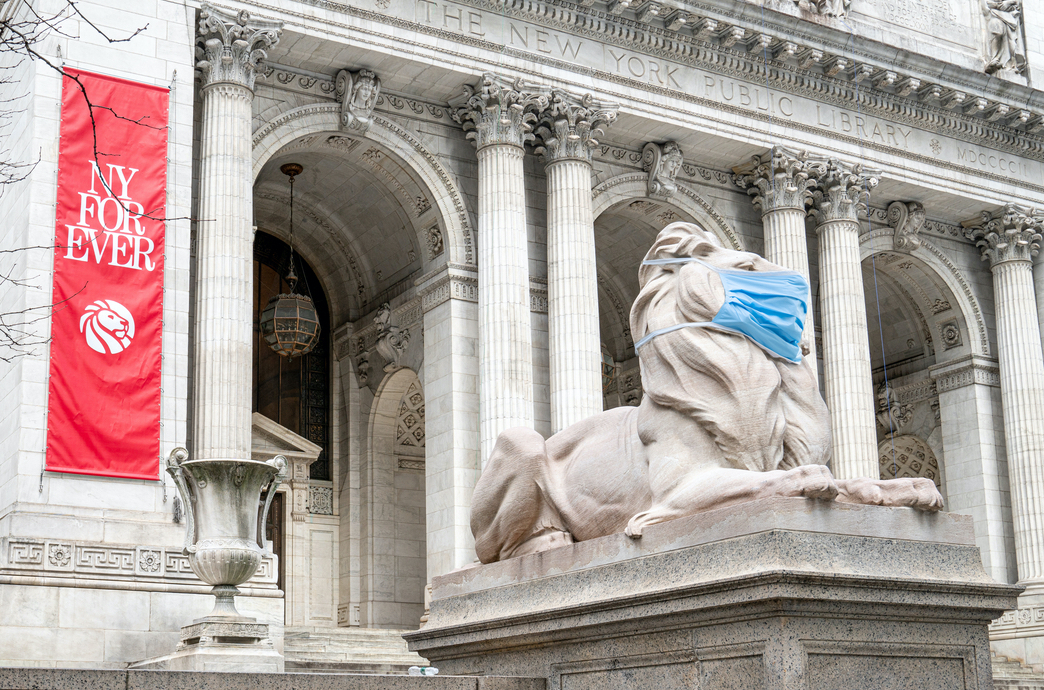
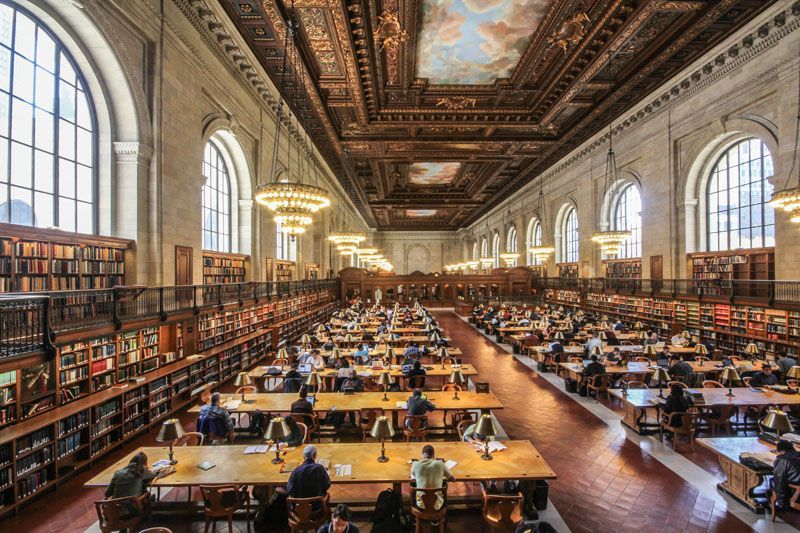
One of my favorite places to visit in New York City is the NYPL flagship branch in Manhattan. The grand Stephen A. Schwarzman Building is a must see for any book lover in the city. The grand Beaux-Arts design aside, the NYPL’s collections include millions of books, historical documents, photos, art, and ephemera. And while much of the library’s materials have been digitized in order to access the collections, you must have a NYPL card. And to get one of those, you have to be a resident of New York City; until now.

For the next two months folks anywhere in the U.S. (or with a VPN) can get digital access to many of the NYPL’s online collections that are typically only available to cardholders. Here’s how you do it:

In response to the recent nationwide increase in attempts to ban books, the NYPL has launched their “Books For All” campaign—part of which is granting readers anywhere in the United States (13 or older) free, immediate, digital access to some of their collections. And unlike some online libraries, you don’t have to wait until the digital copy becomes available: All of the titles in the collection are ready to read right away.

The digital access is via the NYPL’s free e-reader app, SimplyE, which is available to download on iOS and Android devices. Once you download and open the app, here’s what to do:

  • Select “Add a Library Later” to browse the “Books for All Collection”
  • Enter your birth year to verify you are 13 or older
  • Choose your books and start reading

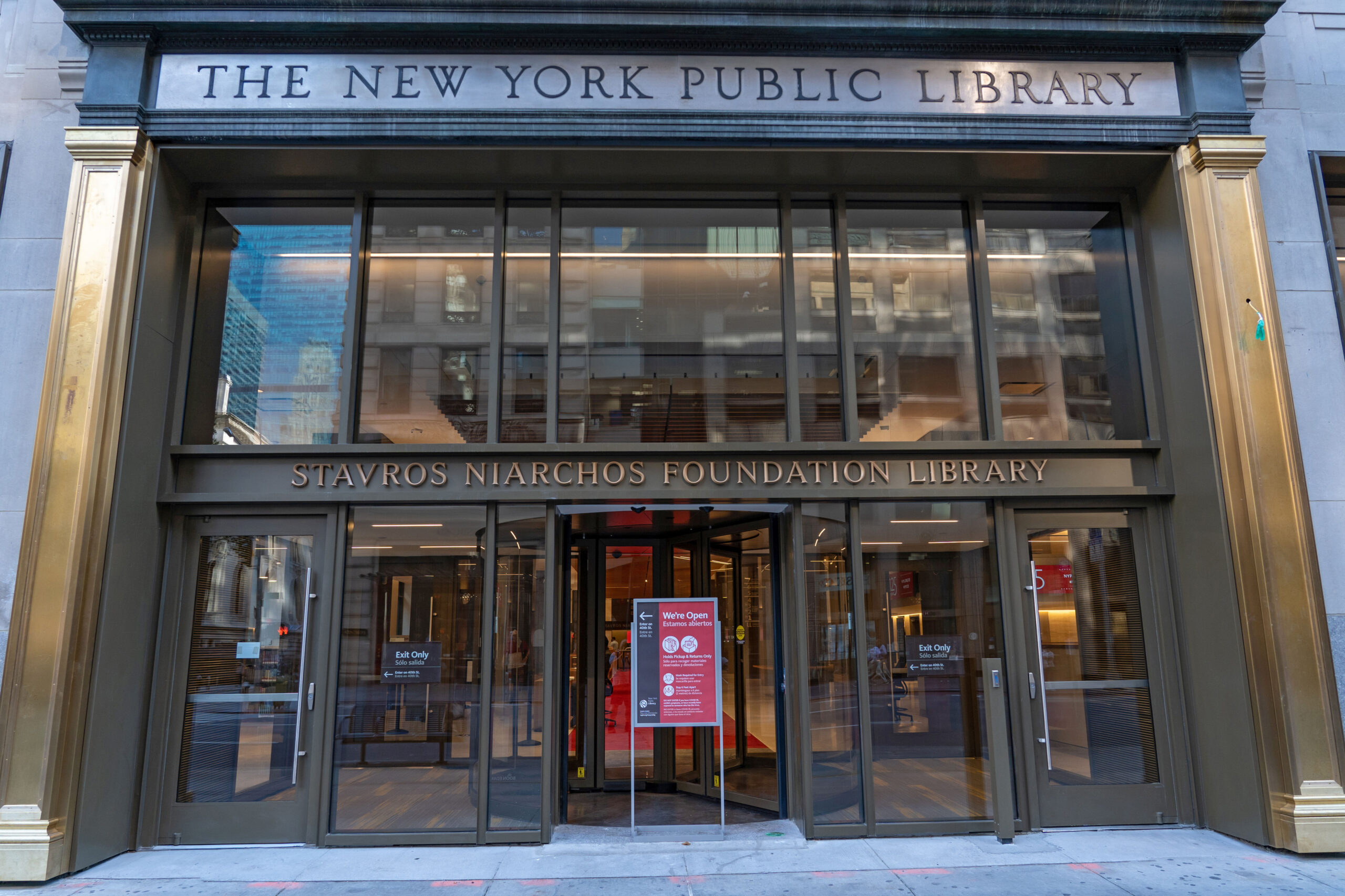
If you are going to visit New York City and would like to use the library’s collections and materials in person, you can apply online for a temporary library card ahead of your trip, or do so when you arrive at any branch in the system. you’ll need to present a photo id and proof of your home address (i.e. passport and drivers license). Your temporary NYPL card is valid for three months. And while it can be renewed, it must be done in person.


Posted in Architecture, Books, Freedom of Speech, Libraries, Maps, Museums, USA | Tagged , , , | Leave a comment

“LIBRARIAN – HAPPY EASTER X”

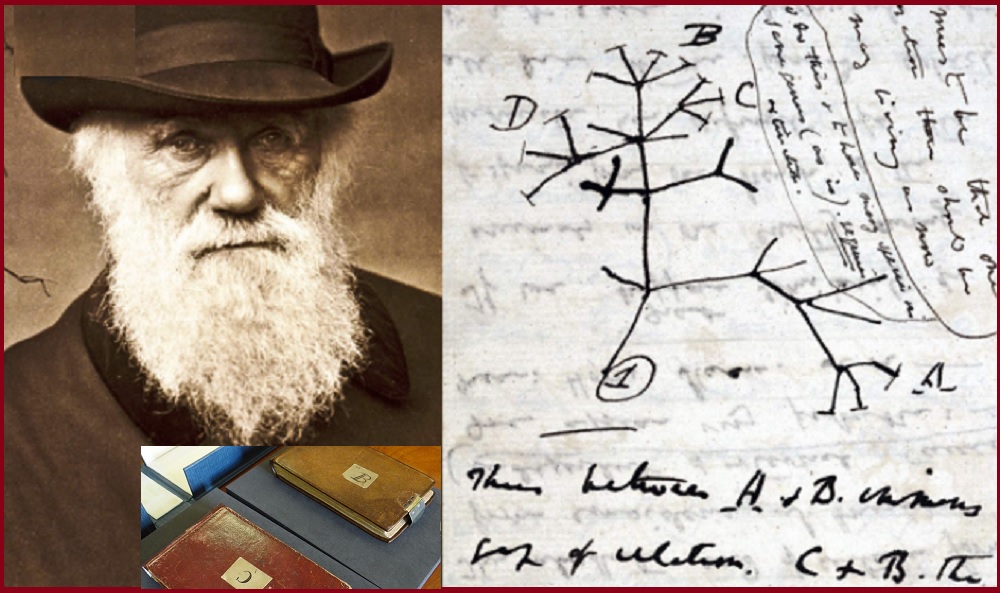
“LIBRARIAN – HAPPY EASTER X”, just  three words and a signature X was all it took to once again open one of Britain’s most intriguing literary mysteries of the 21st century. In November 2000, a pair of notebooks belonging to Charles Darwin, went missing during a “routine request” and photo shoot at Cambridge University Library’s Special Collections Strong Rooms.

Leather-bound and marked “B” and “C,” one of the notebooks contains a sketch by Darwin of his ‘Tree of Life’ theory. According to the BBC report on the story, “The notepads date from the late 1830s after Darwin had returned from the Galapagos Islands. On one page, he drew a spindly sketch of a tree, which helped inspire his theory of evolution and more than 20 years later would become a central theory in his groundbreaking work On the Origin of Species.”

The notebooks were discovered to be missing during a routine check, prompting an extensive search of the library’s shelves and archives in case of a misshelving. After over a decade of detailed combing, and with no clues as to their whereabouts, they were eventually declared missing, presumed stolen.

BBC article in 2020 highlighted the books’ disappearance, prompting an international campaign by the library requesting assistance in their return. “This is the time to just safely, even anonymously, get in touch,” said librarian Dr Jessica Gardner. “It’s those new leads we’re looking for, with the help of the police, in order to help recover these for the nation.”
This month, more than over twenty years after initially going missing, the notebooks were returned in baffling fashion: packed plastic wrap and a pink gift bag, with a cryptic note printed on brown paper. The mystery remains: who took the notebooks and who returned them.

Posted in Books, Europe, History, Libraries, Museums, Writing | Tagged , , , , | Leave a comment

Nonbuyer’s Remorse

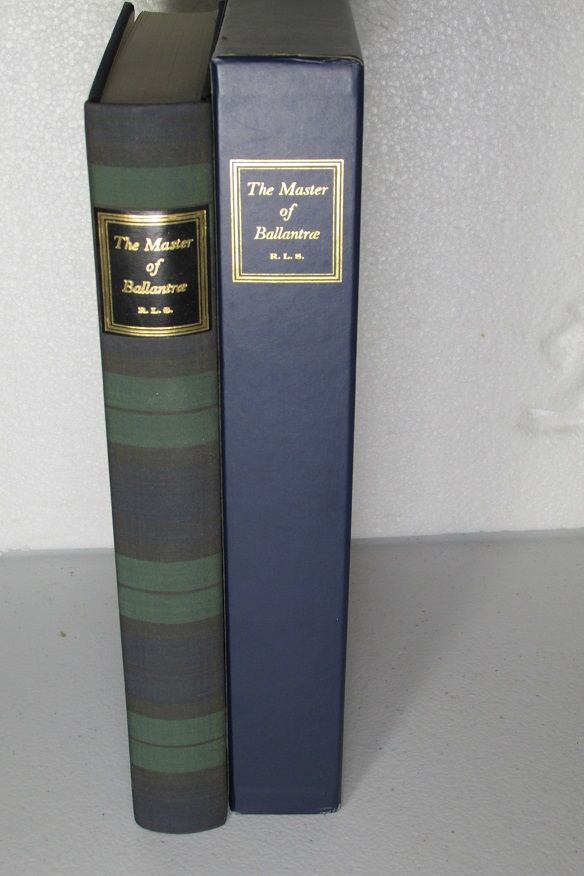
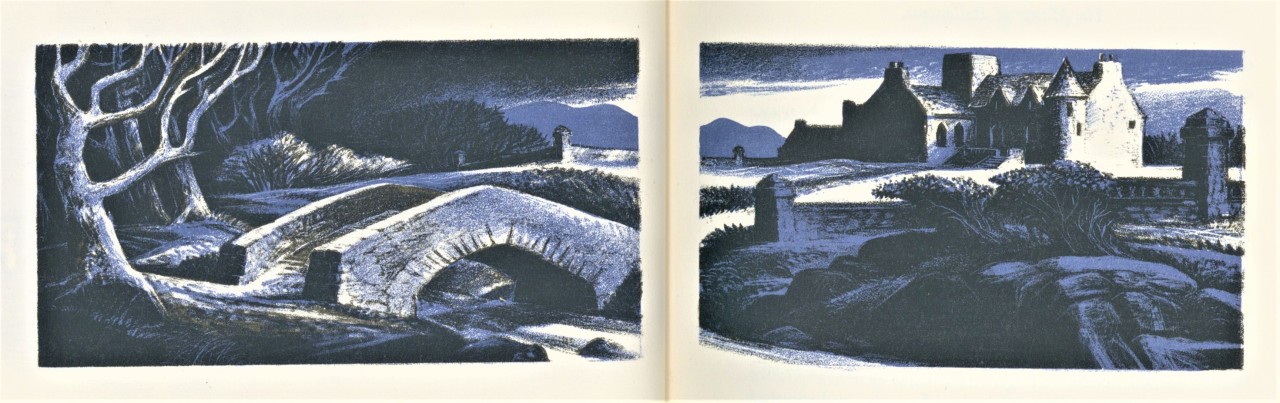
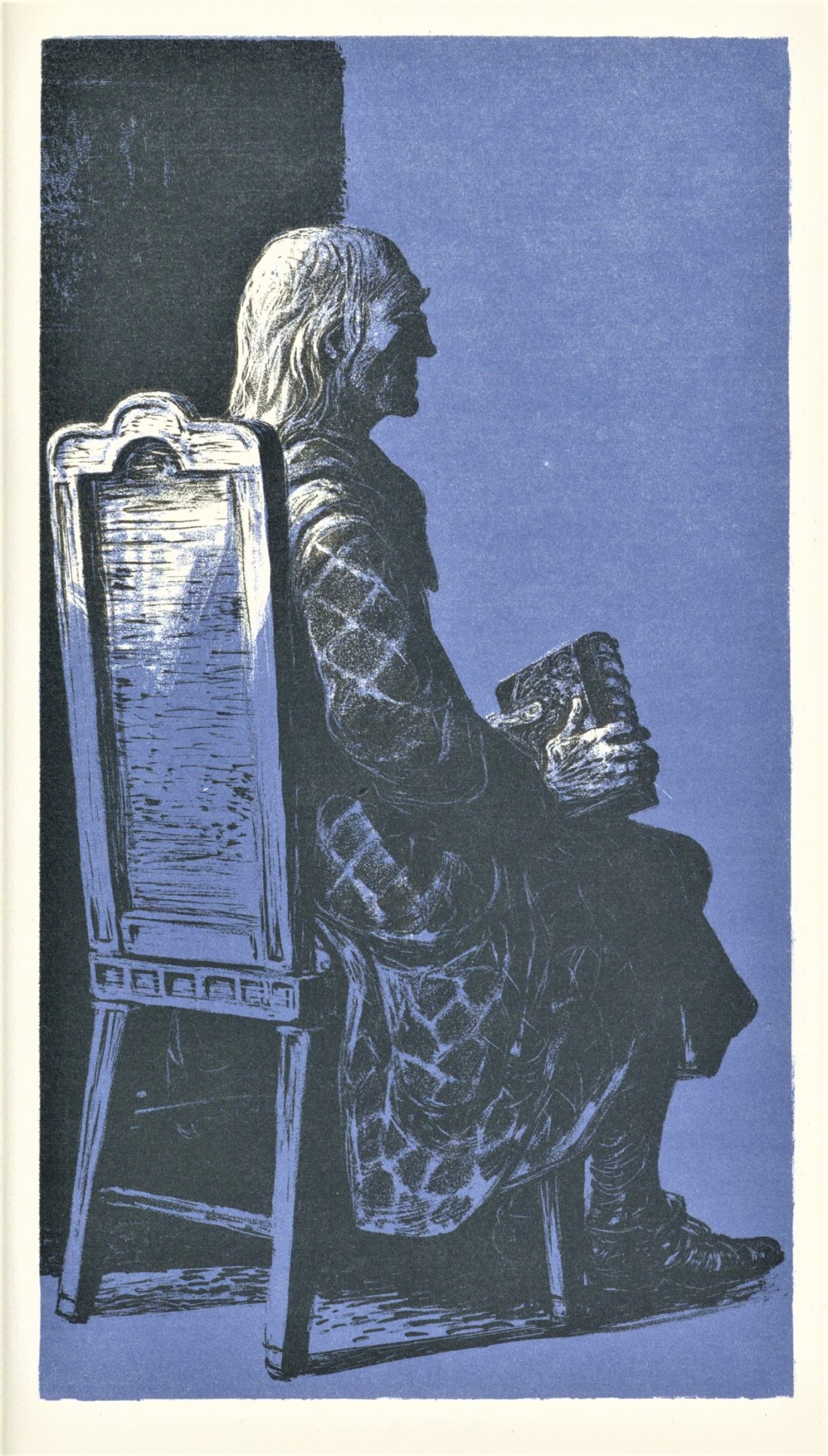
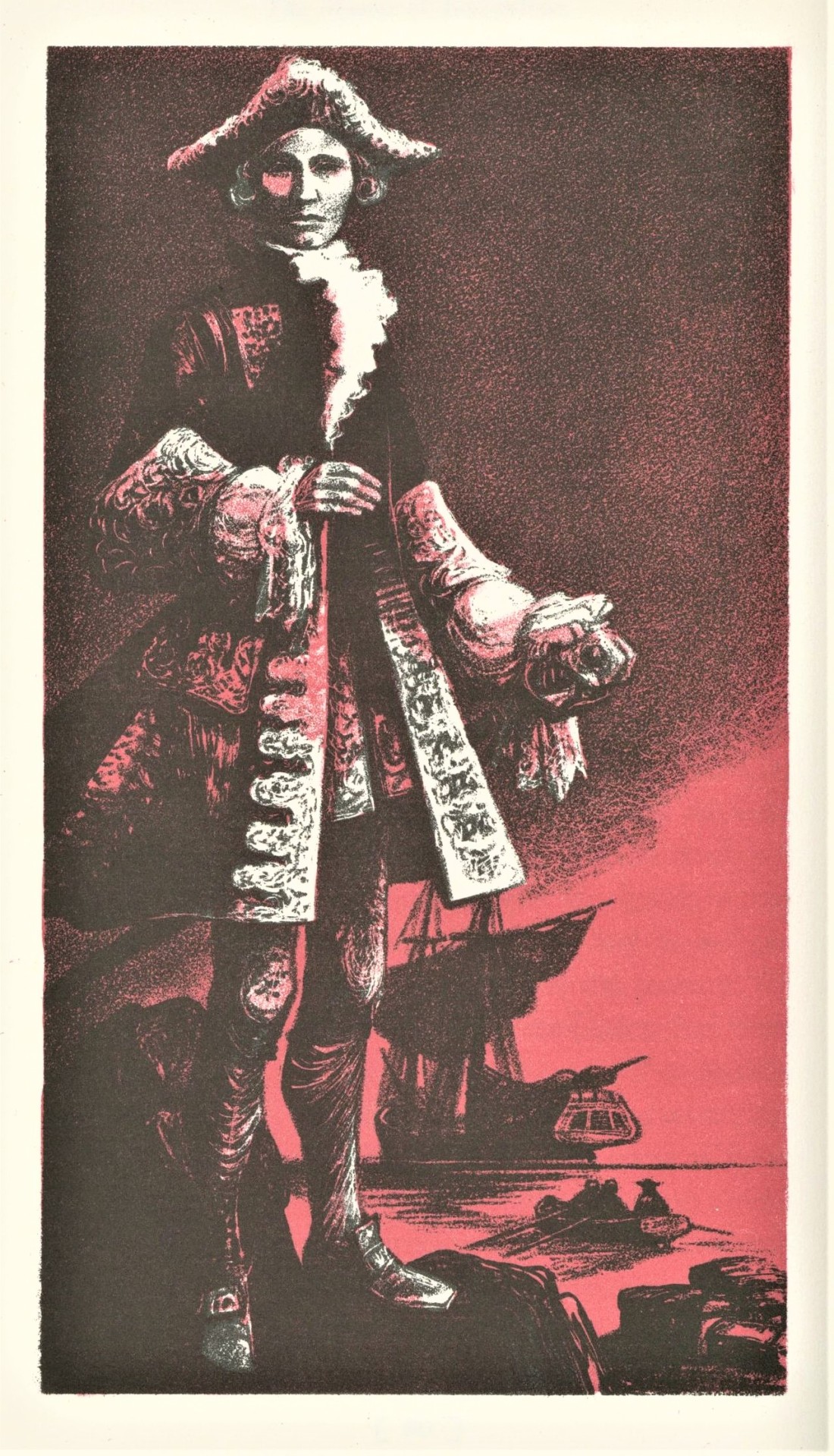
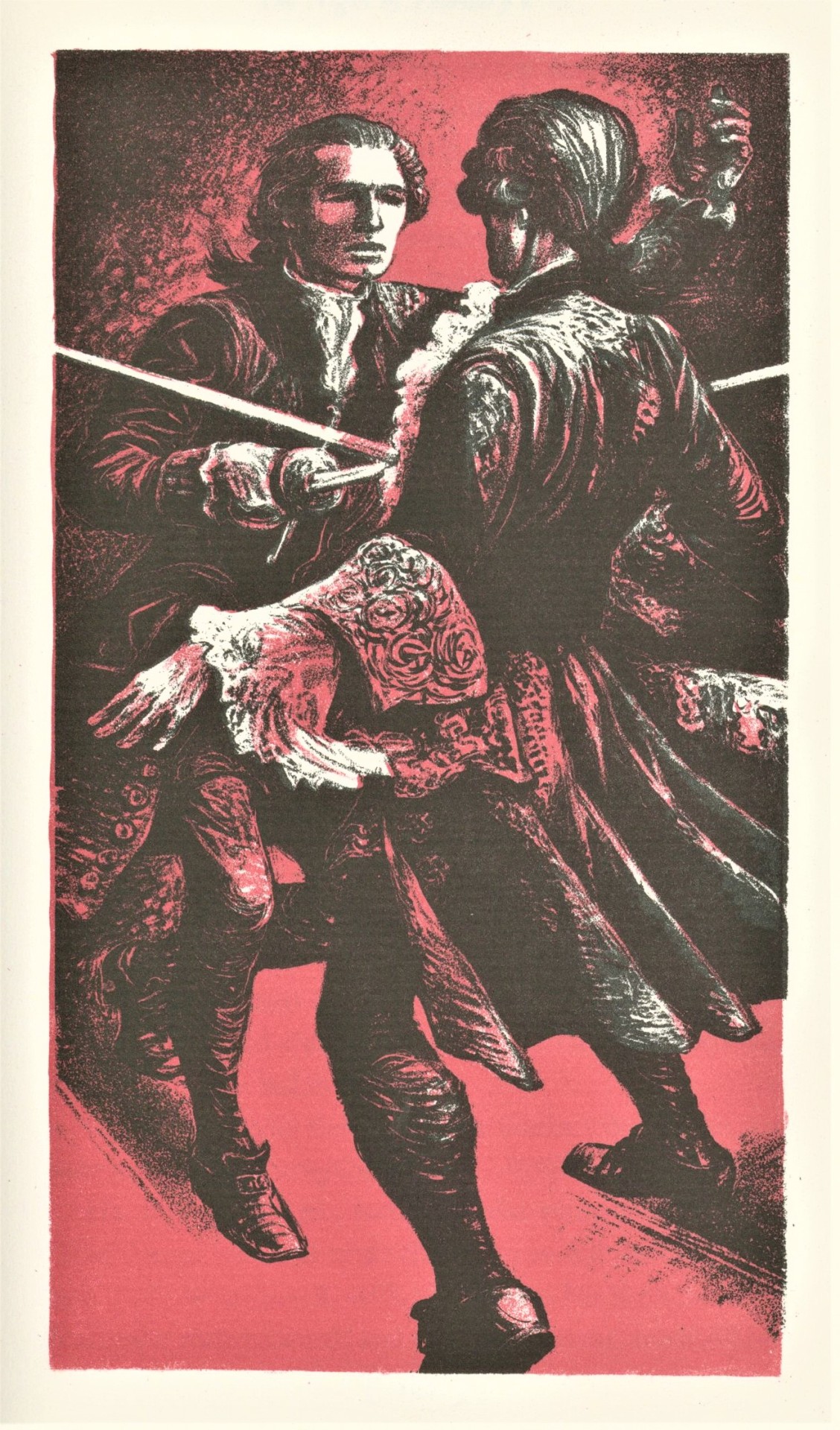
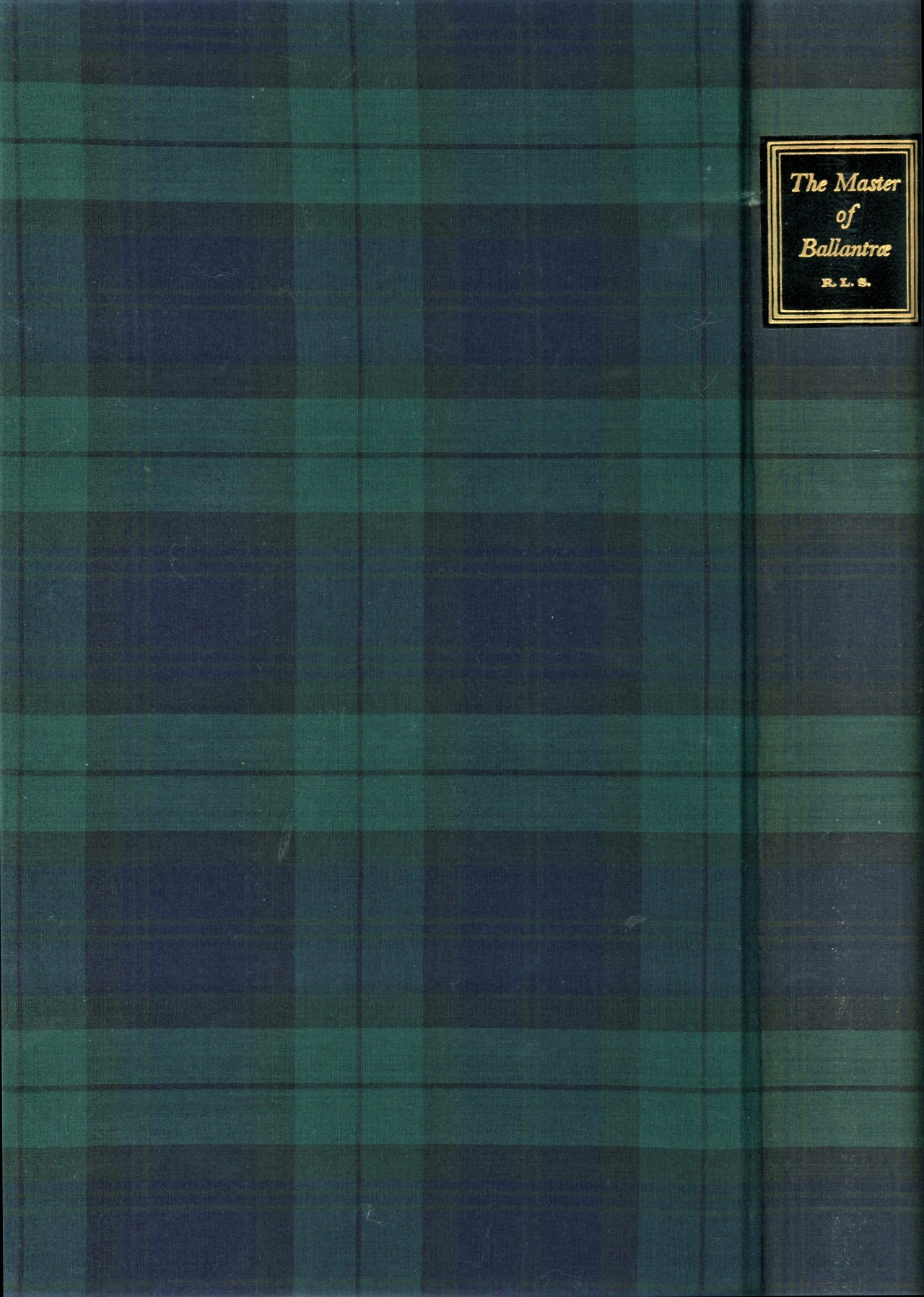
I have happily been able to attend some regional book sales again after a two year hiatus. At a recent event I handled but didn’t purchase a copy of Robert Louis Stevenson’s The Master of Ballentræ .The 1965 Limited Edition Club production of  the Scottish novel was printed in an edition of 1500 copies at the Press of A. Colish in Mt. Vernon, N.Y., with 28 two-color lithographs drawn on stone by Lynd Ward.

The book, originally published in 1889, is about the conflict between two noble-born Scottish brothers whose family is torn apart by the Jacobite uprising of 1745. This edition is appropriately bound in a Tartan of the Black Watch, which has its origins in the Jacobite uprising of 1715.The Watch was established 10 years after the first rebellion to patrol the Scottish Highlands to maintain order and prevent future rebellions. The Companies of the Watch were formed by members of Clans Campbell, Fraser of Lovat, Grant, and Munro. The tartan established for these companies are still worn by Scottish regiments today.

Foolishly, I passed on buying the book because I was focused on purchasing items in my specialty areas of travel, history, and art. Of course, I just spotted a copy of the novel on a book website and realized that the volume that I didn’t purchase was one of only 1500 copies issued. Live and learn—hopefully.


Posted in Art, Books, Europe | Tagged , , , , | Leave a comment

NYC Coffee Culture

There have been coffee houses in New York City since the Dutch “bought” Manhattan from the local Algonquins. One of the first successfull coffeeshop chains actually predated Starbucks by half a century and surprisingly had an intimate connection to the 26th U.S. President Theodore Roosevelt.

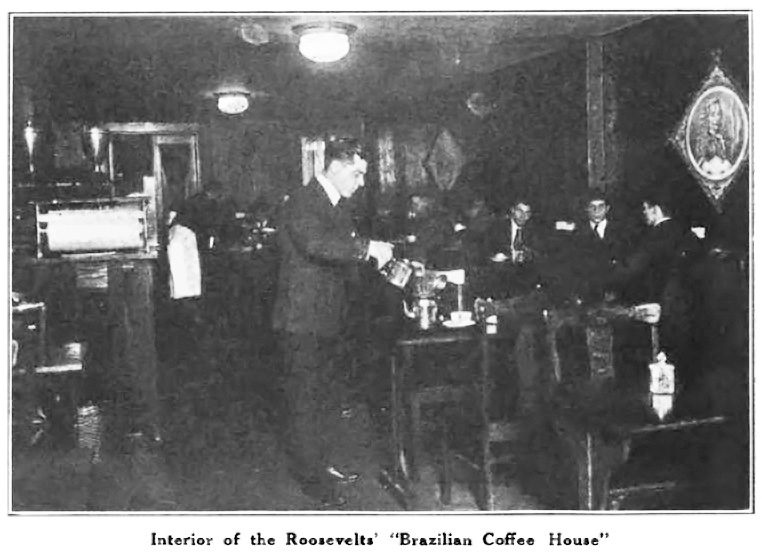
Teddy Roosevelt’s children — Theodore, Jr., Archie, Ethel, and Kermit — and their cousin Philip. Opened their first establishment dedicated to coffee consumption at 108 West 44th Street in November 1919 as the “Brazilian Coffee House”.  It was Kermit who first pitched the idea to the family having spent a few years in South America exploring the Amazon Basin of Brazil with his father, managing a bank in Buenos Aires, he became a fan of the region’s coffeehouses, which served up fresh-ground beans.

The first Roosevelts’ Brazilian Coffee House opened to considerable buzz with the  a headline in the New York Times  announcing “Roosevelts Start Coffee House Chain; Houses Similar to the Ancient Institutions of London to be Established.”   The interior design of the coffeeshop was by Ethel Roosevelt. The walls, papered with a green and gold print of Brazilian bamboo, were hung with portraits of celebrated coffee lovers, such as Voltaire (who allegedly downed 50 cups a day), Shakespeare and Teddy Roosevelt himself. Thirty small oak tables and chairs were grouped around the brownstone shop. Each table at the Brazilian Coffee House had a compartment furnished with ink, envelopes and paper (inscribed with “Brazilian Coffee House”). Dictionaries and encyclopedias were available. “What we desire to do,” Philip Roosevelt told a reporter, “is to provide a place for people to come, where they can talk, write letters, eat sandwiches and cake, and above all, drink real coffee.”


The rapid growth of the enterprise was likely fueled by the institution of alcohol Prohibition, which had passed in January 1919 . The Roosevelts filled the need in New York’s  social life for that public third space. The Brazilian location, in the theater district, was a favorite gathering place for actors, artists, newspapermen and musicians. Among its patrons was the then little-known purveyor of pulpy American gothic fiction, H.P. Lovecraft; his circle of friends, known as the Kalem Club, was known to frequent the Double R. Lovecraft even wrote a fevered ode, “On the Double R Coffee House.”

The coffee houses thrived but the Roosevelts ended their involvement in 1928. In that year a New York Times article describes the purchase of the business by husband and wife Zivko and Aneta Magdich. The purchase combined the couple’s entrepreneurial spirit and a romantic attachment to the business, since it was at the Double R that the couple had first met. Unfortunately, the coffeeshop chain seems to have failed along with New York City’s economy after the 1929 stock market crash.


Posted in Architecture, History, Restaurants, South America, USA | Tagged , , , | Leave a comment

Travel the World With Explordle

Despite what its name might imply Explordle is not another Wordle clone at all. Instead it’s a game that offers you a videoclip shot in first person, walking around a particular place – the challenge is to guess the town or city you’re walking around. Some of the clips are quite simple to suss out based on street signs, shops, etc. but some of the videos are difficult. Be warned that it’s easy to lose an hour of your precious time on the game.


Posted in Public Transport, Tech, Tourism | Tagged , | Leave a comment

Never Again Is Now

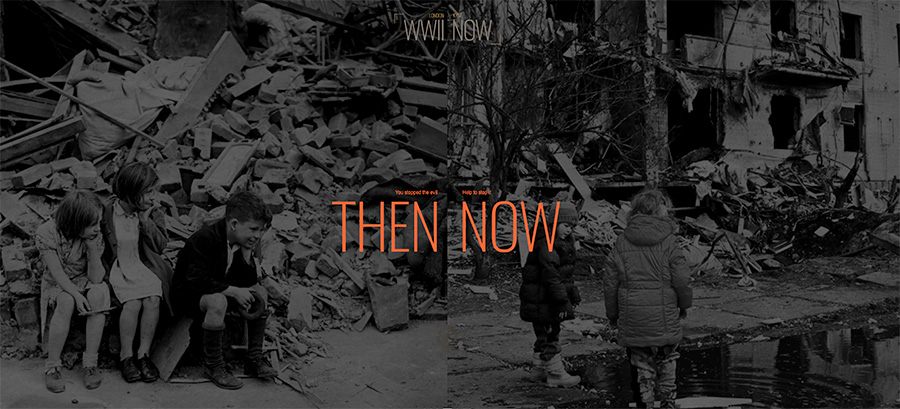
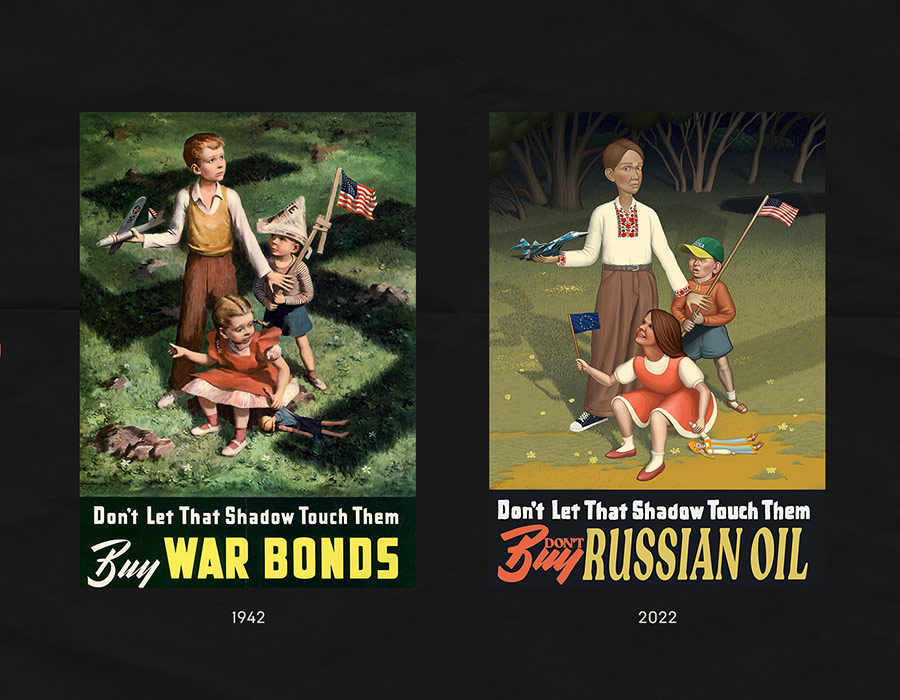
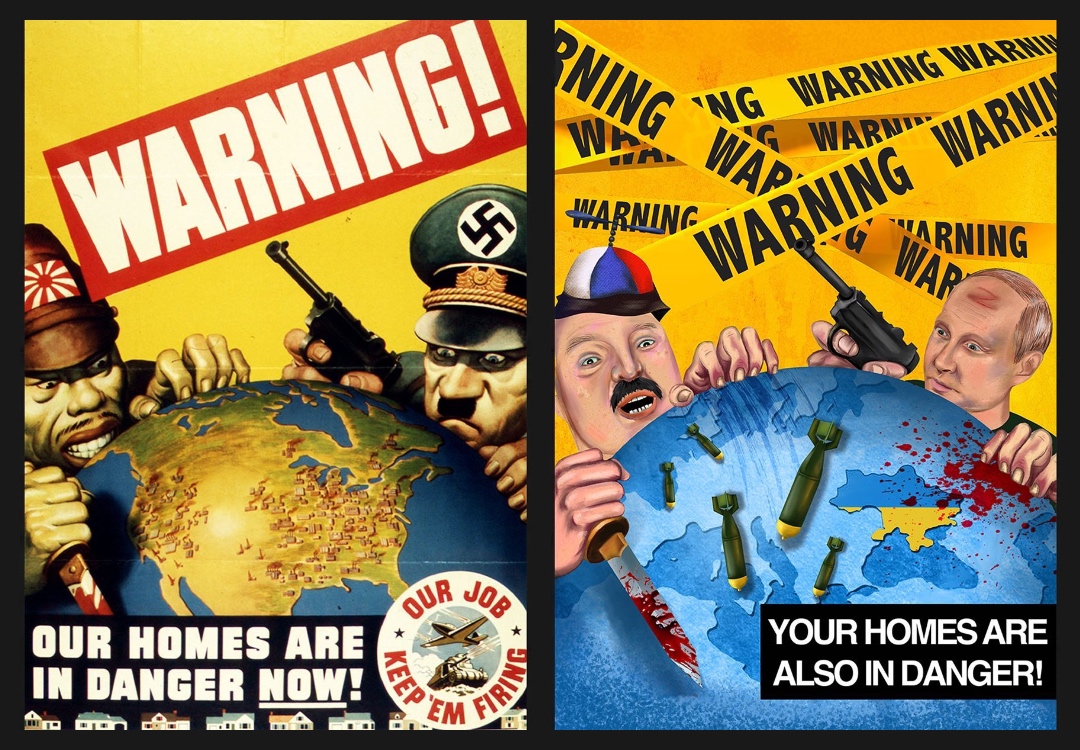
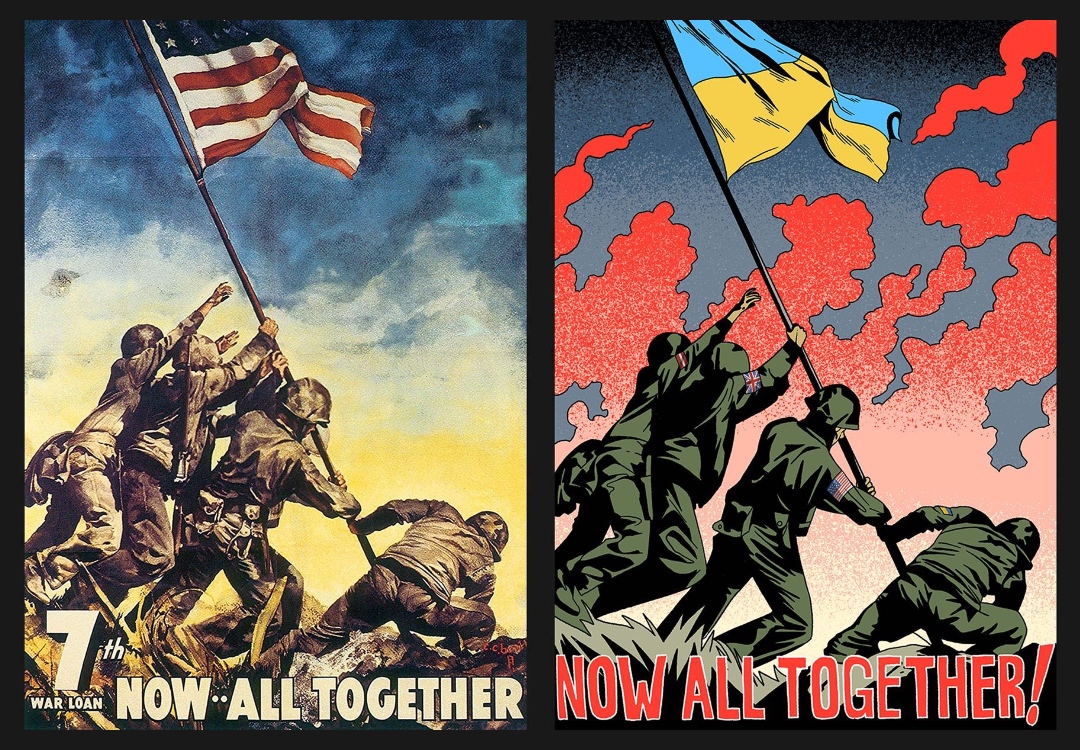
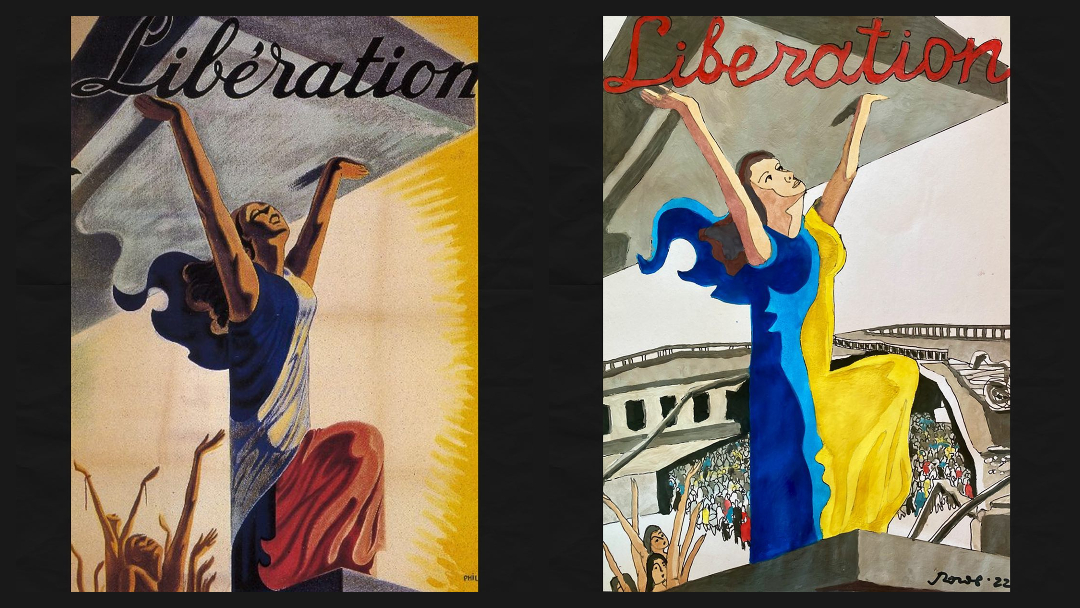
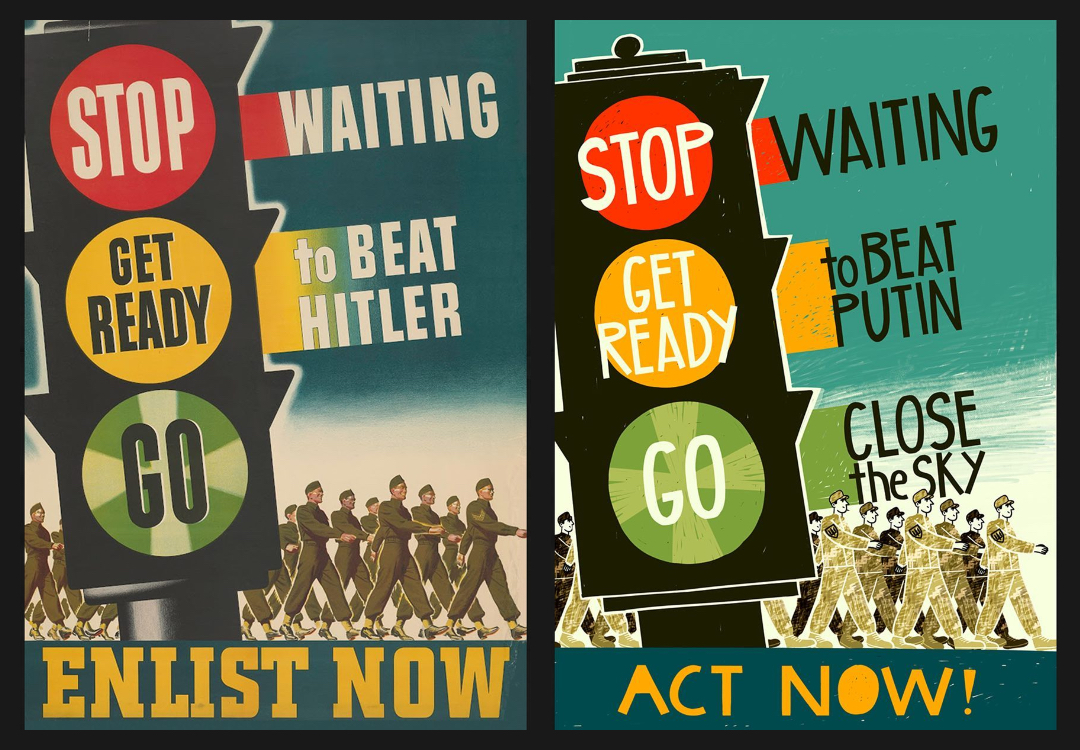
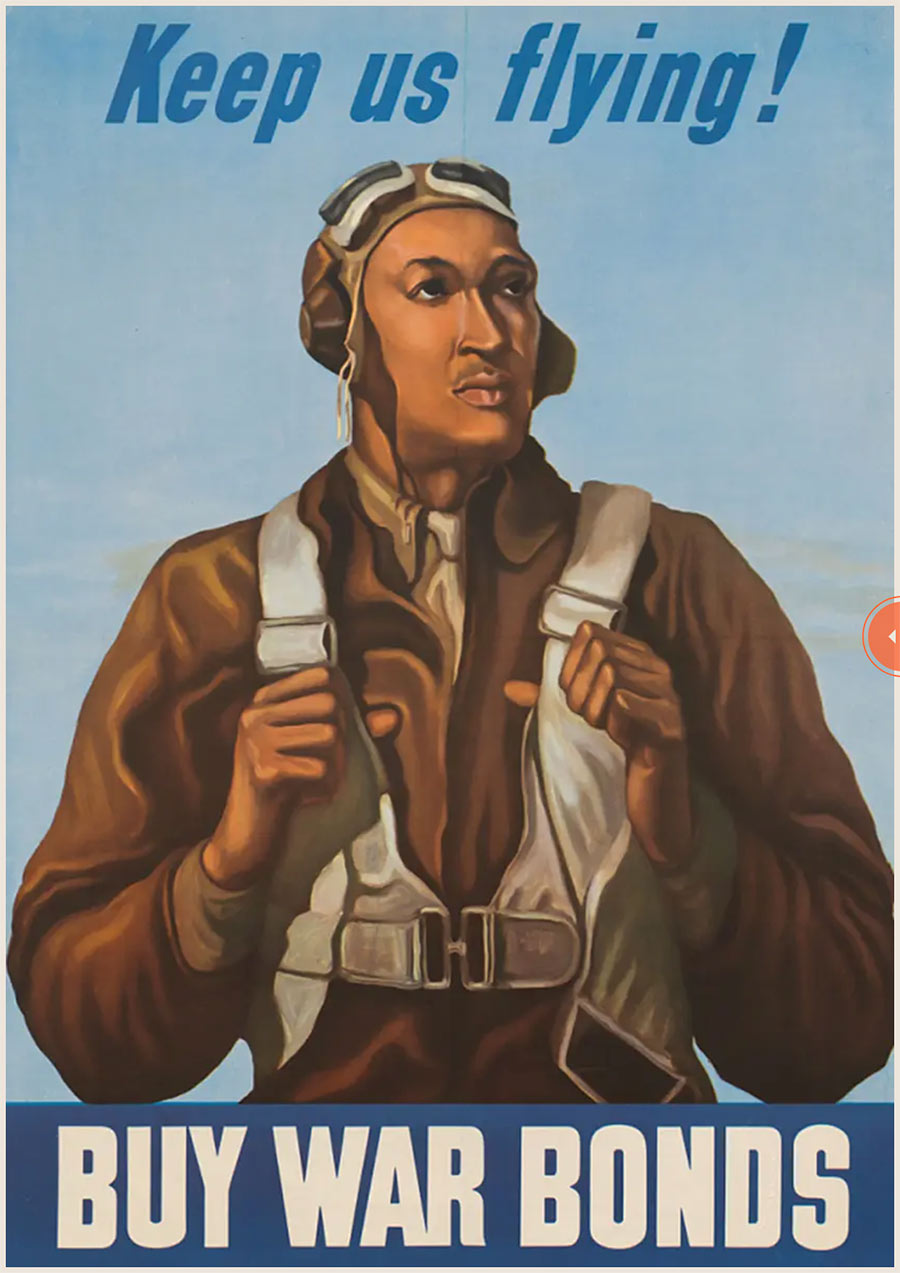
The “Never Again Gallery” project is an online effort by  20+ Ukrainian artists that uses the similarities between the visual campaigns that persuaded people in Allied nations during WWII and the messaging we see daily today regarding Russia’s invasion of Ukraine. These new interpretations incorporate similar sentiments from the U.S. and British propaganda posters of the World War. Visitors to the online gallery are encouraged to download PDFs of new posters and to share them widely to encourage a call to action.
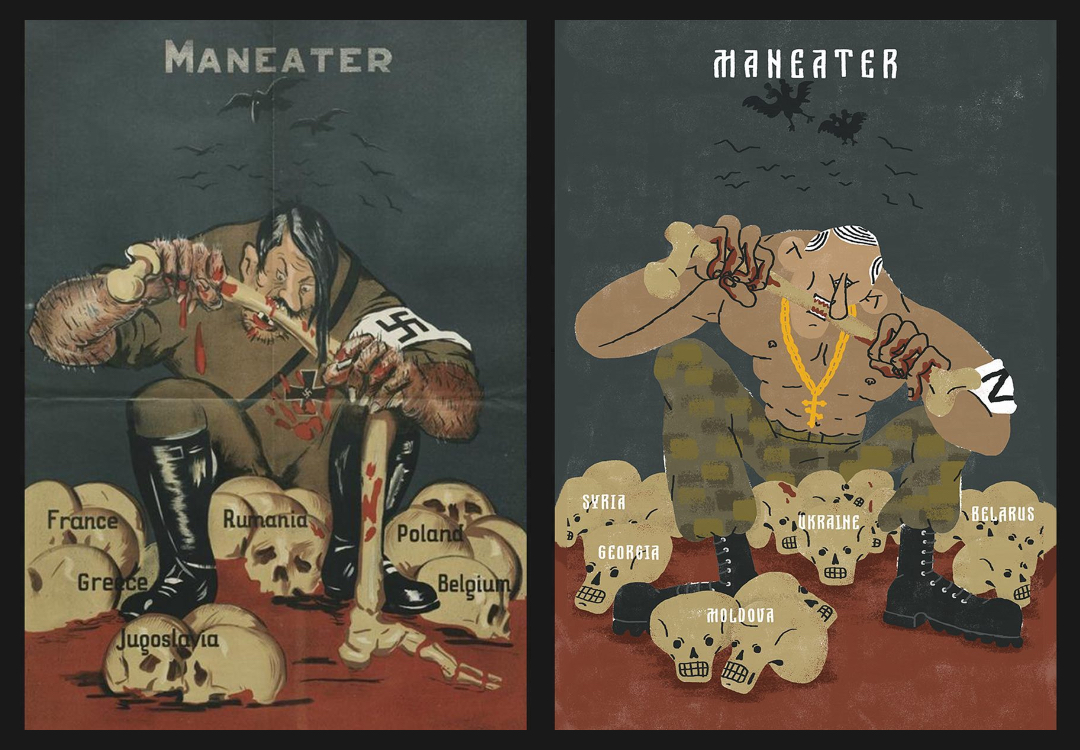
Click HERE to see the whole collection of images and posters, including the original and current versions, and to download and print the posters free of charge.
 

Posted in Art, Europe, History | Tagged , , , , | Leave a comment