Warsaw Old and New

It is often said that the best way to get a sense of a city is by walking the streets. The second best route is probably by bike. YouTube creator MrTiuro got on his bike and really got to see Warsaw, Poland up close and personal.  He begins his hyperlapse tour in the Old Town district, travels through it and then ends up in the new commercial hub in Warsaw’s Wola district. It’s difficult to believe that most of Warsaw was painstakingly rebuilt after World War II.

Posted in Uncategorized | Tagged , , , , | Leave a comment

We see that there really is nothing left to write about.

LATE ECHO

John Ashbery

Alone with our madness and favorite flower
We see that there really is nothing left to write about.
Or rather, it is necessary to write about the same old things
In the same way, repeating the same things over and over
For love to continue and be gradually different.
Beehives and ants have to be re-examined eternally
And the color of the day put in
Hundreds of times and varied from summer to winter
For it to get slowed down to the pace of an authentic
Saraband and huddle there, alive and resting.
Only then can the chronic inattention
Of our lives drape itself around us, conciliatory
And with one eye on those long tan plush shadows
That speak so deeply into our unprepared knowledge
Of ourselves, the talking engines of our day.
Posted in Uncategorized | Tagged | 1 Comment

Where in the world is the Republiko of Zendia

How do you find a republic that never existed ? During the 1950s Cold War, U.S Army cryptologist Lambros D. Callimahos created the mythical  “Republiko of Zendia” to use in wargaming for U.S. military intelligence codebreakers simulating the invasion of Cuba.

The original map of Zendia now hangs on the wall of the library at the National Cryptologic Museum. The “Zendian problem,” in which cryptanalysts students were asked to interpret intercepted Zendian radio messages, formed part of an advanced course that Callimahos taught to NSA cryptanalysts in the 1950s. Graduates of the course were admitted to the “Dundee Society,” named for an empty marmalade jar in which Callimahos kept his pencils.

Posted in Cartography, History, Libraries, Maps, USA | Tagged , , , , | 1 Comment

How 19th century literature can help survive autocracy

I must admit that I was never a big reader of 19th century French literature, other than Jules Verne. And, I somehow didn’t read Stendahl’s The Charterhouse of Parma. However, I was intrigued by a New York Times article that suggested that the 19th century novel might offer a template for surviving a 21st century autocracy.

The Stendhal Novel That Doubles as a Playbook for Surviving Autocracy – The New York Times (gift link) suggests some of the tactics Stendhal’s heroine employs to dodge the depredations of her oppressive prince and his entourage — 26 handy bullet points :

1. Never criticize the prince in word or deed, or voice any disloyal thought. It will get back to him.
2. Make the prince see you as indispensable, without making him resent your skills and influence.
3. Radiate prestige and prosperity at court to bolster your status and enhance the prince’s self-regard.
4. Adopt the fashions of the court, even if they are ridiculous, to show social and political orthodoxy.
5. Never appear independent-minded, virtuous or enthusiastic; it fosters suspicion.
6. Track court gossip at all times; be alert to calumnies against you and to changing princely priorities.
7. Cultivate allies among the prince’s family and intimate circle.
8. Cultivate powerful allies outside the prince’s circle.
9. Recognize that your allies may be unable to help you, or may betray you. Have backup plans.
10. Study the motives and aims of allies, rivals and foes alike, so you know how best to manipulate them.
11. Grant favors to allies, rivals and foes alike, to make them beholden to you (though it may not work).
12. Never regard your own status as secure. Work at all times to buttress it.
13. If you excite envy, expect retaliation — work to pre-empt it.
14. Anticipate attacks against you from rivals for the prince’s favor. Thwart them, and strike back in kind.
15. Know that even if the prince seems to like you, he may seek to destroy you, for sport or out of malice.
16. Act as if you are under surveillance at all times, because you are.
17. Know whom you can trust, but be careful what you let them know, and anticipate their likely slip-ups.
18. Make yourself popular with the common people as a hedge against smears.
19. Avoid becoming so popular with the common people that the prince feels threatened.
20. Be prepared to defend yourself effectively but respectfully when rivals denounce you to the prince.
21. Do not expect the law to protect you; the judiciary is surrendered to the will of the prince.
22. If your influence wanes, invent a conspiracy against the prince; punish its members to impress him.
23. If you are threatened with incarceration in domestic or foreign prisons, leave the country at once.
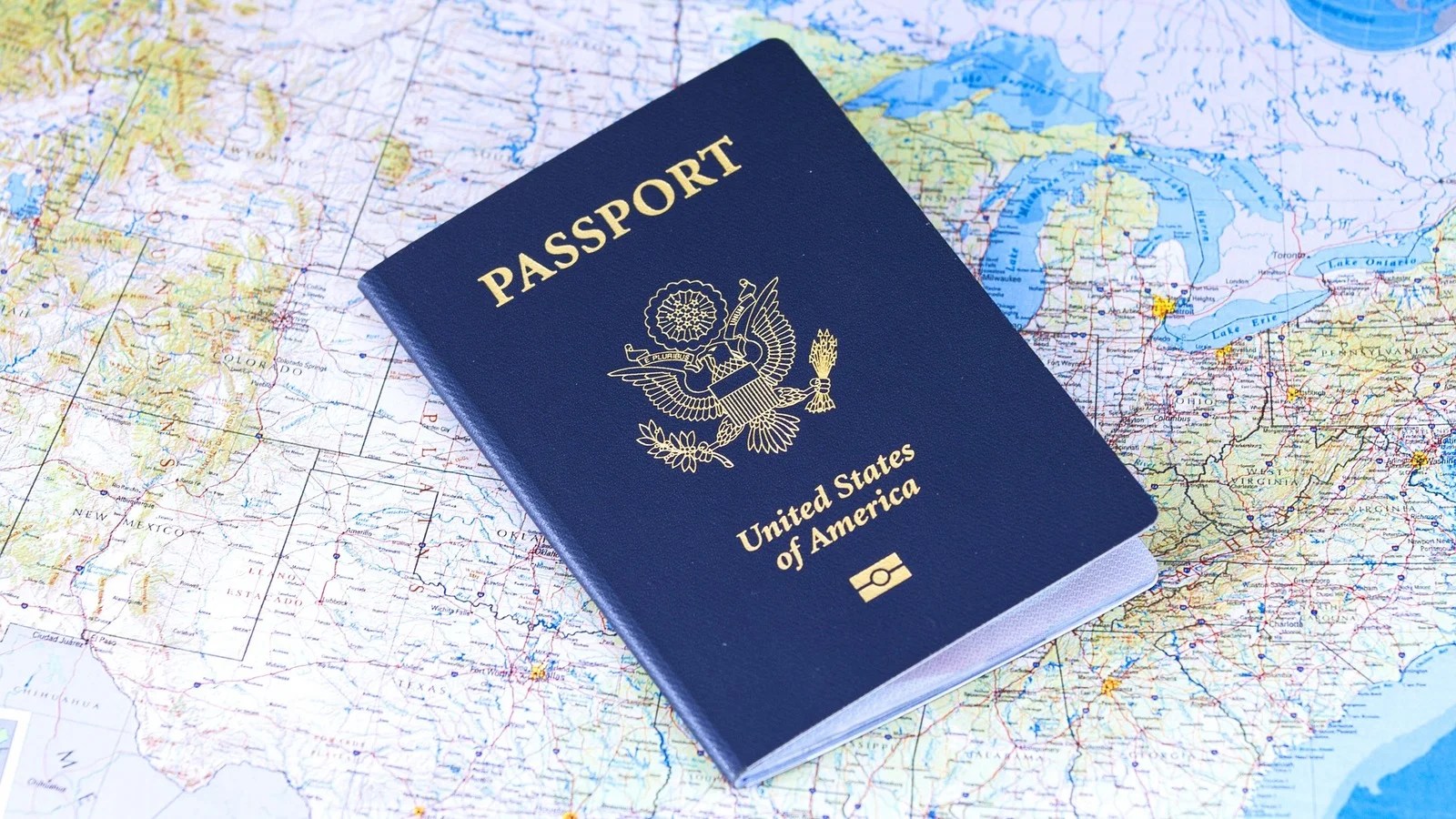
24. When you travel, carry a passport that will pass muster with border officials and court spies.
25. In life or death situations, enlist the help of powerful enemies through blackmail or bribery.
26. If, for self-preservation, you must resort to illegal actions, plan well and cover your tracks.


Posted in Books, Europe, Writing | Tagged , , , | 2 Comments

Summer (is fleeting)

Originally composed as the main theme for Takeshi Kitano’s 1999 film Kikujiro, Joe Hisaishi’s beautiful piece “Summer” has long been cherished in Japan as the soundtrack of nostalgic summer memories. Now, this beloved masterpiece is reimagined as a short film.

Set in a high school in the Japanese countryside that’s slated to close next spring, the story follows members of the school’s broadcasting club as they face their “final summer.” It quietly captures their everyday moments as they try to leave something behind—an imprint of youth, memory, and time.

With no spoken dialogue, the 7-min short film relies solely on music, visuals, and the nuanced expressions of the cast to evoke an emotional coming-of-age narrative. There’s more information about the cast and production on the main site.

If the video fails to load in your browser, please click HERE.

Posted in Asia, Film, Music | Tagged , , | Leave a comment

Oh Summer’s Day

Emily Dickinson, “The Bee is not afraid of me”


Posted in Books, USA, Writing | Tagged , , | Leave a comment

The end of writing and reading will be the end of freedom

I recently read the impassioned defense of literature and reading (below) which was excerpted in the Washington Post from a commencement address by the American author Nicole Krauss.

The end of writing and reading will be the end of freedom
Why graduation season is so heartening to me
Nicole Krauss
For the past year, I’ve lived away from my home in America, in Rome, among the achievements and the ruins of 3,000 years. It’s made me deeply aware of the long arc of history, which saw the rise and fall of almost everything: democracies and dictators, gods and humans, war and peace, that which was feared, and that which was loved and cherished. And though the countless crossroads people arrived at in history, arguing about which way to go, may have since faded into the indelible road chosen, I’m also acutely aware that we now stand at another. That the direction we choose will determine not only our children’s future, but the future of what it will mean to be human — and the conditions under which human life will unfold.
Whether the still relatively young values of liberalism will survive, whether reading and writing will continue to be the underpinnings of culture, whether the constructs and algorithms of AI will replace the freedoms of selfhood, whether we will dominate and destroy nature or salvage and protect it: We now stand before these questions. Stand and, I hope, pause. For in the stillness of that pause, the lessons of history sometimes speak to us.
Lately, I’ve found such a lesson in the history of my own people. In the 5th century B.C., when the Jews in exile in Babylon were allowed to return to Jerusalem, they were called upon to rebuild themselves, their city and their lives in their homeland. In exile, without a land or a Temple, the Jews wrote and transcribed the Torah. The opportunity to return to reconstruct their home and rebuild the Temple raised a vital question: What kind of people are we going to be?

The synoptic Books of Ezra and Nehemiah are two accounts of that return and its essential question. Ezra, a priest, laments the moral and spiritual decline of the newly reestablished community, and calls for religious reforms and priestly leadership. But it is in Nehemiah that we read of something truly extraordinary: the first record of the Torah being read in public. Ezra brought the scroll out and read from it, “facing the square before the Water Gate, from the first light until midday, to the men and the women and those who could understand; the ears of all the people were given to the scroll of the Torah. … They read from [it], translating it and giving the sense; so they understood the reading.”
It is impossible to exaggerate how momentous this moment was. At perhaps the greatest juncture the Jews have ever faced, the Temple was replaced by Torah. Sacrifice was replaced by reading, teaching and study. And Judaism was made independent of place and became portable, ensuring its survival to this day.
Dayenu, as we say. But there is even more to those astounding lines in Nehemiah than the choice of Torah over Temple. What we find is a radical step toward democratization: toward the democratic ideals that generations of later Jews would not only embrace but die without, and also die to create — and whose present endangerment many are protesting in the streets and squares of their cities and countries. In those few lines of Nehemiah, we find a rejection of a hierarchical system based on hereditary power in the hands of the few, toward the town square, where all men and women are offered the chance to participate, to listen, learn and understand the teachings for themselves. It might be argued that from that day on, all that is required to live as a Jew are words. No more, and no less.
I am a writer in a long line of writers, among my people and all people who have been writing these last few thousand years. And I write, just as I read, because I believe that in the realm of literature we are, each of us, free. Free to imagine, to invent, to change our minds, to travel through time, across space, to feel and experience the full breadth of ourselves, and to do what I don’t believe can be done in any other realm, medium or dimension: to step into the mind of another. Feel what it is to live inside another and, in the process, enlarge ourselves beyond the borders of selfhood, into the vaster fields of mutual understanding and empathy. As such, literature is fundamentally democratic but for one major caveat: To access its freedoms, we must be taught to read, value and engage with literature.
At the crossroads where we now stand, among the many other things at stake, is the future of reading, writing and literature, and all of the expansive freedom they have afforded us.
In my lifetime, I have watched the demolition of the capacity to read and engage with books. Not just of our children, who have been the unwitting guinea pigs of growing up inside cellphones, but among all of us human beings. We have lost not just our ability to concentrate on deciphering long passages of written language; we have, I believe, begun to lose our attachments to the meaning of words and sentences, which we once trusted to carry the precious freight of communicating who we are — to ourselves and to each other. The blatantly, proudly senseless speech of our current leaders is not the cause, it is merely the most extravagant example of what happens when an entire culture — increasingly, the monoculture of the world — gives up on, and ceases to be capable of, the struggle to funnel meaning into language — to translate themselves, their thoughts, and their ideas into words that others can read and share. Writing and reading are not effortless. But, without that effort, we will slide deeper and deeper into inchoateness, darkness, violence, diminished freedom for all and a diminished state of human being.
This month, hundreds of thousands of students are graduating across the United States, from colleges and universities where it is the lifework of countless professors to ensure they have access to the freedom that comes with becoming a reader, being able to write for oneself, and partake in a culture of literature and ideas. Which, to me, is deeply heartening.
And I do believe that history is long, and that where there is destruction, there is also the potential for tikkun, for repair. For thousands of years, we have been finding words for ourselves, we have been writing our own story and, in the process, have done something far more radical than expressed ourselves: We have invented ourselves. We have asked the essential question: Who are we, and what kind of people do we want to be? And it is, I believe, only as readers and writers, only as people educated in the bonding of language and meaning, that we have any hope of rising to the occasion of an answer.
(Nicole Krauss is a novelist and a 2025 Guggenheim fellow. This op-ed is adapted from a speech the author gave on May 13 while receiving an honorary doctorate at Ben-Gurion University.)


Posted in Uncategorized | Tagged , , | 1 Comment

Judging Books By

I recently stumbled on Matt Dorfman’s annual Ten Best list in the New York Times Book Review and was impressed by the terrific book covers. Here’s how Dorfman introduced the article:

If most book cover designs are conceived as quick-to-metabolize marketing tools, a great one can make the reader do a double take in slow motion. A good first impression is, of course, the goal: to elicit curiosity and excitement before you’ve even picked the book off a shelf. But a great cover can fortify itself in our consciousness, resonating more deeply as we absorb the text within, ideally prompting a second impression after we finish reading.


Posted in Uncategorized | Tagged , , , | Leave a comment

August arrives in the dark…etc.

“But most urgent on my list of appreciation are those of you who have welcomed my tunes into your lives, into your kitchens when you’re doing the dishes, in your bedrooms, in your courting and conceiving, into those nights of loss and bewilderment, and into those aimless places of the heart, which only a song seems to be able to enter. It is before this sudden and strange and mysterious intimacy that has developed between us that I bow my head with real gratitude. Thank you, thank you, thank you.”

-Leonard Cohen


Posted in Uncategorized | Tagged , , , , | 1 Comment

My favorite story this month

It’s been a horribly depressing July here in the former colonies, but there was one story that lifted my spirits and gave me a moment of joy.

Just ahead of the August fortieth anniversary of the release of the 1985 film, the Alamo has acquired the iconic, custom Schwinn DX Cruiser that appeared on screen in Pee-wee’s Big Adventure. Directed by Tim Burton and cowritten by Paul Reubens and Phil Hartman, Herman travels cross country in search of his stolen bicycle hitchhiking to Texas after being told by a fake psychic that his beloved bike is in the basement of the San Antonio mission. The film prop will go on display in the visitors’ center and museum of the Alamo, in the sublevel that famously did not exist at the time of the shooting, a space below the gift shop also used as a reception hall.  This accession was undertaken by a private trust that maintains the monument’s collections.

Posted in Uncategorized | Tagged , , , | Leave a comment