If You Want To Help An Author…

Thanks to reader Ret Marut for this post.
 

If you have friends or family members who have written a book:

1. Buy your friend’s book. Encourage other friends to buy the book. Go to your local library or bookstore and encourage them to buy the book. Buy books as gifts.

2. Don’t put off buying the book. Don’t wait for the holidays to buy the book as a gift. First, the sooner you buy, the more confidence you’ll inspire in your friend. Second, media and other decision makers pick up on a book based on the momentum the book inspires. The more sales at the beginning of the book’s life, the more attention it will get from key decision makers, the media, and consumers.

3. Where should you buy the book? First choice: the indie bookstore nearest you (that will help your friend get her book into that store on a regular basis). Second choice: a chain bookstore like Borders or Barnes & Noble (if they start selling the book locally, they might buy books for more stores in the chain). Third choice: the author’s website (the author makes the most money when selling direct). Fourth choice: buy direct from the author. Fifth choice: Buy from Amazon.com (preferably from the link on the author’s website).

4. Recommend your friend’s book. If you like the book, recommend it to friends. Blog about it. Tweet a review or mention. Share a note on Facebook. Recommend the book to your book group. Review her book on Amazon.com, BN.com, GoodReads, Library Thing, and other reader social networks.

5. Tell your friend what you like about the book. Provide your friend with support by telling him something you like about his book. Was it a good read? Did it move you to tears or laughter? Did you learn something new?

6. Help your friend get speaking engagements. If your friend is comfortable speaking, recommend your friend to your Rotary Club, Jaycees, church, Friends of the Library, bookseller, garden club, school, etc.

7. Recommend your friend’s website. Link to it from your website, blog, Facebook page, etc. Tweet about it. When your friend writes a blog post, link to it. If your friend tweets something great, retweet it. Feature a quote from your friend’s book on your website. Or tweet the quote.

8. Create a Wikipedia page for your friend. While authors can’t create their own Wikipedia page, other people can. Every book author deserves a Wikipedia page, since a published book grants the author at least a modicum of fame. On the Wikipedia page, feature a short bio, a bibliography, a link to the author’s website.

9. Help your friend with the media. If you know of any newspaper editors or reporters, magazine editors, radio producers or hosts, TV show hosts or producers, columnists, bloggers, etc., send them a copy of the book or a note about the author. Or tell your friend about your connection, and introduce her to your contact.

10. Pray. Prayer always helps. Pray for your friend and his book. If you’re not into prayer, ask your favorite tree to help.

11. Ask. Ask your friend how you can help her. You may have some talent, connection, specialized knowledge, etc. that might be just the thing she needs. Or they might just need some of your time to help pack and ship some books or make a few phone calls.

12. Do a video review of the book and post it on YouTube and other video sharing websites.

13. Help your friend make some videos for the book. Every author needs a cameraperson, a scriptwriter, a producer. Again, share on YouTube and other video sharing websites.

14. Look for specialty retailers. As you drive around your own hometown or a nearby larger city, keep on the lookout for specialty retailers that might be interested in selling your friend’s books. Cookbooks in gourmet shows, do-it-yourself books in hardware stores, children’s books in toy stores, art or history books at museum shops. Make the contacts yourself or pass them on to your friend to follow up.

15. Look for other sales venues. If your friend’s book is about retirement, check out accountants, tax lawyers, etc. who might be interested in buying copies to give to their clients. Health books, children’s books, and cookbooks might interest doctor and dentist offices. Health clubs might be interested in exercise or diet books. Again, make the contacts yourself or pass them on to your friend to follow up.

16. Suggest catalogs, associations, and other special sales opportunities. If you receive mail order catalogs that feature books like your friend’s book, tell her abour the catalog. The same with associations, groups, corporations, etc. that might be interested in buying bulk copies of your friend’s book.

17. Help them sell rights. If your friend’s novel would make a great movie and you have a connection to an A-list actor or producer who might be interested in making the movie, introduce your friend to your connection. The same with TV producers, audio publishers, agents, etc.
 

Posted in Books, Libraries, Writing | Leave a comment

Visions of the Apocalypse

After a summer of reading Justin Cronin’s The Passage, Margaret Atwood’s After the Flood ,Marcel Theroux’s Far North and re-reading A Canticle for Leibowitz, I was well and truly psyched for next month’s Scientific American “ Apocalit” features.

All things must come to an end, but we humans have an endless fascination with the inevitable. Scientific American’s September 2010 special issue and their web exclusives explore some of those endings. Writers and filmmakers, of course, have been tackling apocalyptic themes for decades, at times using them to highlight emotional aspects of sacrifice, heroism and dedication, to varying degrees of success.

The staff at Scientific American came up with a list of movies and books that show what human civilization would be like if it got short circuited by some sort of catastrophe.

1. Astronomical catastrophes
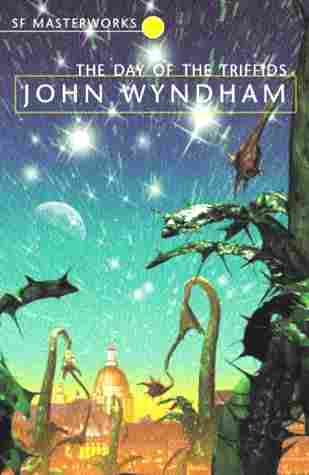
Day of the Triffids (novel 1951)
A beautiful meteor shower brings widespread blindness to all who watched it, causing civilization to descend into chaos—resulting in the release of bioengineered plants that move around and attack people.
Lucifer’s Hammer (novel 1978)
A chronicle of the end of civilization caused by a comet that impacts Earth.
Armageddon (film 1998)
NASA sends oil-rig workers on a mission to blow up an asteroid that is on course to destroy all life on Earth. An overbaked action version of Deep Impact.
Deep Impact (film 1998)
The world braces for the impact of a seven-mile wide comet that threatens to cause mass extinction. A touchy-feely version of Armageddon.
Sunshine (film 2007)
The sun is dying, so a heroic crew travels by spacecraft to deliver a massive bomb to reignite the Sun.
Death from the Skies (nonfiction 2008)
Phil Plait, astronomer and author of the blog “Bad Astronomy,” provides a chilling chronicle of potential hazards from outer space that could wipe out life on Earth and explains the science behind them.
Everything Matters! (novel 2009)
The story of one man who lives his entire life with the knowledge that life on Earth will be destroyed by an asteroid called Destroyer of Worlds.
2012 (film 2009)
Neutrinos released from a massive solar flare melt Earth’s inner core, triggering a chain of catastrophic natural disasters, and survivors struggle take refuge on a small number of arks.
2. Biological Calamities
Earth Abides (novel 1949)
After humanity is wiped out by a deadly airborne illness, a small band of survivors set about rebuilding civilization.
A Sound of Thunder (short story 1952, film 2005)
A time-traveling hunter inadvertently crushes a butterfly during an excursion to the Jurassic period. It causes a succession of “time waves” to batter present-day Earth—and its embattled human occupants—and wrenches reality onto a different evolutionary path. Think baboon-dinosaurs besieging your local gas-mart.
I Am Legend (novel 1954, films 1964 (The Last Man on Earth), 1971 (Omega Man), 2007 (I Am Legend))
One lone man is immune to a pandemic virus that ravages humanity. He struggles to develop a treatment to save the infected.
The Andromeda Strain (novel 1969, film 1971, TV miniseries 2008)
A satellite returns to Earth with a deadly microbe that wipes out an entire town except for a baby and an old man.
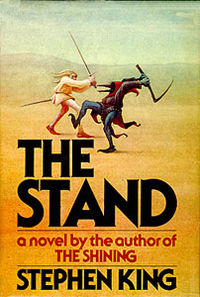
The Stand (novel 1978)
A deadly virus is accidentally released from a research lab, wiping out humanity. The story chronicles the confrontations that occur among the survivors.
12 Monkeys (film 1995)
A terrorist release of a virus has devastated civilization, forcing the remainder of humanity underground. Scientists send a convicted felon back in time as part of an effort to stop the release.
28 Days Later (film 2002)
A chimpanzee harboring a deadly virus escapes from a research lab and infects the entire population, resulting in societal collapse. The film focuses on four uninfected people and their struggle to survive.
Reign of Fire (film 2002)
Dragons suddenly populate Earth and wipe out all people in their path. Small bands of survivors across the planet struggle to evade the dragons and fight for their lives.

3. Geophysical Disasters
Soylent Green (film 1973)
The planet has warmed significantly and is overpopulated. Food is scarce; humanity clings to survival by consuming a processed food called soylent green, which contains a horrifying secret ingredient.
Waterworld (film 1995)
The polar ice caps have melted, leaving civilization underwater. Small bands of survivors drift across the waters seeking land.
The Core (film 2003)
Earth’s inner core has stopped rotating, and its magnetic field dies. A heroic crew must travel to the center of the planet and detonate a nuclear bomb to restart the inner core and save humanity.
The Day After Tomorrow (film 2004)
A series of severe weather events brought about by climate change triggers a devastating ice age that prompts survivors to flee to warmer latitudes.
Wall-E (film 2008)
A garbage-collecting robot sets about cleaning an Earth so trashed that mankind has abandoned it.

4. War
The World, the Flesh and the Devil (film 1959)
A man emerges from a caved-in mine that trapped him for days to find a deserted world wiped out by nuclear war.
On the Beach (novel 1957, film 1959 and TV movie 2000)
A nuclear World War III has wiped out most of the planet, except for a band of survivors on Australia. This story follows the lives of these ordinary people as an impending radioactive cloud nears their refuge, bringing certain death.
A Canticle for Leibowitz (novel 1959)
Set in a Catholic monastery, the story chronicles the rebuilding of society after a devastating nuclear war.
Planet of the Apes (novel 1963, film 1968)
Astronauts crash land on a distant planet with a civilization of walking, talking apes that are hostile to humans. Sequels to the 1968 movie include Beneath the Planet of the Apes and Escape from the Planet of the Apes.
Stop the Planet of the Apes, I Want to Get Off! (musical 1996 from The Simpsons)
I hate every ape I see, from chimpan-A to chimpanzee…
A Boy and His Dog (short story 1969, film 1974)
A young man and his telepathic dog roam a desolate world obliterated by a nuclear war.
Mad Max (film 1979)
Set in the wastelands of post-apocalyptic Australia, the film tells the story of a vengeful policeman and his clashes with a violent motorcycle gang. Sequels: The Road Warrior (1981) and Mad Max Beyond Thunderdome (1985).
The Day After (film 1983)
Fictional account of the devastation wreaked by a nuclear war between the U.S. and the Soviet Union.
Testament (film 1983)
This film chronicles the lives of people in a small California town after nuclear blasts destroy civilization.
Threads (TV drama 1984)
Documentary-style look at the medical, economic, social and environmental consequences of a nuclear war in northern England.
The Postman (novel 1985, film 1997)
A war has devastated the planet, and bands of people, led by a stranger in a postal uniform, struggle to survive.
Book of Eli (film 2010)
Thirty years after a devastating world war, a man named Eli travels on foot to the west coast of the U.S. to deliver the last remaining copy of the Bible to a safe location.

5. Machine-Driven Takeovers
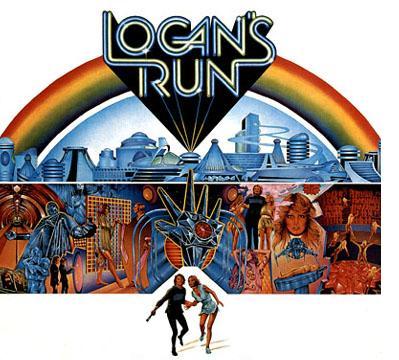
Logan’s Run (novel 1967, film 1976)
In a futuristic society, every aspect of people’s lives is controlled by a supercomputer, and, to keep the population and planet’s resources in equilibrium, no one is permitted to live beyond the age of 21.
The Terminator (film 1984)
In a post-apocalyptic future, intelligent machines devise a plan to exterminate the remaining humans. The film led to several sequels, a television series and two gubernatorial victories in California.
The Matrix (film 1999)
Machines harvest humans for energy by keeping their minds trapped in a simulation of the late 20th century. Sequels: The Matrix Reloaded and The Matrix Revolutions
6. Unspecified Catastrophes
The Road (novel 2006, film 2009)
A father and son struggle to survive after an unknown disaster reduced the planet to ash and rubble. They must avoid cannibals and scavenge food from abandoned houses and stores.
The World Without Us (creative nonfiction 2007)
This riveting thought experiment imagines how the planet would respond if humans suddenly vanished.

7. Collected Disasters
Armageddon Science: The Science of Mass Destruction (nonfiction 2010)
The science behind potential apocalyptic threats such as climate change, nuclear blasts, bio-hazards and the Large Hadron Collider
How it Ends: From You to the Universe (nonfiction 2010)
A scientific explanation of how everything in the universe will eventually end.

Posted in Books, Film, Writing | Leave a comment

Real Locations – Imaginary Crimes


Whether it be the London of Sherlock Holmes or the Ystad of the Swedish Wallander, Dashiell Hammett’s San Francisco or Donna Leon’s Venice, the settings chosen by crime fiction authors have helped those writers to bring their fictional investigators to life and to infuse their writing with a sense of danger and mystery.

Following the Detectives: Real Locations in Crime Fiction follows the trail of over 20 of crime fiction’s greatest investigators, discovering the cities and countries in which they live and work.

Edited by one of the leading voices in British crime fiction, Maxim Jakubowski, each entry is written by a crime writer, journalist or critic with a particular expertise in that detective and the fictional crimes that have taken place in each city’s dark streets and hidden places.

The book includes beautifully designed maps with all the major locations that have featured in a book or series of books – buildings, streets, bars, restaurants and locations of crimes and discoveries – allowing the reader to follow Inspector Morse’s footsteps through the college squares of Oxford or while away hours in a smoky Parisian café frequented by Inspector Maigret, for example.

Aimed at the avid detective fan, the armchair tourist and the literary tourist alike, Following the Detectives is the perfect way for crime fiction fans to truly discover the settings of their favourite detective novels. Published by New Holland Publishers, London, the book will be available in late September.

Posted in Books, Europe, Maps, Photography, Tourism, USA, Writing | Leave a comment

Do It In Public

Thanks to Brian Heater from Read Comics In Public Day for this post

Like so many great things in this world, Read Comics in Public Day has its roots in a joke. I don’t remember the exact wording, but it was something off-handed about reading novels on the train, because I was too embarrassed to read comics in public. Like many good jokes, that one had its root in the truth.

I run a comics blog, I travel to comic conventions, and many of my good friends are involved in some form or another in the comics industry, but I still find it hard sometimes to get around the stigma. Take that time, two years ago, when I was having my taxes done. The accountant asked if I had made any charitable donations in the prior year—I’m pretty sure she snickered when I attempted to explain to her what the CBLDF is. “That’s all right,” she said, “We don’t have to fill in the name.”

Comics are now widely accepted as a legitimate and vibrant art form—so why do I still feel a bit embarrassed to let strangers know about my not-so-secret passion?

My fellow Daily Cross Hatch editor Sarah Morean suggested that we turn the joke into something a bit nobler—and perhaps more permanent. And thus, the first annual Read Comics in Public Day was born.

The concept is fairly simple: we’re asking that everyone take an hour or two out of their day on August 28th (also the birthday of Jack “King” Kirby, incidentally) to read a comic book in a public setting—a park bench, a beach, a bus, the front steps of your local library (we do ask, however, that you be mindful of local loitering laws). Let strangers see you reading a piece of sequential art.

Take to the streets. Be proud. If someone asks what you’re reading, say, “a comic book” (the phrase “graphic novel is also acceptable, but let’s face it, it sort of defeats the whole purpose). Heck, lend them a book, if you’ve got an extra—what better way to make a new friend and convert a new reader?

While you’re at it, why not get a friend to snap a picture of you reading? Send it along and we’ll post it up for you in our photo gallery and on our site.

It’s all pretty straight forward, of course, but if you’ve got any questions—or suggestions—feel free to drop us a line at readcomicsinpublic@gmail.com.

Posted in Art, Books, Writing | Tagged | Leave a comment

Visit The Garden of Knowledge


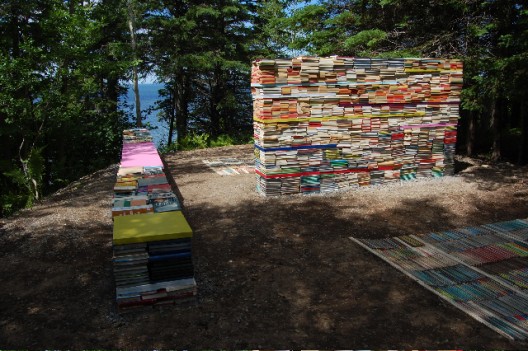
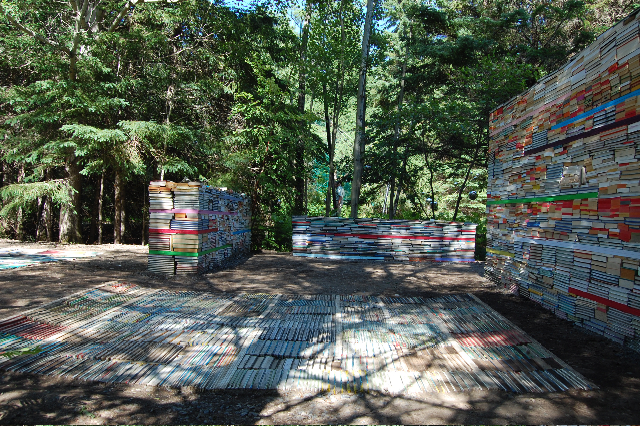
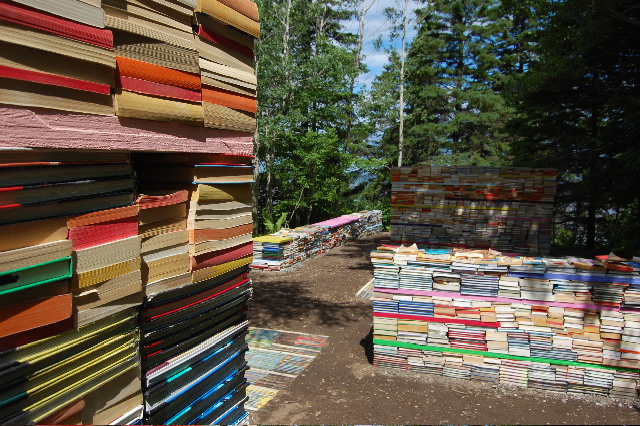
Designed and built by 100Landschafts Architektur group Berlin, The Jardin de la Connaissance is a temporary garden in a Quebec, Canada forest.Incorporating approximately 40,000 books, multi-coloured wooden plates and several varieties of mushrooms the Jardin is just one of an amazing group of installations that compose the International Garden Festival 2010 at the Rockford Gardens in Grand-Métis on the south shore of the magestic St. Lawrence River.

Focused on the theme of paradise,  the tree of knowledge is the central semiotic theme of the paradisiacal garden. Rather than reopening a way through the proverbial enclosures, the design team is interested in its manifold textures. From the single tree of knowledge they have gone to the many of the forest; from one truth to the plenitude of multimedia and the overwhelming world of information. The ‘Garden of Cognition’ does not illustrate a ‘return to nature’ or attempt a ‘biblical’ reconciliation, but its intention is to provide a platform to experience and frame the forest  in a unique and compelling way. The garden engages the mythical relation between knowledge and nature integral to the concept of ‘paradise’. By using books as material in the construction of the garden, they confront these instruments of knowledge with the temporality of nature. And by exposing these fragile and supposedly timeless materials to transformation and disintegration, they also invite an emotional involvement of the visitor. The book assemblages establish a framework amidst the forest that embodies a variety of experiential activities. The Jardin de la Connaissance becomes a sensual reading room, a library, an information platform, a dynamic realm of knowledge.

The Jardin de la Connaissance is built from a large quantity of discarded books that form walls, benches, and carpets. Based on an open compositional principle, these elements are assembled to create a garden space, integrating it with the site and the structure of the forest. The orthogonal organization is reminiscent of a Neo-Plastic composition from the early 20th Century, invoking an optimistic orientation based on ‘primary’ elements. And yet, this ‘utopian’ notion is countered by the gradual decomposition of the paper material.The structure of the book-volumes is interspersed, marked and structurally supported by brightly coloured wood plates, which bind the individual book-stacks together.The bright, artificial colours of these elements complement the changing tones of the exposed paper in the books and the surrounding forest. The markers form a discrete linear composition suspended between the books. Thus they also create a luminous spatial signage, inviting visitors into the garden. Placed on the benches, some also serve as elements on which the visitor can sit.

Extending the theme of transformation and providing an additional element in the semiotic field of cultural and natural knowledge, mushrooms add an additional materiality to the garden. Knowledge about the cultivation of mushrooms is – with the exception of the Japanese shiitake (ca.1000 years) and the button mushroom (ca.350 years) – rare and quite new. The cultivation of other mushroom varieties has begun only in recent decades. Eight different, edible mushroom varieties such as Winecap or Oyster mushrooms are cultivated within particular books and are nourished by the book walls. The mushrooms are pre-cultivated from spawn-sets and prepared for insertion in the book walls in well-watered book bundles. The mushrooms will be watered and humidifi ed on a regular basis. The mushrooms enrich the theme of the post-paradise life cycle. This also responds to the temporal nature of the garden installation within the framework of a temporary garden festival.

Photos by Jardin de la Connaissance designers Thilo Folkerts and Rodney LaTourelle.

Posted in Architecture, Art, Canada | Tagged , | 1 Comment

Will You Help A Brother (Therapist) Out?

Please check out this post from the innovative travel psychologist and travel writer Dr. Michael Brein and then support his new project on Kickstarter.

THE TRAVEL PSYCHOLOGIST E-BOOK SERIES
You wouldn’t believe the incredible stories people have told me about their travels!

Have you ever heard of the psychology of travel? Probably not, because I am the first one, I think, to coin this term, back in ’65. In fact, they almost threw me out of graduate school at the University of Hawaii when I told them that I came there to study the psychology of travel. “There’s no such thing as the psychology of travel,” said the two rat psychologists leering down at me. But I stood my ground, got my degree, followed my passion, and now I am ‘The Travel Psychologist’. But my God, what a monster I have created! Please read on…

What this is all about:

Imagine Forrest Gump running back and forth across the US simply because he liked to run! Passion and perseverance can lead to some very strange things, indeed! Read on. It’s hard to believe, what it is that I’ve done.

Over the last 35 years, while traveling the world, I’ve collected more than 5,000 fantastic travel tales told to me by at least 1,500 fellow world travelers and adventurers whom I’ve encountered around campfires, in pubs, in train stations, on safari, on cruise ships, on planes, chicken buses, transsiberian trains, and even on elephant back–in fact, I found people just about everywhere!

Right from the beginning, from getting people to promise to wait for me while I ran to get my bulky, unwieldy tape recorder, to a bit later, recording with a small micro-cassette recorder, and finally, in the modern era, to recording with digital voice recorders, I wheedled, pleaded, coaxed, cornered, wore down, obsessed, stalked, and finally managed to convince 100s and 100s of travelers to sit down with me for a bit so that I could record their stories.

Some I talked to for just a few minutes, some over days. And just this I did–over a period of nearly 35 years! Many thanks to my dear friends Steve Strickland and Megan Mitchell of BMSE (Body, Mind & Spirit Expos) out of Ashland, Oregon for providing, literally, this eccentric (ME!) enough booth space in many of their Expos up and down the west coast (and even Hawaii) to carve out my biggest chunk of interviews (about 300) in most recent years.

Travel-life in the raw–the good, bad, and the ugly:

All the while, I have been one of my own very best sources of travel tales too: I have been chased, robbed, mugged, menaced, scammed, conned, faced machine guns, been stalked by KGB, detained by US agents, as well as been leered at by lions, hippos, and buffaloes. I’ve been scared speechless, and, luckily, have had a few great escapes of my own.

I have tried all kinds of foods, drinks, and even a few dubious substances. But I have also liked, loved and formed phenomenal friendships nearly everywhere I’ve been. I have peered into the mystical, met gurus and saints, glimpsed the paranormal. In all, I have experienced the timelessness, the core, the essence, and perhaps even touched the very soul of travel. I have, indeed, lived the full, explored travel-life of my own.

Recorded these tales:

I meticulously recorded the good, the wonderful, the bad, the horrible, the incredible, the mystical, the close calls and great escapes, the confessions, the funniest, scariest, dangerous, most hair-raising and horrifying of travelers’ experiences as we’ve all meandered and traversed the globe.

Travel, not for the faint of heart:

These are not the meek tales of how travelers’ spent their summer vacations. Rather, they are the real down in the dirt travel-life trials and tribulations of travelers as they’ve faced life and death situations. Most have lived to tell their tales, and, sadly, some have not.

What’s different about them:

These are the tales that truly touch travelers’ souls. I searched, and searched even more, for the psychology behind travelers’ experiences. I probed how they got themselves into good situations, out of bad ones, and how they avoided the horrific altogether. I wanted to know what travelers thought and felt about what was happening to them right at the very instant they were in the thick of it. I wanted to know the shoulda, coulda, woulda–what would they have done differently. I probed at the deepest depths. And the moment I sensed even the slightest glimmer of something psychological, I relentlessly zeroed in on the travelers’ psyche, up close and very personal. Many have told me that my interviews were provocative and made them examine their own travels at a deeper level.

What a collection!:

The result is a phenomenal collection of travelers’ stories with an in-depth look at the core of the travel experience itself. The tales cover more than 200 themes and virtually every country in the world. Although collecting the stories was more than half the fun, it is now time to bring them out in the form of an e-book series–The Travel Psychologist Series–consisting of somewhere between 50 and 100 e-books, each one covering a different country, region or subject theme. You’ll see these e-books eventually on Kindle, the iBookstore, Borders, Barnes and Noble, and, hopefully, on your own laptops, desktops and mobile devices as well. E-books are booming! The time is now!

My e-books are designed to entertain and inform. If but one person avoids being pick-pocketed or worse, or forms a lasting friendship with a person of another culture, or has the time of his or her travel-life as a result of my efforts, then I will have succeeded. There is so much to share with the armchair adventurer or real-time traveler. I’ve had my fun amassing this unbelievable collection of travel tales and now it is time for me to make them public.

How I plan to do it:

I am systematically organizing my collection of travel tales into categories of countries, regions, and travel themes. From the Cold War Soviet Union & Eastern Europe, the Hippies & Drugs, Police & Jails, Saints, Miracle-Workers & Magicians, Cons & Scams, Safaris & Wildlife, Safety & Security, Close Calls & Great Escapes, the Best of Collection, and much, much more–in fact, nearly 200 categories! A collection of somewhere between 50 and 100 e-books will emerge.

I have the equivalent of nearly 600 micro-cassette tapes full of these tales, all of which have already been digitized into MP3 files. Approximately 1/3 of these files has already transcribed and I am currently already working with these stories as we speak.

What the money is for:

Simply stated, I am raising the money in order to have the 2/3 remaining digital files transcribed into a form that I can work with (Word documents). I have found a company in India that does excellent work at a very reasonable rate. Thus, I should be able to transcribe the rest of my material fairly efficiently and quickly, enabling me to complete my work on the series in about year or two.

To learn something more about ‘The Travel Psychologist e-Book Series’, please visit http://www.michaelbrein.com/. Select ‘Travel Tales’ and ‘The Travel Psychologist’ to get an idea of what I am doing. Be sure to look at ‘FAQ’ and ‘Themes’.

And who am I to be able to accomplish this?

Aside from having a relentless passion to do this, I am intelligent and very creative. All very well, you may be thinking. But have I actually done something? Can I really do this? You betcha! I’ve been very entrepreneurial in my life, having created some very good things, such as a successful dining, shopping, travel and entertainment discount card in Hawaii (The Epicure Card).

And I have created the world’s first and only travel guide series to sightseeing by public transportation. It is this guide series that I am proposing as a partial reward and thank you for your helping to fund The Travel Psychologist series. To learn more about this unique travel guide series, please visit http://www.michaelbrein.com/ (select ‘Travel Guides’).

What’s in it for you? Contribute, Participate, Pledge, and Share!

You, who are kind and generous enough to support me in this effort stand to gain as well. Could be you’ve had travels of your own. Maybe even you’ve wanted to write your own book. And perhaps you’ve learned that this may very well never be. I am doing The Travel Psychologist e-book series for both me and, in a sense, for you as well. If you can relate to and appreciate what I’m doing–and maybe participate in some small way–you can certainly share in various aspects as well.

At various PLEDGE levels for my project I will gift you with the following:

FREE digital and print copies of my unique travel guide series, “Michael Brein’s Travel Guides to Sightseeing by Public Transportation”;

FREE digital copies of the e-books in “The Travel Psychologist E-Book Series”;

A FREE consultation about your own travel-life with The Travel Psychologist (me!);

And, finally, for the Grand Patrons among you who may have a dream to collect your own travel experiences into a book–I’ll create and include a book of your own travel stories in The Travel Psychologist E-Book Series!

Thank you for considering my project!

Before you go:

WANTED! Have a few good travel tales to contribute to my e-books?
REWARD! I’ll gift you with a FREE copy as a ‘thank you!”

Posted in Books, Tourism, Travel Writing, Writing | Leave a comment

Gotta Love Strange Maps !

Frank Jacobs has been curating and writing the Strange Maps blog since 2006 and has recently joined the culturally minded Big Think collective. You can also find a terrific selection of Frank’s bizarre and brilliant work in the Strange Map anthology published by Penguin.

Here’s a taste of the wacky world of Strange Maps :

Marge Simpson’s European Adventure


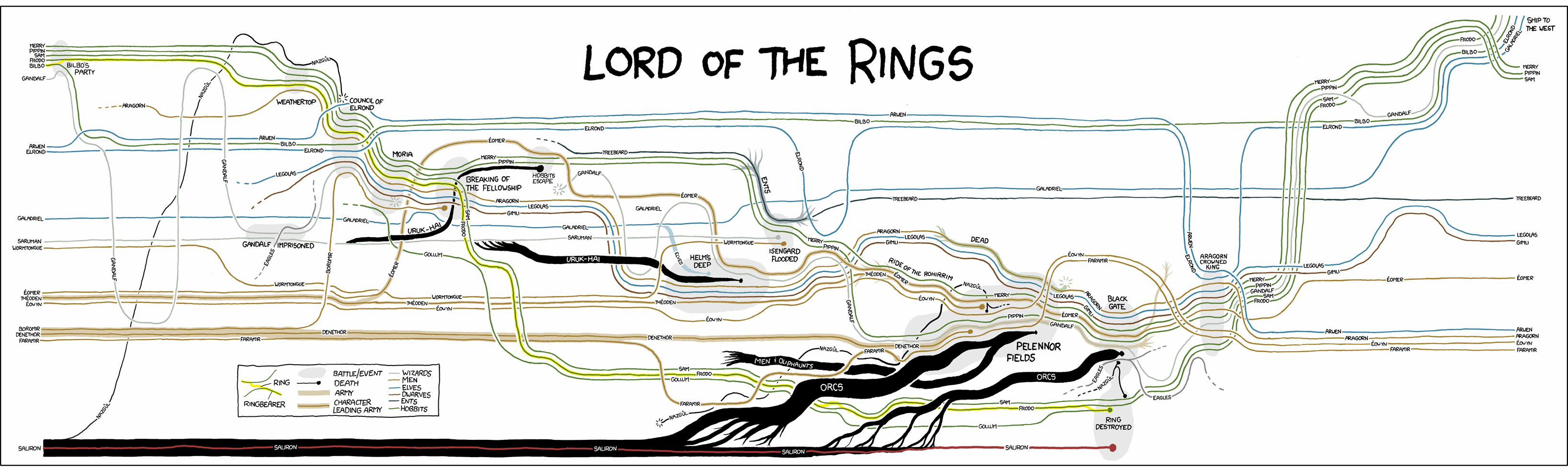
Flow-Charting The Ring Trilogy

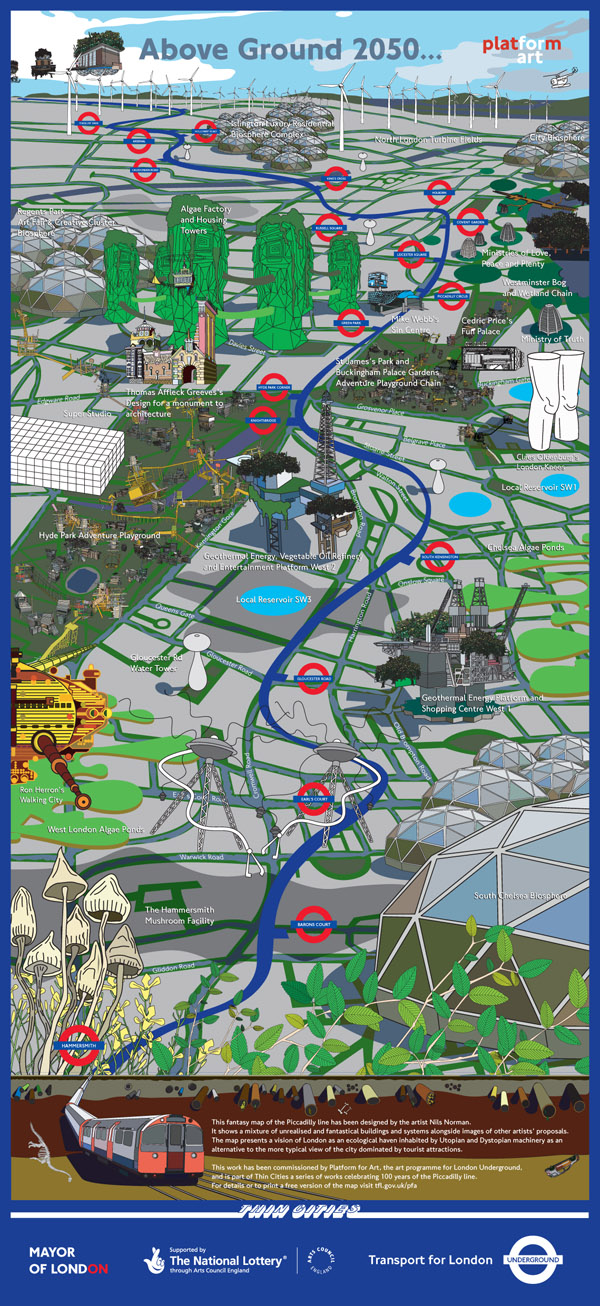
A Piccadilly Fanatasy: London in 2050

Slapstick on a Map: The Three Stooges’ Starvania


Posted in Books, Maps | 1 Comment

I’m Not Waiting For The Paperback, This Time

The first dictionary of slang, out of print for 300 years, is being published by the Bodleian Library, Oxford from a rare copy unearthed in its collections.Originally entitled A New Dictionary of Terms, Ancient and Modern, of the Canting Crew, its aim was to educate the polite London classes in ‘canting’ – the language of thieves and ruffians – should they be unlucky enough to wander into the ‘wrong’ parts of town.

With over 4,000 entries, the dictionary contains many words which are now part of everyday parlance, such as ‘Chitchat’ and ‘Eyesore’ as well as a great many which have become obsolete, such as the delightful ‘Dandyprat’ and ‘Fizzle’. Remarkably, this landmark of English from 1699 was compiled and published anonymously, by an author who has left us only his initials – ‘B.E. Gent [gentleman]’.

Playfully highlighting similarities and contrasts between words, B.E. includes entries ranging from rogues’ cant, through terms used by sailors, labourers, and those in domestic culture, to words and phrases used by the upper classes. In his introduction to the Dictionary, John Simpson, the Chief Editor of the Oxford English Dictionary, explores B.E.’s decision to interweave rogues’ cant with the everyday insults and slang of his day:

‘Cant was the secret language of the rogues, beggars and vagabonds who peopled the underworld of early England. The word ‘slang’ itself is not recorded by the Oxford English Dictionary until 1756. … Short lists of canting vocabulary had been available in print since at least the early sixteenth century, but they had always been tucked away in longer texts. B.E. was the first person to present the canting tongue in dictionary form.’

B.E.’s dictionary is a lost gem. It offers real insight into life during the period and bristles with humorous and eminently quotable definitions, many of which reveal the earthier side of seventeenth-century London. Now available to the general reader, this book offers a tantalising glimpse of the linguistic richness of English, at a time when slang was being codified.

Sample Entries

Anglers, c. Cheats, petty Thieves, who have a Stick with a hook at the end, with which they pluck things out of Windows, Grates, &c. also those that draw in People to be cheated.

Arsworm, a little diminutive Fellow.

Buffenapper, c. a Dog-stealer, that Trades in Setters, Hounds, Spaniels, Lap, and all sorts of Dogs, Selling them at a round Rate, and himself or Partner Stealing them away the first opportunity.

Bumfodder, what serves to wipe the Tail.

Bundletail, a short Fat or squat Lass.

Cackling-farts, c. Eggs.

Dandyprat, a little puny Fellow.

Farting-crackers, c. Breeches.

Fizzle, a little or low-sounding Fart.

Humptey-dumptey, Ale boild with Brandy.

Grumbletonians, Malecontents, out of Humour with the Government, for want of a Place, or having lost one.

Keeping Cully, one that Maintains a Mistress, and parts with his Money very generously to her.

Knock down, very strong Ale or Beer.

Lantern-jaw’d, a very lean, thin faced Fellow.

Mawdlin, weepingly Drunk.

Mopsie, a Dowdy, or Homely Woman

Muddled, half Drunk.

Mutton-in-long-coats, Women. A Leg of Mutton in a Silk-Stocking, a Woman’s Leg.

One of my Cosens, a Wench

Pharoah, very strong Mault-Drink.

Princock, a pert, forward Fellow

Provender, c. he from whom any Money is taken on the Highway.

Strum, c. a Periwig. Rum-Strum, c. a long Wig; also a handsom Wench, or Strumpet.

Urchin, a little sorry Fellow; also a Hedgehog.

Willing-Tit, a little Horse that Travels chearfully.

Posted in Books, Europe, History, Libraries, Writing | Tagged | Leave a comment

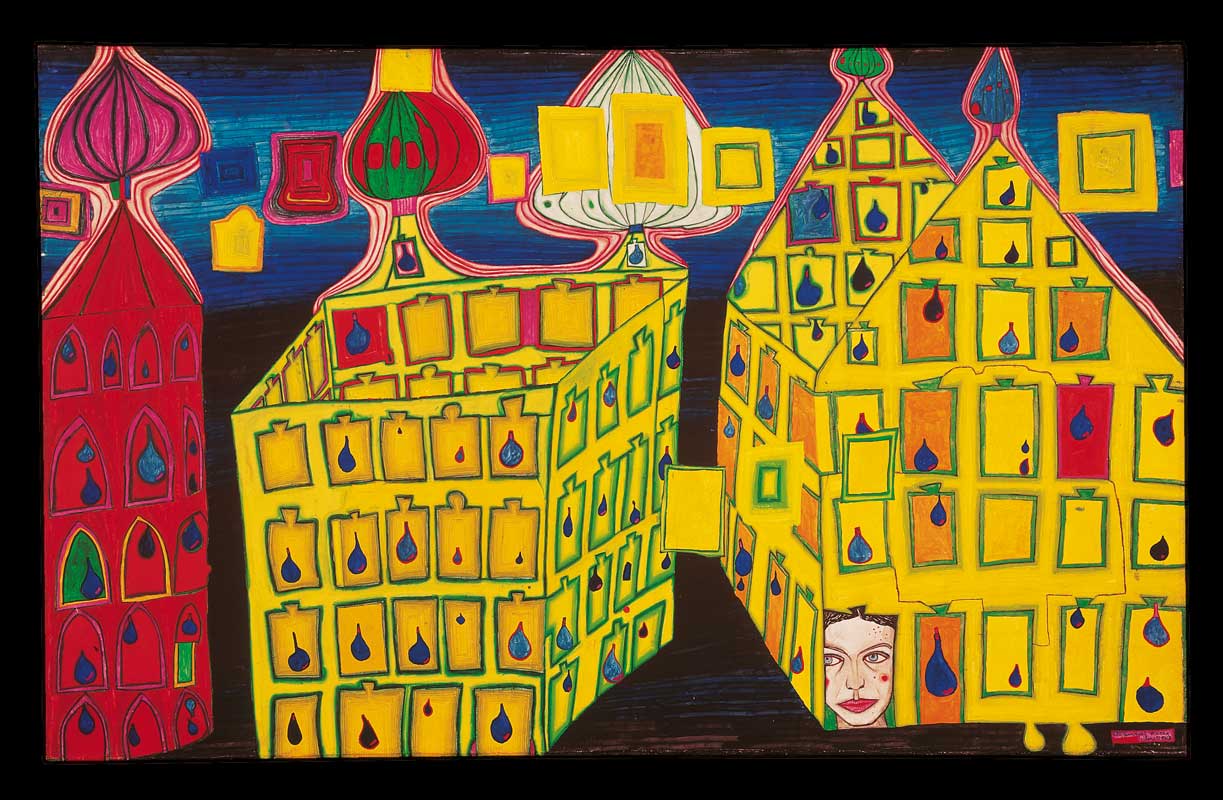
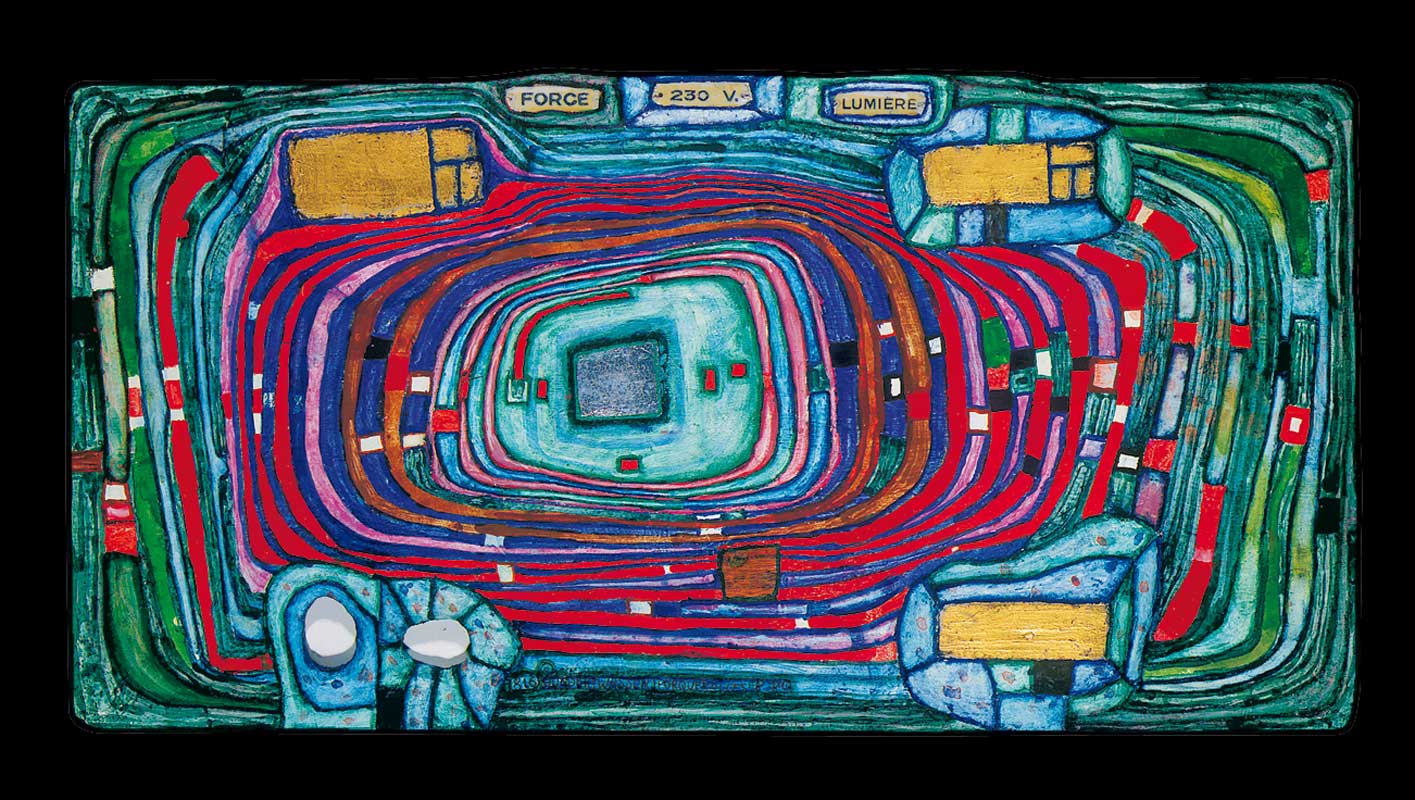
Mehr Hundertwasser

As requested, more Hundertwasser.


“The Straight Line Leads to The Downfall of Humanity”

— Friedensreich Hundertwasser


Posted in Art, Europe | Leave a comment

Be A Bookstore Hero

Located in the colorful Mission District of San Francisco, Modern Times Bookstore is facing a financial crisis and urgently needs an influx of cash if they are going to survive through the summer. Modern Times is, as the store put it recently, “one of the few remaining independent, collectively run, politically progressive bookstores in North America.” Besides selling books, it hosts events, has open mics and workshop and aims to be a community center and resource in the Mission District. Modern Times was founded in 1971.

The store worker-owners estimated that if everyone on its mailing list “donated $10 we would raise enough to keep going for 3 months, $20 each would keep us in business for 6 months, donations of between $30 to $100 or more would be enough for us to keep our doors open, hopefully for good.” They also suggested that members and customers who couldn’t give that much consider smaller donations, all of which “will go directly towards covering the bookstore’s costs, and are a part of a larger plan of action and structural change to make the business sustainable in the current economy.”

Among other suggestions: supporters can become sustaining or lifetime members, sponsor a shelf, promote the fundraising drive to friends and family, organize fundraisers, “pass the hat at a party,” encourage professors and teachers to buy books and have their students buy books at the store, give a Modern Times membership or gift certificate and bring friends to the store. For more information, see the Help Us page on their website.

Posted in Books, Bookstore Tourism, USA | Tagged , | Leave a comment