Pushing the Envelope in Poland

Controversial Banner

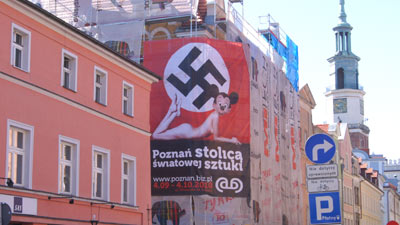
Art gallery owners in Poznan, Poland are facing jail-time over an enormous banner outside of their gallery advertising an upcoming show titled “Abnormal Nudes”. The huge poster features a nude Minnie Mouse sprawled under a giant Nazi swastika.

The banner image by Italian artist Max Papeschi is called “Nazisexymous”. Local residents are especially enfuriated by the ad’s placement nextdoor to the local synagogue. During World War II the synagogue was looted by the Nazis and then flooded for use as a swimming pool for German troops.

Local prosecutors are studying the banner to determine if it promotes Fascism, a crime punishable by up to three years in jail in Poland.

The gallery manager, Maria Czarnecka, has denied that the poster promotes Nazism, saying “Our goal is not just to exhibit, but to provoke, to show how modern pop culture comments on reality”.

Ironically, Poznan just inaugurated a PR campaign last week to encourage tourism. The campaign, called “Breath of Culture”, is aimed at burnishing Poznan’s image as a city of art and culture, and is part of a movement to have Poznan named the “European Capital of Culture” for 2016. Really ?

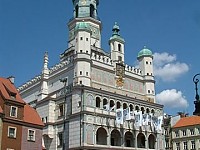
Poznan

Posted in Art, Europe, History, Tourism | Tagged | Leave a comment

Nordic Noir

Henning Mankell

Philadelphia author Joe Queenan recently visited Sweden for the BBC World Service and recorded a fascinating podcast on the phenomenon of Scandinavian crime fiction.

Queenan explores the social stressors that are making the Nordic region such fecund ground for popular fiction. You can listen to or download the podcast at the BBC World Service .

Helen Tursten

Posted in Books, Europe | Tagged , , | Leave a comment

Book Town Bredevoort

Landstraat Bredevoort

Bredevoort Boekenstad started in 1993 as a private initiative to bring the historic centre back to life. Now it has over 30 antiquarian & second-hand bookshops, art galleries and studios. Bredevoort Booktown has been honoured with many national and international awards. It is one of the founding members of the Association of International Booktowns and has a partnership with the art-village Schöppingen, in the Munster area. Bredevoort Booktown’s Committee of Recommendation has renowned members. If you want to support this project you can become a ‘Friend’.
Regularly there are small cultural events: concerts in the 16th century church, exhibitions, writer’s lectures, workshops and the “Gondelvaart”.  

Bredevoort antiquarians offer a large selection of books in English, German and many Dutch antiquarian bookshops. An opportunity to find the one book which you have been looking for.
Every third Saturday you’ll find a specialized bookmarket with bookdealers from all over the country on the square under the old trees, and bookbinding demonstrations in the former school. Many antiquarians are opened on the Sunday in the same weekend.
In May and August Bredevoort organises the large international bookfairs with dealers from Germany, Belgium and the Netherlands. The large private sellers market in July is very popular. And on Easter Monday you can find bargains at the yearly clearance market.  

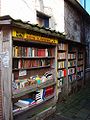
"Honesty" Bookshop

Bredevoort is a very charming medieval town. The ancient street plan can still be traced without major changes and the entire town centre is a listed national heritage site.  

You can find more information at: Bredevoort Boekenstad

This post was provided by Jaap Brinkman

Posted in Books, Europe | Tagged , | 1 Comment

Book Town Redux : St.Pierre-de-Clages

This post was provided by Jamie Emery. 

Swiss Book Town

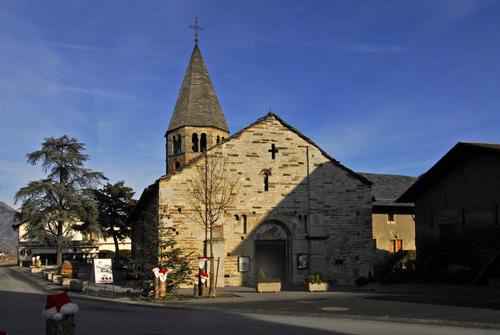
Situated in the heart of the majestic Swiss Alps, in the Canton Valais, and surrounded by magnificent vineyards, St.Pierre-de-Clages has a colourful history as a Celtic and Roman settlement. In the 11th century Benedictine monks constructed a Romanesque church in the center of the village. 

Today, the diminutive village of 630 inhabitants, with lovely 16th and 17th century houses and shops, is home to the Village Suisse du Livre and fifteen antiquarian booksellers. The annual Fête du Livre Book fair in August also attracts more than 120 booksellers from Switzerland, France and Italy, along with 20,000 avid book-lovers. 

Market day

This gorgeous little book town is easily accessible by train on the Lausanne-Simplon Line or in less than ten minutes by road from nearby Sion. It makes a brilliant day trip from Montreux, Lausanne or Geneva. 

St.Pierre

For more information, please see the St.Pierre-de-Clages Book Town website

Posted in Books, Europe | Tagged , | 1 Comment

Book Town Favorites : Redu, Belgium

This post was suggested by Joanne Allen.

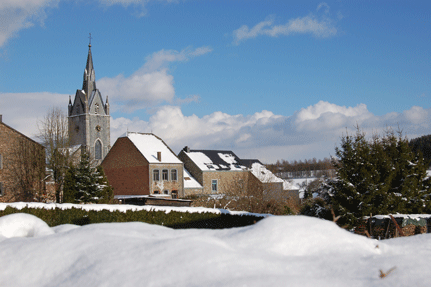
Redu

The first Book Town established on the “Continent”, Redu Village du Livre was founded in 1984. Today there are twenty-four bookshops, offering antiquarian and secondhand titles, in the little, thousand year-old village of 500 nestled in the Ardennes.

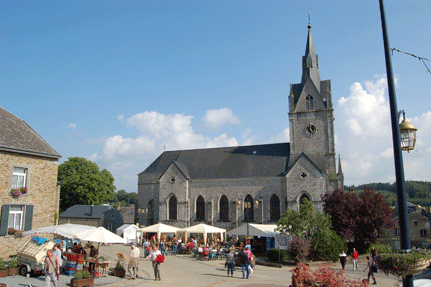
Redu attracts more than 300,000 bibliophiles a year to the otherwise sleepy village. The best time to visit is in August, when the Nuit du Livre is held. Village shops and restaurants stay open all night and there’s music and fireworks.

Along with terrific bookshops, Redu boasts many artisanal shops selling baked good, food, soap and clothing.

Redu weekend market

Redu


Posted in Books, Europe | Tagged | Leave a comment

What’s Your Favorite Book Town ?

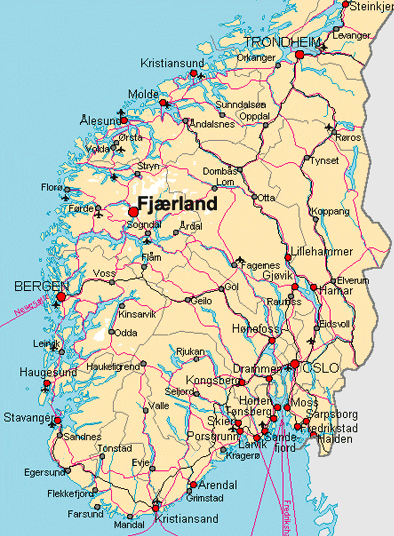
Fjaerland

Whatever you call them: Boekenstad, Paese dei Librai, Village du Livres or just Book Towns, they are small towns or villages in which secondhand and antiquarian bookshops are concentrated. Most Book Towns have developed in settings of historical interest or scenic beauty. And many Bücherstadt  have been the result of community efforts to revive local economies through Bookstore Tourism.

Most booklovers are well acquainted with Hay-on-Wye , Wales, and the story of its creation by the legendary Richard Booth. But how many bibliophiles know about Montereggio Paese dei Librai  in Italy or the newest Village du Livres in Esquelbecq, France ?

For sheer gobsmacking beauty and chutzpah, my nominee for favorite European Book Town has to be Fjaerland, Norway. Magically situated in an achingly beautiful spot between a fjord and a glacier this Noske Bokbyen is a bibliophilic nirvana. Huddled along the waterfront, Fjaerland’s bookshops are housed in former barns, a stable, the old post office, a ferry terminal, old grocery store and a boathouse.

Arnold's

The town boasts that there are four kilometers of book shelves and more than 250,000 used, secondhand and antiquarian books for sale. And since this is Norway, the titles are from throughout Europe and North America.

So if you plan to visit Western Norway, and why wouldn’t you want to, you may as well book a room at the only hotel in town, the grand 19th century Hotel Mundal, and spend a day or two.

For more information on Bokbyen Fjaerland visit their website. And for more on the International Book Town Movement try the International Organisation of Book Towns official site .

Western Norway

Posted in Books, Europe | Tagged , | 4 Comments

London Literature Festival (and more)

This post on the upcoming London Literature Festival (July 1 through 18) was provided by UK correspondent Evan Smythe.

Southbank Centre

Football, philosophy, capitalist apocalypse, comedy and adventures in science are just some of the features of this year’s festival, which brings the world’s best writers and thinkers to Southbank Centre. Experience the radical force of Slovenian philosopher Slavoj Žižek and make a date with father of American Psycho Bret Easton Ellis. Plumb the ocean depths with explorer Sylvia Earle, hear Jeanette Winterson deliver the Southbank Centre Lecture and play ball with Brazilian footballing legend Sócrates. Experience the uncanny with a contemporary performance of The Yellow Wallpaper and stare into the eye of the beast with a new production of Moby Dick. Master the art of kissing, join our Book Club and make history by taking part in the world’s first Litweeter festival.

This year bibliophiles and booklovers of all stripes are in for a treat with an exceptional line-up of authors and poets from around the globe. World Lit is celebrated throughout the Festival with events highlighting rising literary talents from Africa, the Middle East, Asia and Latin America.

While you are on the South Bank, be sure to visit the special exhibition being held at Lambeth Palace until July 23rd. It’s well worth a detour.

Four hundred years old in 2010, Lambeth Palace Library (part of London’s Lambeth Palace) celebrates this momentous occasion with the exhibition Treasures of Lambeth Palace Library. Featuring manuscripts, books and archives, it offers a fascinating indication of the library’s vast scale.

Among the huge array of materials found in the exhibition is the founding collection owned and used by Archbishop Bancroft as his ‘theological arsenal’ in a time of religious controversy and as a scholar and patron of learning. Treasures include a Gutenberg Bible from 1455, the first book printed in Western Europe from movable metal type; the 12th-century Lambeth Bible, regarded as one of the monuments of Romanesque art; and some unique witchcraft tracts collected by Bancroft through his interest in debates over diabolic possession and exorcism.

Lambeth Palace

Posted in Books, Europe, Writing | Tagged , | Leave a comment

Where in the World is Maardam ?

This post is the first in a series suggested by reader Laura Courier. 

Hakan Nesser

Now that Stieg Larsson’s “Millennium Trilogy” has taken the world by storm, English-speaking readers are finally taking notice of some of Scandinavia’s other stellar authors. Most booklovers are familar with Sweden’s media darling, Henning Mankell, but the world is just warming to the other Nordic bestsellers. 

Håkan Nesser has published twenty wildly successful books in Sweden over the past twenty-two years, but only four have been translated into English so far. These titles are from a ten book series based on Chief Inspector Van Veeteren and his detective squad. The series takes place in an unnamed northern European country that at various times resembles Sweden, Germany, Norway and even the Netherlands. The characters, places and locations switch between Swedish, Dutch and German names.

The action in Nesser’s novels generally centers on the fictitious city of Maardam; a town rife with contemporary European angst that could be just about anywhere north of Brussels. The recurring central character, Chief Inspector Van Veeteren, a lugubrious, philosophical cop, is a cross between Mankell’s unsentimental, depressive Kurt Wallender and Fred Vargas’ quirky, sardonic Commissaire Adamsberg.  

Nesser’s complex characters, economical writing and Hitchcock-ian plots make for intriguing, disconcerting and riveting novels from start to finish. Nesser is a controlled stylist, who manages to unsettle, frustrate, challenge, but still amuse his audience. Fortunately, we will finally see more of his books in translation. Nesser’s latest novel to be published in English, The Inspector and Silence, will be released on July 2nd.

The Inspector and Silence


Posted in Books, Europe | 12 Comments

Why Not Armenia ?

This post was sent to us by Nellie Malkhassyan of Yerevan, Armenia. Nellie is a travel guide, consultant and specialist on Armenian travel and culture. 
 

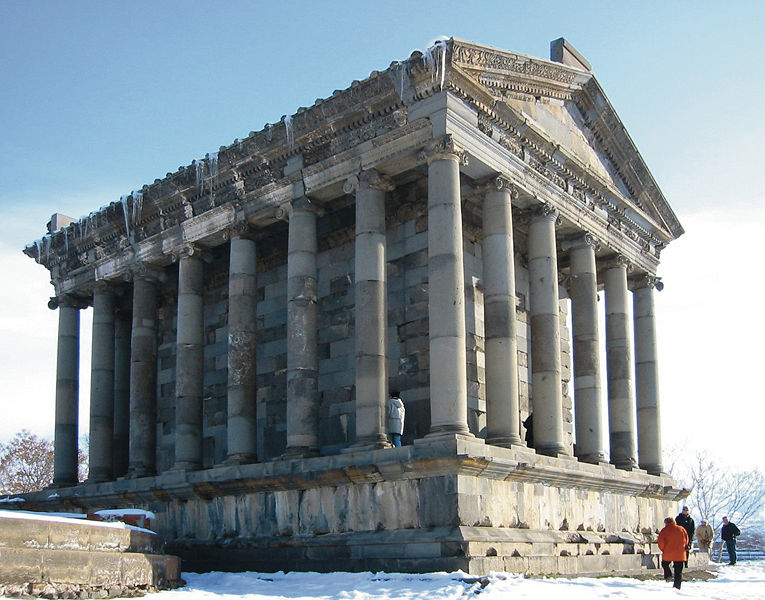
Garni

I am pleased to invite you to visit Armenia and discover fully the hidden treasures of my homeland. Armenia has attracted travelers since ancient times. Caravans would travel across the territory of historical Armenia as it was an important part of the Great Silk Route. Many famous travelers, such as Jean Baptist Tavernier, Marco Polo, and others, have portrayed this country in their books depicting its picturesque landscape and the richness of its numerous cultural monuments, covering a wide range of the history of human civilization from Cyclopean fortresses to the times of Urartu and the Pagan era, with its towns built in Hellenistic style to early Christian churches and ecclesiastic universities homed by monasteries. Pages could be written on the long-aged history of Armenia!   

  
Generally, tourists visiting Armenia are excited by its nature and amazed by the results of its “creative work” (pictorial landforms, rock sculptures, waterfalls, etc.) and wish to learn more about the roots of their formation. As a matter of fact, Armenia is one of those few countries that, though small in territory, is notable for its complexity and rich diversity of its geological structures. In a small area, one can observe various signs of active geological processes ever taking place on the Earth and continuing today.    

Among all this diverse Armenian geology are objects that could be assigned to the rank of rarity, and often, unique natural geological monuments are to be found. The agro-biological diversity of wild relatives of plants – cultivated, medicinal, edible, wood, coloring, aromatic, fodder, and many others – including many endemic, relict, and rare species is surprising.    

The people and races that have populated the Armenian highland, whose origin stretches into the unknown millennia of prehistory, have provided the human substance for its culture. Being at the crossroads of Asia and Europe, the country served as a bridge joining both, geographically as well as culturally, Iran and Indo-China with European civilization. Armenia synthesized the best traditions of the arts, music, and architecture from its neighbors and gave them a new interpretation that not only enriched its own cultural heritage but also influenced that of its neighbors. A visit to Armenia will help one to define a new interpretation of east-west cultural interactions.    

Throughout Yerevan alone, there are more than 40 museums and galleries presenting fine arts. Yet the country as a whole is often referred to as an outdoor museum. It has over 4,000 historical monuments, which cover various periods of the country’s development from prehistoric to the Hellenistic era and from the early to medieval Christian era. The stone-carved crosses and cathedrals recall the European Renaissance. Comparisons and discoveries of the arts are a continual delight in this magical country.    

Though distinctive national styles are clear, an Armenian national song can sound to a westerner as hauntingly oriental. In order to understand Armenian musical arts, please visit the House-Museum of the world-reknowned contemporary composer Aram Khachatouryan or go to the Philharmonic Hall, the Chamber Music Hall, or to the Opera and Ballet House while in Yerevan.    

Armenia’s literary and artistic history is studied and exhibited in Matenadaran – the Institute of Ancient Manuscripts in Yerevan, which preserves a unique collection of 14,000 complete manuscripts, fragments, and miniatures (UNESCO World Heritage Site). The oldest parchment manuscript dates back to early 5th c. The majority of manuscripts are research works of ancient scholars on astrology, alchemy, geography, history, medicine, poetry, and the musical arts.    

Looking forward to hearing from you. For more information, email  nellie@seearmenia.net .
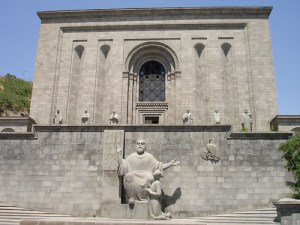
Matenadaran (photo by TigranMets)
Posted in Art, Books, Europe | Tagged , , | 2 Comments

The Mysterious Stieg Larsson


Stieg Larsson only granted one interview about the “Millennium Trilogy” before his untimely death in 2004. Lasse Winkler, editor-in-chief of the of the Swedish book trade magazine Svensk Bokhandel recently reminisced about his singular encounter with the mysterious author and some of the surprises that Larsson revealed.   

Until The Girl With The Dragon Tattoo was published Larsson was widely known as the publisher of the progressive, leftist magazine Expo and as an anti-skinhead campaigner, but few people knew that he had reviewed crime fiction for the Swedish TT News Agency for years. Larsson also collaborated on articles about detective fiction for TT.  

The seeds for the “Millennium Trilogy” were planted at that time, but the real inspiration came when Larsson tried to imagine what the fictional character Pippi Longstocking would be like in the 1990s. He re-imagined Astrid Lungren’s renowned children’s book heroine as a 25 year-old social outcast, stumbling upon the spark that would bring Lisbeth Salander to life. He turned to another Lungren character, Kalle Blomkvist boy detective, as inspiration for Salander’s partner journalist Mikael Blomkvist.

Larsson also revealed that the trilogy was actually intended as a five book series, and that the fourth book was about thirty percent complete at the time of the Winkler interview. He also indicated that he’d keep writing the Salander books as long as people wanted to read them.  

Probably the biggest surprise from the Winkler interview is that the trilogy was initially submitted to the Piratförlaget publishing house, which didn’t even bother to read the manuscripts before rejecting the series. Fortunately for us, a friend of Larsson took the books to Norstedts publishing and the rest is history.

Millennium Trilogy

Posted in Books, Europe, Writing | Tagged | 1 Comment