
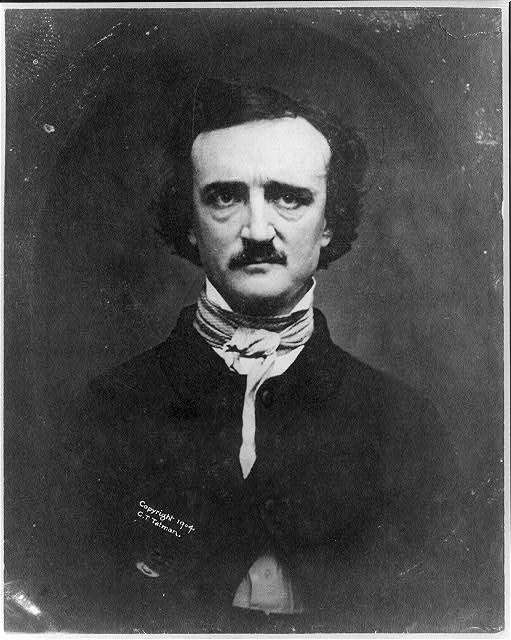
Few writers have the ability to evoke a sense of horror and dread more effectively than Edgar Allan Poe, born on January 19, 1809, in Boston, Massachusetts. Poe’s parents were actors. Their bright but unstable son grew up to be a romantic poet, a master of macabre tales, the originator of the modern detective story, and an acute literary critic, editor, and journalist. Orphaned at age two, Poe grew up in the Richmond, Virginia home of a childless couple, merchant John Allan and his wife Frances. His foster parents treated him well. Allan paid for Poe’s education at schools in England and in Virginia. Poe showed an early gift for language and Allan enrolled him in the University of Virginia in February 1826.
Before the year was out, Poe, maintaining the lifestyle of a Virginia gentleman of substance, had accumulated a debt of $2,000. Poe angered his foster father—accusing him of providing inadequate financial support for his university expenses. Allan paid Poe’s charges to Charlottesville merchants, but refused to pay his gambling debts, regarded at that time by young gentlemen as “debts of honor.” When Poe returned to Richmond for Christmas, Allan refused to send him back to the university. For two months the pair argued at home, culminating in a huge fight in March 1827 that prompted Poe to move to Boston. In May, Poe enlisted in the army under an assumed name. While training as a soldier, he found time to write romantic poetry in the tradition of Lord Byron. His first volume of poems was published in 1827 as Tamerlane and Other PoemsExternal, “By a Bostonian.”
Allan and Poe were not in contact after Poe moved to Boston. Early in 1829, however, Poe’s regimental commanding officer, acting as intermediary, helped them reestablish communication. The death of Poe’s foster mother on February 28, 1829, sealed Allan and Poe’s reconciliation.
Poe was discharged from the army in April 1829. In May he took up residence in Baltimore with his grandmother Poe, and his aunt Maria Clemm and her children. He supported himself by holding odd jobs. In December 1829, a Baltimore publisher brought out Poe’s second volume of poetry, Al Aaraaf, Tamerlane, and Minor PoemsExternal.
Allan, who had resumed his financial support of Poe, assisted him in financing his entrance into the U.S. Military Academy. Poe enrolled in the Academy on July 1, 1830. Within the year, Poe’s academic career and his relations with Allan again ran aground. Poe drank to excess and ran up debts at West Point. By this time, Allan, who had remarried in October 1830, was more interested in starting a new family than dealing with the ongoing problems of his foster son. He again severed relations with Poe, this time permanently.
During the 1830s Poe’s writing began to attract notice. He published stories in the Philadelphia Courier, the Baltimore Sunday Visitor, and Godey’s Ladies Book. In 1835 he moved back to Richmond where he became editor and contributor to the Southern Literary Messenger. Shortly thereafter, he married his thirteen-year-old cousin Virginia Clemm. Between 1835 and 1837, during his tenure with the Messenger, Poe published more than one hundred reviews and editorials in a regular literary column, and also brought out many new poems and stories. In 1838 he published his one full-length piece of fiction, The Narrative of Arthur Gordon PymExternal.
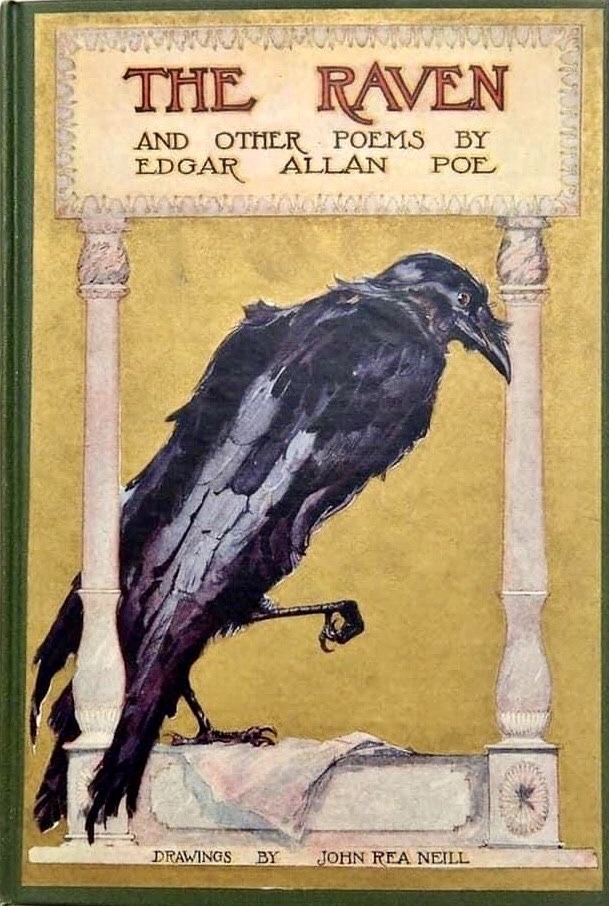
From 1838 until 1844, Poe lived with his wife and mother-in-law in Philadelphia. During these productive years, he served as editor of Burton’s Gentleman’s Magazine, which became Graham’s Lady’s and Gentleman’s Magazine, publishing incisive literary criticism and some of his finest fiction, including “The Pit and the Pendulum”External, The Tell-Tale HeartExternal, and “The Fall of the House of Usher”External. In 1840 Poe’s stories were published in two volumes as Tales of the Grotesque and ArabesqueExternal. The publication of “The Gold-Bug”External and “The Black Cat”External in the summer of 1843 produced a literary sensation. He received even wider acclaim with the publication of “The Raven” in 1845.
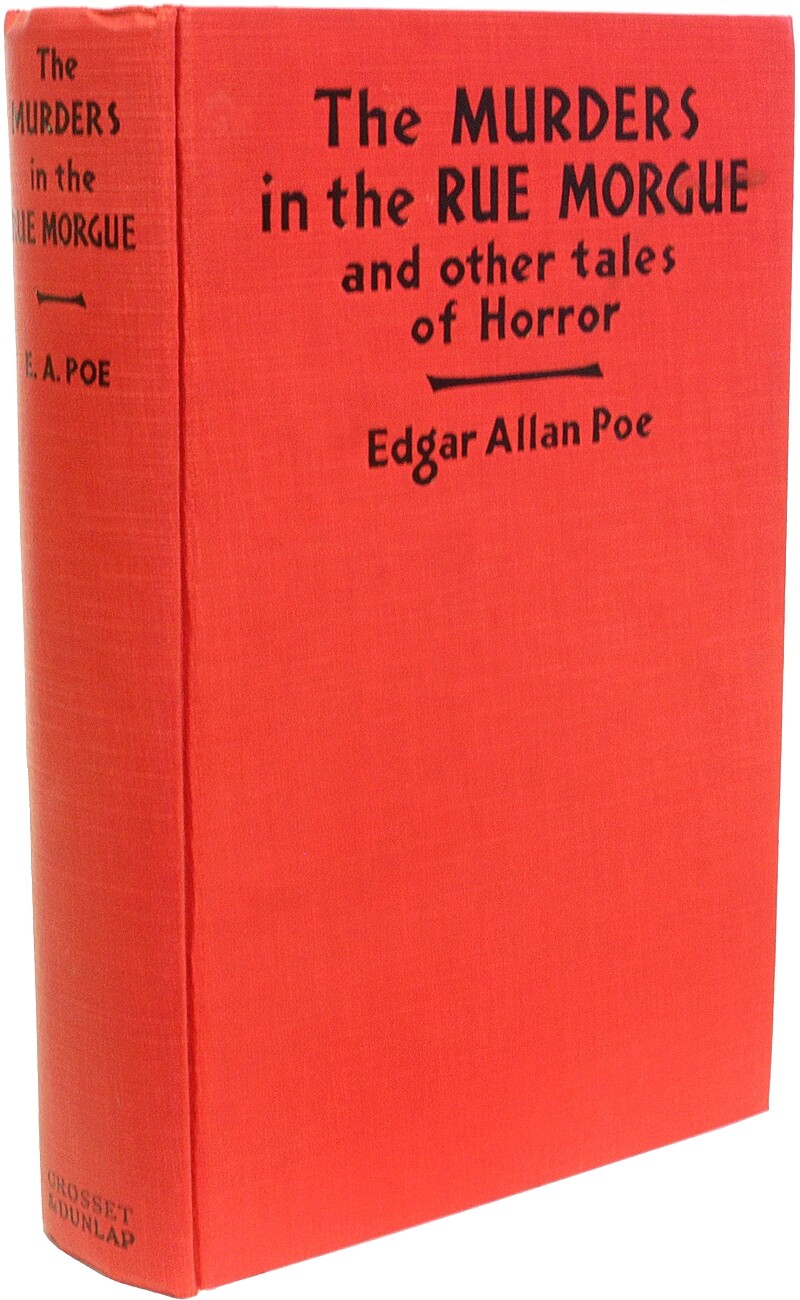
Simultaneous with his development of gothic themes of terror, Poe experimented with the pleasure of logical analysis, which flowered in the creation of a new type of literature. Poe called the new genre the “tale of ratiocination.” The first story of this type, The Murders in the Rue MorgueExternal, featured an apparently inexplicable crime and a step-by-step analysis by the rational Frenchman Dupin, as narrated by his admiring and baffled sidekick. From this formula, which proved to be amenable to endless variations, arose the widely popular genre of the mystery novel and detective story.

In the spring of 1846, Poe and his wife, who had long been seriously ill, moved to a cottage in Fordham, New York. Virginia Clemm Poe died there the following January. During the next two years, Poe pursued a number of erratic romantic attachments with unavailable women, drank heavily, and made himself ill.
Increasingly incapacitated, Poe experienced bouts of delusion and paranoia. On October 3, 1849, he was found in a state of semiconsciousness at Gunner’s Hall tavern in Baltimore. First thinking him to be intoxicated, physicians soon realized that his illness was of a more serious nature. Poe died in delirium at Washington College Hospital four days later. The official cause of death was reported by the Baltimore Clipper as “congestion of the brain.”
Poe’s romantic tales and poems had often involved the morbid dread of loss of an idealized female love object. This theme seems to have arisen from Poe’s grief over the early loss of his mother, followed by the deaths of his friend’s mother, when he was fifteen years old, and of his foster mother, when he was twenty. In the months before his own death he had penned several versions of one of his most famous and haunting poems on this theme.
“Annabel Lee” was published in the Richmond Examiner, the New York Tribune, and the Southern Literary Messenger, along with Poe’s obituary notice.
For the moon never beams without bringing me dreams
Of the beautiful Annabel Lee;
And the stars never rise but I see the bright eyes
Of the beautiful Annabel Lee;
And so, all the night-tide, I lie down by the side
Of my darling, my darling, my life and my bride
In her sepulchre there by the sea —
In her tomb by the side of the sea.
Source: LOC.gov

































 Travel Between The Pages