The Winston Smith Library of Victory & Truth

Edinburgh-based artist Hans K Clausen is creating an innovative project titled “The Winston Smith Library of Victory and Truth.”  This visual art installation/ sculpture/ library will be centered solely on George Orwell’s iconic novel 1984 and be built from  1,984 donated copies sourced from around the world.


“The Library” which will become a touring artwork, will be launched on the Isle of Jura on June 8, 2024, which is the 75th anniversary of its UK publication of 1984.  It will then go on tour across the UK visiting locations of significance to Orwell.

Orwell devotees have an opportunity to participate in the creation of “The Winston Smith Library of Victory and Truth” by sharing their personal copies of 1984. Here’s what Clausen has to say about that:

The project is still growing and there’s plenty room on the bespoke shelves of Winston Smith’s Library for more donated books. We’ll be very grateful for all donations, in any language and any condition, the more worn and personalised the better. All donors will receive a limited edition enamel badge a symbol of life time membership of The Winston Smith Library of Victory and Truth.

We’re also eager to hear from institutions, organisations, or any third parties who would be interested in partnering, hosting or sponsoring ‘The Library’ after its June 2024 launch in Jura, and from any artists or academics who may have ideas for collaborative events.

You can learn more about this timely project and participate by clicking here.


Posted in Art, Books, Europe, Film, Freedom of Speech, History, Libraries | Tagged , , , | 1 Comment

“The book itself is a curious artifact”

Regular visitors to Travel Between the Pages will have noted that I am a life-long fan of the late, great American author Ursala K. Le Guin. Although she is best remembered for her groundbreaking speculative fiction, Le Guin was a prolific writer of literary criticism, poetry, children’s books, and essays. I recently ran across an exerpt from an interesting piece that she wrote for Harper’s magazine in 2008. The full article, which touches on reading and publishing, is well worth a few minutes of your time. So, here’s my own exerpt below and a link to the complete article.

The book itself is a curious artifact, not showy in its technology but complex and extremely efficient: a really neat little device, compact, often very pleasant to look at and handle, that can last decades, even centuries. It doesn’t have to be plugged in, activated, or performed by a machine; all it needs is light, a human eye, and a human mind. It is not one of a kind, and it is not ephemeral. It lasts. It is reliable. If a book told you something when you were fifteen, it will tell it to you again when you’re fifty, though you may understand it so differently that it seems you’re reading a whole new book.

This is crucial, the fact that a book is a thing, physically there, durable, indefinitely reusable, an object of value.

I am far from dismissing the vast usefulness of electronic publication, but my guess is that print-on-demand will become and remain essential. Electrons are as evanescent as thoughts. History begins with the written word. Much of civilization now relies on the durability of the bound book—its capacity for keeping memory in solid, physical form. The continuous existence of books is a great part of our continuity as an intelligent species. We know it: we see their willed destruction as an ultimate barbarism. The burning of the Library of Alexandria has been mourned for two thousand years, as people may well remember the desecration and destruction of the great Library in Baghdad.

To me, then, one of the most despicable things about corporate publishers and chain booksellers is their assumption that books are inherently worthless. If a title that was supposed to sell a lot doesn’t “perform” within a few weeks, it gets its covers torn off—it is trashed. The corporate mentality recognizes no success that is not immediate. This week’s blockbuster must eclipse last week’s, as if there weren’t room for more than one book at a time. Hence the crass stupidity of most publishers (and, again, chain booksellers) in handling backlists.

Over the years, books kept in print may earn hundreds of thousands of dollars for their publisher and author. A few steady earners, even though the annual earnings are in what is now dismissively called “the midlist,” can keep publishers in business for years, and even allow them to take a risk or two on new authors. If I were a publisher, I’d rather own J.R.R. Tolkien than J. K. Rowling.

But capitalists count weeks, not years. To get big quick money, the publisher must risk a multimillion-dollar advance on a hot author who’s supposed to provide this week’s bestseller. These millions—often a dead loss—come out of funds that used to go to pay normal advances to reliable midlist authors and the royalties on older books that kept selling. Many midlist authors have been dropped, many reliably selling books remaindered, in order to feed Moloch. Is that any way to run a business?

I keep hoping the corporations will wake up and realize that publishing is not, in fact, a normal business with a nice healthy relationship to capitalism. Elements of publishing are, or can be forced to be, successfully capitalistic: the textbook industry is all too clear a proof of that. How-to books and the like have some market predictability. But inevitably some of what publishers publish is, or is partly, literature—art. And the relationship of art to capitalism is, to put it mildly, vexed. It has not been a happy marriage. Amused contempt is about the pleasantest emotion either partner feels for the other. Their definitions of what profiteth a man are too different.

So why don’t the corporations drop the literary publishing houses, or at least the literary departments of the publishers they bought, with amused contempt, as unprofitable? Why don’t they let them go back to muddling along making just enough, in a good year, to pay binders and editors, modest advances and crummy royalties, while plowing most profits back into taking chances on new writers? Since kids coming up through the schools are seldom taught to read for pleasure and anyhow are distracted by electrons, the relative number of book-readers is unlikely to see any kind of useful increase and may well shrink further. What’s in this dismal scene for you, Mr. Corporate Executive? Why don’t you just get out of it, dump the ungrateful little pikers, and get on with the real business of business, ruling the world?

Is it because you think if you own publishing you can control what’s printed, what’s written, what’s read? Well, lotsa luck, sir. It’s a common delusion of tyrants. Writers and readers, even as they suffer from it, regard it with amused contempt.

Posted in Books, ebooks, History, Libraries, USA, Writing | Tagged , , | Leave a comment

Paris Syndrome

This weekend my wife and I watched a very disappointing film which was primary set in Paris at Christmas time. The only thing that it had going for it was the romance of Paris all aglow with holiday lights. And even though we’ve both been to Paris many times, we oohed and ahhed at the glittering cinematic tourist version of the city and proclaimed a desire to return.


This set me thinking about the rarely mentioned Paris Syndrome. First reported in the nedia about 20 years ago, this syndrome primarily strikes first-time visitors and mainly tourists from Japan. Most cases are in visitors in their 20s and 30s. Paris Syndrome sufferers exhibit symptoms including distress, depression, paranoia, anxiety, delusions, and hallucinations.


It’s theorized that Paris Syndrome manifests more frequently in Japanese tourists due to an over-idealized view of the city in popular Japanese culture, which does not match the reality of the French capital. Other notions are that the language differences exacerbate communication problems. Or, that the syndrome is triggered by jet-lag due to the long flight time from Japan.

The frequency of Paris Syndrome in Japanese tourists is so significant that the Japanese Embassy in Paris maintains a 24-hour help-line for its affected citizens. Most of those afflicted improve after a few days, although some sufferers are returned to Japan for mental health treatment.

Posted in Air Travel, Asia, Europe, Film, Public Transport, Tourism | Tagged , , , | 1 Comment

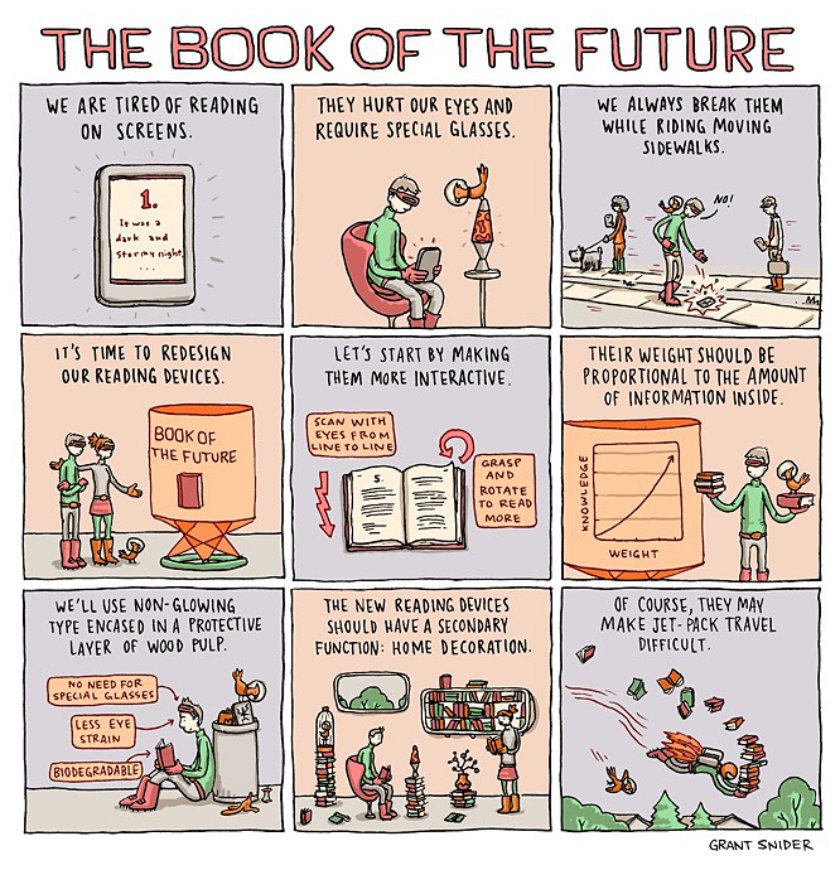
The future of the book


Posted in apps, Books, ebooks, Tech | Tagged , | Leave a comment

Diabolical Maps

Along with some hilarious cartoons, former NASA scientist Randall Munroe creates some very vexing maps for his website xkcd.com. I’m hoping that he turns his acerbic mapping talents towards Euope next.


Posted in Maps, USA | Tagged , | Leave a comment

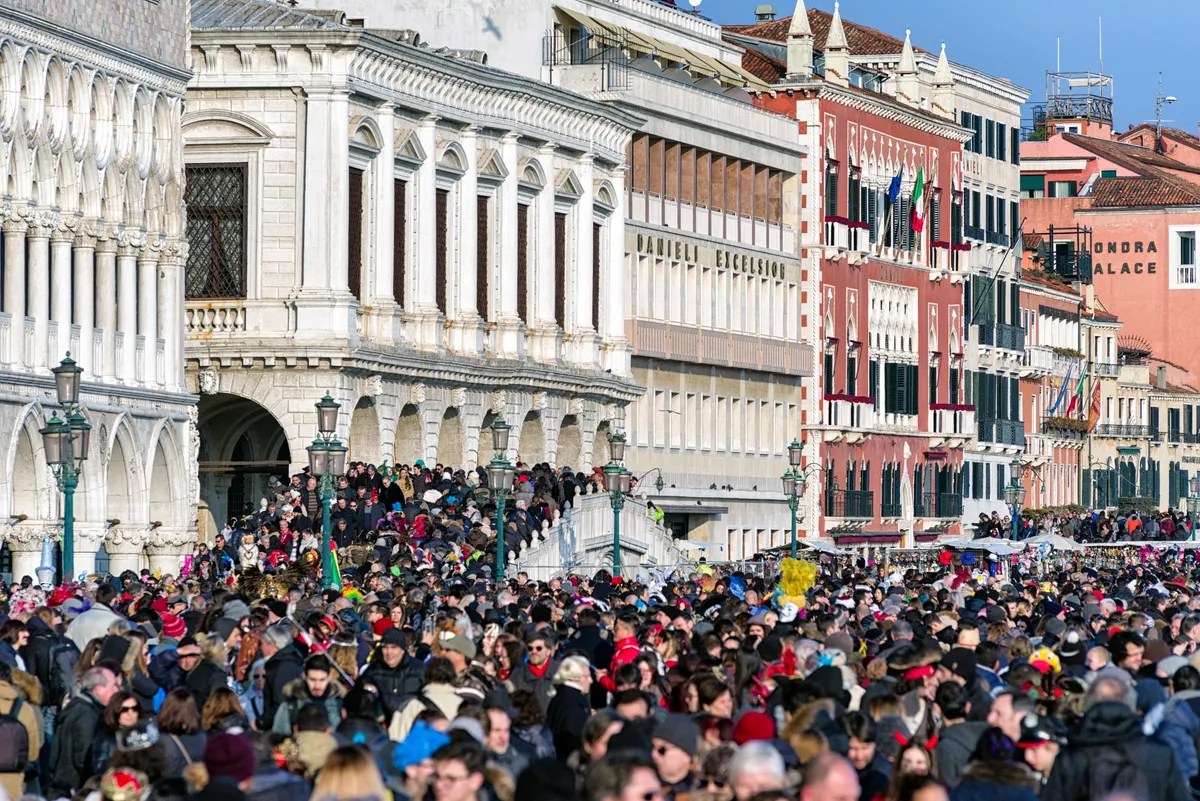
Venice fights back and I say bravo

I count myself lucky to have visited Venice for the first time nearly half a century ago. In that distant halcyon era of European travel, Venice was gloriously free of massive cruise ships and mobs of day-tripping bus groups. It was possible to wander back streets without seeing another tourist and to discover tiny local shops and restaurants frequented by actual Venitians. On each of my subsequent vists to La Serenissima the city felt more and more claustrophobic and Disneyfied.

It finally appears that over-tourism is being recognised as an urgent issue for the grand city. In September, Venice approved the trial of a €5 (£4.30; $5.35) fee for daily visitors. Elisabetta Pesce, the official with responsibility for the city’s security, said the latest policies are “aimed at improving the management of groups organised in the historic centre”. The city is just 7.6 sq km (2.7 sq miles) in size but it hosted almost 13 million tourists in 2019, according to the Italian national statistics institute. On busy days, more than 120,000 tourists descend on the city of just 50,000 residents. Due to cruise ships, bus groups, budget airlines, and day-trippers, the numbers of visitors are expected to reach and exceed pre-pandemic levels by 2025.

Venice is now banning groups larger than 25 and the use of loudspeakers in public, with the new rules coming into effect in June. Local activists are also pushing for controls on AirBNB-type rentals, as well as more stringent regulation of day-tripping tour groups. I for one say bravo.


Posted in Air Travel, Europe, Public Transport, Tourism | Tagged , , | 6 Comments

Judging a Book by Its Cover

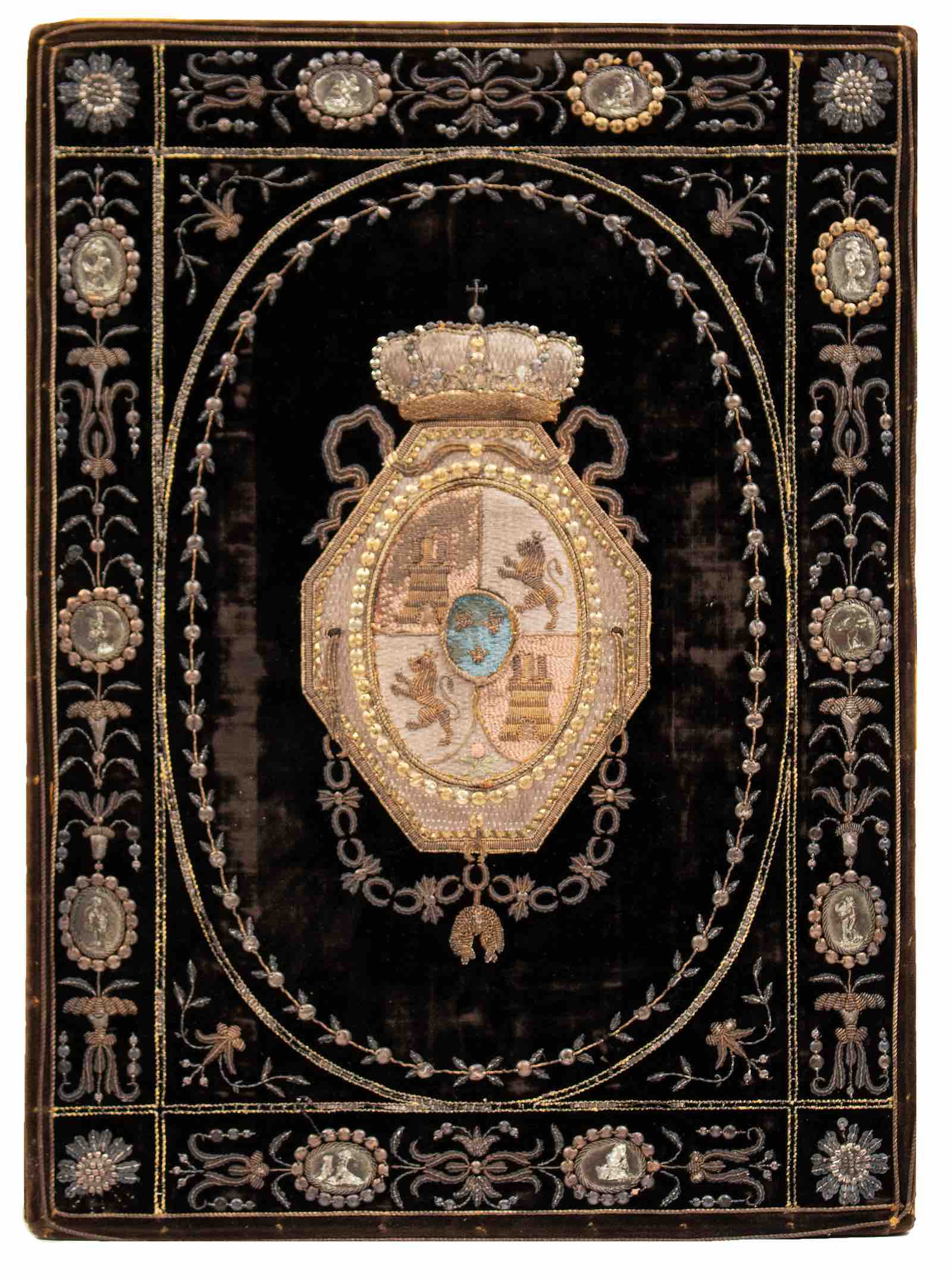
One of New York City’s best tourist attractions for book lovers The Grolier Club starts 2024 off with an impressive exhibition detailing the history and aesthetics of fine bookbindings. Judging a Book by Its Cover: Bookbindings from the Collections of The Grolier Club, 1470s-2020 which highlights selections from the Grolier Club’s collection of bindings, largely donated and built by the Club’s members over the course of its 140-year history.

Judging a Book by Its Cover highlights selections from seven centuries of the Grolier Club’s collection of bindings, largely donated and built by the Club’s members over the course of its 140-year history. The exhibition explores the history of decorated bindings, book bindings as three-dimensional art objects, what makes a binding collectible, and the Club’s investment in commissioning fine bindings through the present day. Highlights from the 15th century to the present will be on view, including a silver filigreed and jeweled miniature Book of Hours (1673); a gilt maroon goatskin binding from a Vatican bindery, presented to Cardinal Basadonna (1674); and a bright green silk and floral embroidered binding created by May Morris, daughter of William Morris (ca. 1888). Judging a Book by Its Cover is curated by Grolier Club member H. George Fletcher, the former Astor Director for Special Collections at The New York Public Library and former curator at The Morgan Library & Museum. The accompanying catalogue, written and compiled by Fletcher, will be available from University of Chicago Press in January 2024.

*Photo above from Judging a Book By Its Cover: Officium Beatae Mariae Virginis. Pro quatuor anni temporibus, On: [Book of Hours, Use of Paris. Latin]. A silver filigree miniature binding, Paris, 1673 or later. Paris: Michael Dauplet, 1673. 32mo. 80 ✕ 50 ✕ 20 mm.

On view in the Grolier Club’s ground floor gallery from January 17 through April 13, 2024, the exhibition explores the history of decorated bindings, book bindings as 3D art objects, what makes a binding collectible, and the Club’s investment in commissioning fine bindings through the present day.

More than 100 historic and fine bindings will be on view, ranging from the oldest in the collection, a ca. 1473 pigskin binding with etched brass cornerpieces and central boss on a volume of the works Jewish Antiquities and the Jewish War and Ecclesiastical History, to one of the newest bindings, a 2019 free-drawn gilded design in a polychrome palette by Ulrich Widmann, inspired by the text and illustrations in the work Ich bin nur Flamme: Gedichte des Expressionismus by Svato Zapletal.

Judging a Book by Its Cover is curated by Grolier Club member H. George Fletcher, the former Astor Director for Special Collections at The New York Public Library and former Astor Curator of Printed Books and Bindings at The Morgan Library & Museum. The accompanying catalogue, written and compiled by Fletcher, is available from University of Chicago Press in January 2024.

“A principal motivation of the Founders who brought the Grolier Club into existence was to improve the state of fine bookbinding in America,” said Fletcher. “Their practice had been to send their rare books to France for proper treatment, accepting the vagaries of transatlantic shipment as a necessary risk. The development of The Club Bindery and regularly exhibiting bookbindings is a practice that continues at the Grolier Club to the present day.”

The Grolier Club exhibitions are open to the public, free of charge.

Hours:
Monday-Saturday: 10 a.m. to 5 p.m.
Sunday: CLOSED

Visit the Grolier Club website for information on in person and virtual tours.


Posted in Art, Books, Europe, History, Libraries, Museums, Tourism, USA | Tagged , , , | Leave a comment

Last list from the last year (I promise)

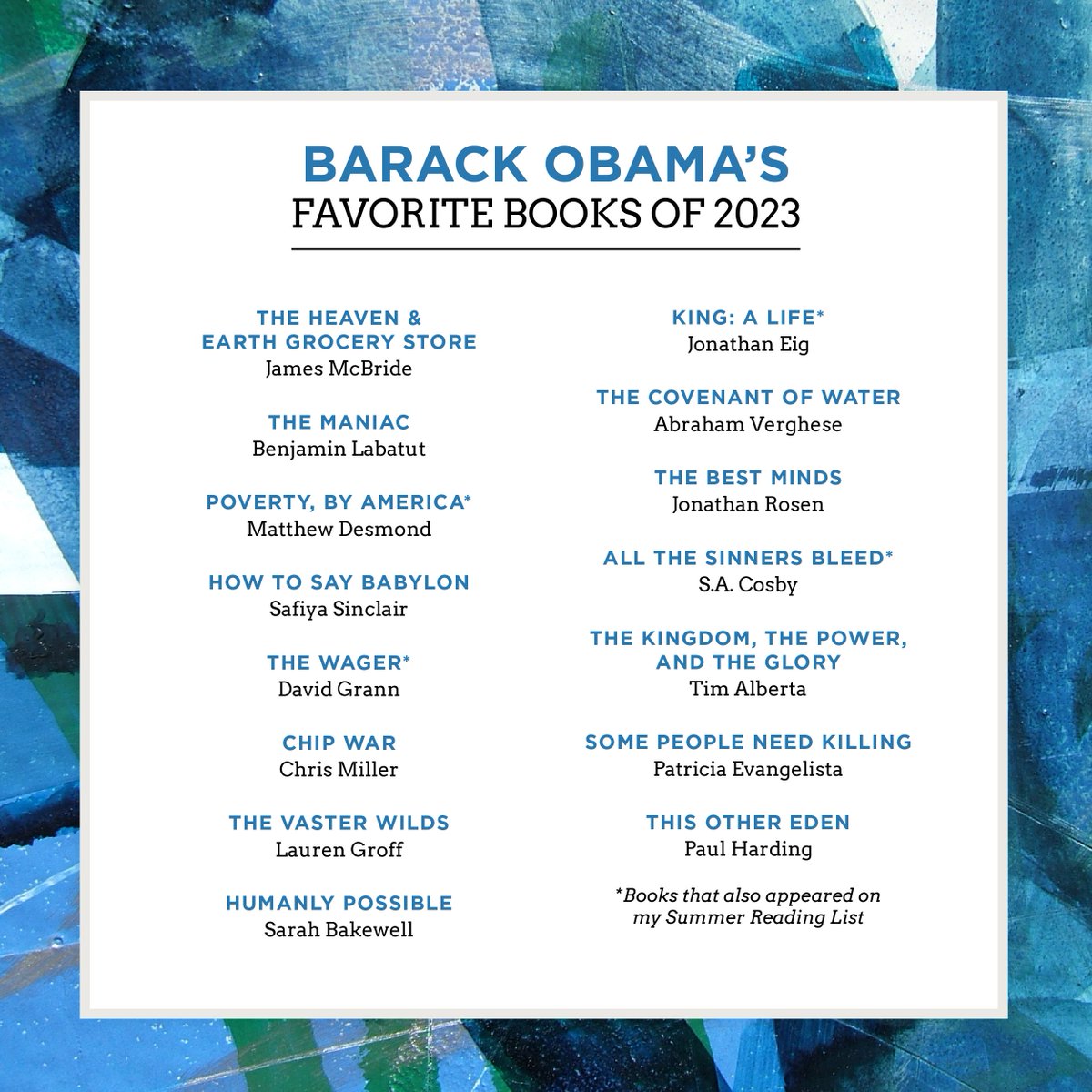
Some folks may be suffering from “Best List of the Year” fatigue, so here’s the absolute final list from 2023. This one is from former President Barack Obama who usually has excellent taste in books.

As I usually do during this time of year, I wanted to share my favorite books, movies, and music of 2023. First up, here are the books I’ve enjoyed reading. If you’re looking for a new book over the holidays, give one of them a try. And if you can, shop at an independent bookstore or check them out at your local library. What were some of your favorite books this year?


Posted in Books, USA, Writing | Tagged , , , , | 1 Comment

Think you know your cities ?

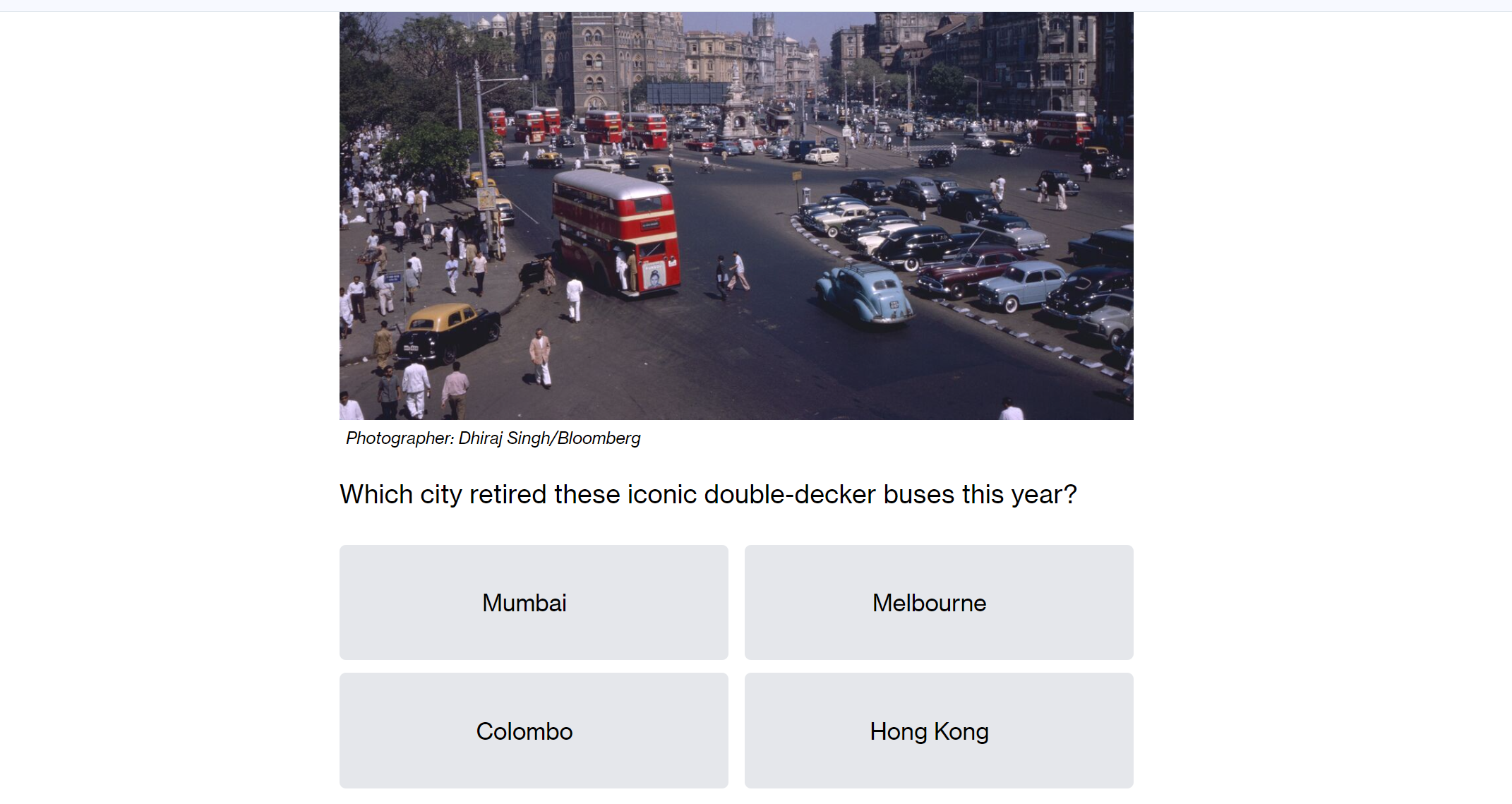
With 4.4 billion people living in cities, it’s more important than ever to stay informed about what is happening in the homes of 56% of the world’s population. Bloomberg news recently published a fascinating quiz that examines “… how are cities adapting, and what’s next? Our 2023 quiz is meant to look at some of the trends shaping urban life this year.” It’s a fun and informative test of current events knowledge. Give it a spin.


Posted in Asia, Canada, Europe, Public Transport, USA | Tagged , , | Leave a comment

we shall have cast our reformation to the winds

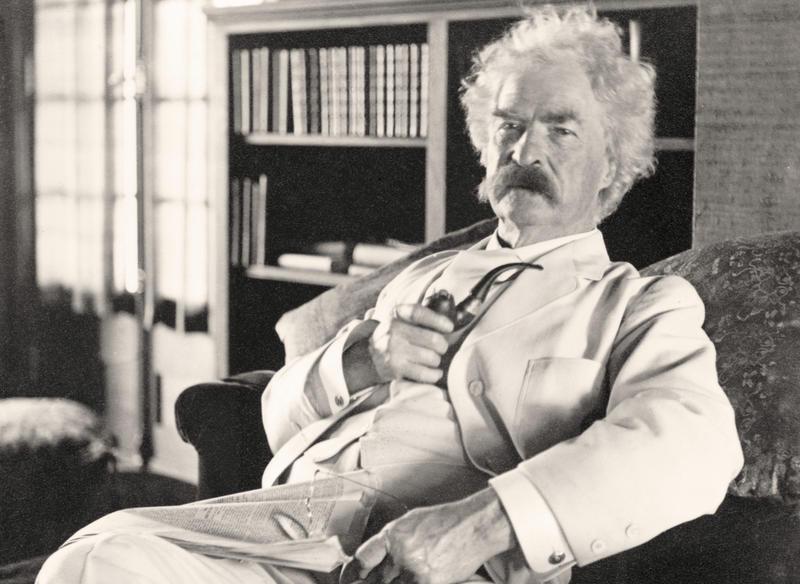
From Mark Twain’s January 1st, 1863 column in the Territorial Enterprise:

Now is the accepted time to make your regular annual good resolutions. Next week you can begin paving hell with them as usual. Yesterday, everybody smoked his last cigar, took his last drink, and swore his last oath. To-day, we are a pious and exemplary community. Thirty days from now, we shall have cast our reformation to the winds and gone to cutting our ancient short comings considerably shorter than ever. We shall also reflect pleasantly upon how we did the same old thing last year about this time. However, go in, community. New Year’s is a harmless annual institution, of no particular use to anybody save as a scapegoat for promiscuous drunks, and friendly calls, and humbug resolutions, and we wish you to enjoy it with a looseness suited to the greatness of the occasion.

Posted in USA, Writing | Tagged , , | 2 Comments