More Bookstore Mapping

Indie bookstores in Montana have collaborated to develop the first-ever Montana Bookstore Trail. The mapping project was coordinated by Rachel Elliott-Burg, owner of Reading Leaves in Townsend, and designed with Elk River Books in Livingston, the map features 21 independent bookstores across the Big Sky state.

Visitors can get their passports initialed or stamped at each participating store, and once the trail is complete they can scan the QR code on the back of the passport to access a short quiz. Completing the quiz will enter the customer into a drawing for a Bookstore Trail tote bag full of books and other prizes.

Chelsia Rice, owner of Montana Book Company in Helena, noted that while not every Montana indie opted-in, “there is an awesome selection this year and surely more to come next year.”

Posted in Books, Bookstore Tourism, Maps, Tourism, USA | Tagged , , | 1 Comment

A Writer’s Tale

Way back in 1961 a 14 year-old writer had the audacity to submit an unsolicited short story to Spaceman Magazine. That bold young author was undeterred by the rejection of his work and kept at it. Stephen King has gone on to become one of the world’s bestselling authors. Unsurprisingly, Forrest Ackerman, the editor who gave King his first rejection, eventually published the story in a new periodical thirty-three years later.


Posted in Books, USA, Writing | Tagged , , | Leave a comment

Making A Book

A big tip of the hat to loyal Travel Between The Pages follower Bonnie B. for sharing the wonderful video below titled “Making A Medieval Book.” In just 24 minutes the video demonstrates the 60 hour process of creating a gorgeous handmade book. I’ve seen other bookmaking videos, but this one from Four Keys Book Arts in Canada is by far the most interesting and comprehensive.


Posted in Art, Books, History | Tagged , | 6 Comments

The Work of Happiness

THE WORK OF HAPPINESS
by May Sarton

I thought of happiness, how it is woven
Out of the silence in the empty house each day
And how it is not sudden and it is not given
But is creation itself like the growth of a tree.
No one has seen it happen, but inside the bark
Another circle is growing in the expanding ring.
No one has heard the root go deeper in the dark,
But the tree is lifted by this inward work
And its plumes shine, and its leaves are glittering.

So happiness is woven out of the peace of hours
And strikes its roots deep in the house alone:
The old chest in the corner, cool waxed floors,
White curtains softly and continually blown
As the free air moves quietly about the room;
A shelf of books, a table, and the white-washed wall —
These are the dear familiar gods of home,
And here the work of faith can best be done,
The growing tree is green and musical.

For what is happiness but growth in peace,
The timeless sense of time when furniture
Has stood a life’s span in a single place,
And as the air moves, so the old dreams stir
The shining leaves of present happiness?
No one has heard thought or listened to a mind,
But where people have lived in inwardness
The air is charged with blessing and does bless;
Windows look out on mountains and the walls are kind.


Posted in Books, Writing | Tagged | Leave a comment

A Hunger Artist

Martin O’Niell

In honor of Franz Kafka’s 140th birthday, here’s his popular short story “A Hunger Artist.” Published just two years before Kafka’s death from tuberculosis in 1924, the story is often viewed as a reflection of his illness and his struggles to eat. However, I’ve always thought that it was a parable about the artist’s role in society.

This version was translated by Ian Johnston.

In the last decades interest in hunger artists has declined considerably. Whereas in earlier days there was good money to be earned putting on major productions of this sort under one’s own management, nowadays that is totally impossible. Those were different times. Back then the hunger artist captured the attention of the entire city. From day to day while the fasting lasted, participation increased. Everyone wanted to see the hunger artist at least daily. During the final days there were people with subscription tickets who sat all day in front of the small barred cage. And there were even viewing hours at night, their impact heightened by torchlight. On fine days the cage was dragged out into the open air, and then the hunger artist was put on display particularly for the children. While for grown-ups the hunger artist was often merely a joke, something they participated in because it was fashionable, the children looked on amazed, their mouths open, holding each other’s hands for safety, as he sat there on scattered straw—spurning a chair—in a black tights, looking pale, with his ribs sticking out prominently, sometimes nodding politely, answering questions with a forced smile, even sticking his arm out through the bars to let people feel how emaciated he was, but then completely sinking back into himself, so that he paid no attention to anything, not even to what was so important to him, the striking of the clock, which was the single furnishing in the cage, merely looking out in front of him with his eyes almost shut and now and then sipping from a tiny glass of water to moisten his lips.

Apart from the changing groups of spectators there were also constant observers chosen by the public—strangely enough they were usually butchers—who, always three at a time, were given the task of observing the hunger artist day and night, so that he didn’t get something to eat in some secret manner. It was, however, merely a formality, introduced to reassure the masses, for those who understood knew well enough that during the period of fasting the hunger artist would never, under any circumstances, have eaten the slightest thing, not even if compelled by force. The honour of his art forbade it. Naturally, none of the watchers understood that. Sometimes there were nightly groups of watchers who carried out their vigil very laxly, deliberately sitting together in a distant corner and putting all their attention into playing cards there, clearly intending to allow the hunger artist a small refreshment, which, according to their way of thinking, he could get from some secret supplies. Nothing was more excruciating to the hunger artist than such watchers. They depressed him. They made his fasting terribly difficult. (cont. here)
 

Posted in Books, Europe, Writing | Tagged , , | 1 Comment

Summer Sunday Sundries

“In its June 26, 1948, issue, The New Yorker published Shirley Jackson’s unsettling story “The Lottery,” and it’s not an overstatement to say that readers freaked out. They wrote letters in droves, angry or unsure about what this slowly unfolding portrait of small-town mob violence was doing in a literary-minded magazine. Now considered an American classic, the story went on to become a classroom mainstay.”  Haven’t read it yet? Here you go.

Archaeologists at the Pompeii ruins have discovered a still-life fresco of a Mediterranean meal that looks ready to eat even after 2,000 or so years. To many viewers, it appears to contain a pizza. But pizzas as we know them today, with tomato and mozzarella, weren’t baked in Italy until the 1800s. Instead, it’s more likely that the fresco  features a focaccia — food that was commonly eaten in the city before it was destroyed in the A.D. 79 eruption of Mount Vesuvius.

The Archaeological Park of Pompeii unveiled the small fresco on June 27. The image was found during recent excavations in Regio IX, a section of the ancient town that contained a mix of residential houses and commercial structures, such as a laundry and a bakery, as well as the skeletal remains of at least three people.

I am a regular follower of the wonderful Japanese arts and culture blog Spoon & Tamago. The site recently featured a story about Yoko Tada who began painting in her 80s. At 100 she’s publishing her first book. There’s hope for late bloomers everywhere.

“It may be that when we no longer know what to do, we have come to our real work and when we no longer know which way to go, we have begun our real journey.

The mind that is not baffled is not employed. The impeded stream is the one that sings.”

– Wendell Berry


Posted in Art, Asia, Books, Europe, History, Museums, Restaurants, Tourism, USA, Writing | Tagged , , , | 1 Comment

A problem involving Don Quixote

“A Problem”

by Jorge Luis Borges

Translated by Andrew Hurley


Let us imagine that a piece of paper with a text in Arabic on it is discovered in Toledo, and that paleographers declare the text to have been written by that same Cede Hamete Benengeli from whom Cervantes derived Don Quixote. In it, we read that the hero (who, as everyone knows, wandered the roads of Spain armed with a lance and sword, challenging anyone for any reason) discovers, after one of his many combats, that he has killed a man. At that point the fragment breaks off; the problem is to guess, or hypothesize, how don Quixote reacts.

So far as I can see, there are three possibilities. The first is a negative one: Nothing
in particular happens, because in the hallucinatory world of don Quixote, death is no
more uncommon than magic, and there is no reason that killing a mere man should disturb one who does battle, or thinks he does battle, with fabled beasts and sorcerers. The second is pathetic: Don Quixote never truly managed to forget that he was a creation, a projection, of Alonso Quijano, reader of fabulous tales. The sight of death, the realization that a delusion has led him to commit the sin of Cain, awakens him from his willful madness, perhaps forever. The third is perhaps the most plausible: Having
killed the man, don Quixote cannot allow himself to think that the terrible act is the work
of a delirium; the reality of the effect makes him assume a like reality of cause, and don Quixote never emerges from his madness.

But there is yet another hypothesis, which is alien to the Spanish mind (even to the Western mind) and which requires a more ancient, more complex, and more timeworn setting. Don Quixote—who is no longer don Quixote but a king of the cycles of Hindustan—senses, as he stands before the body of his enemy, that killing and engendering are acts of God or of magic, which everyone knows transcend the human condition. He knows that death is illusory, as are the bloody sword that lies heavy in his hand, he himself and his entire past life, and the vast gods and the universe.

Posted in Books, Writing | Tagged , | 1 Comment

Beach Reads

Posted in Books | Tagged , , , | Leave a comment

Down a research rabbit hole

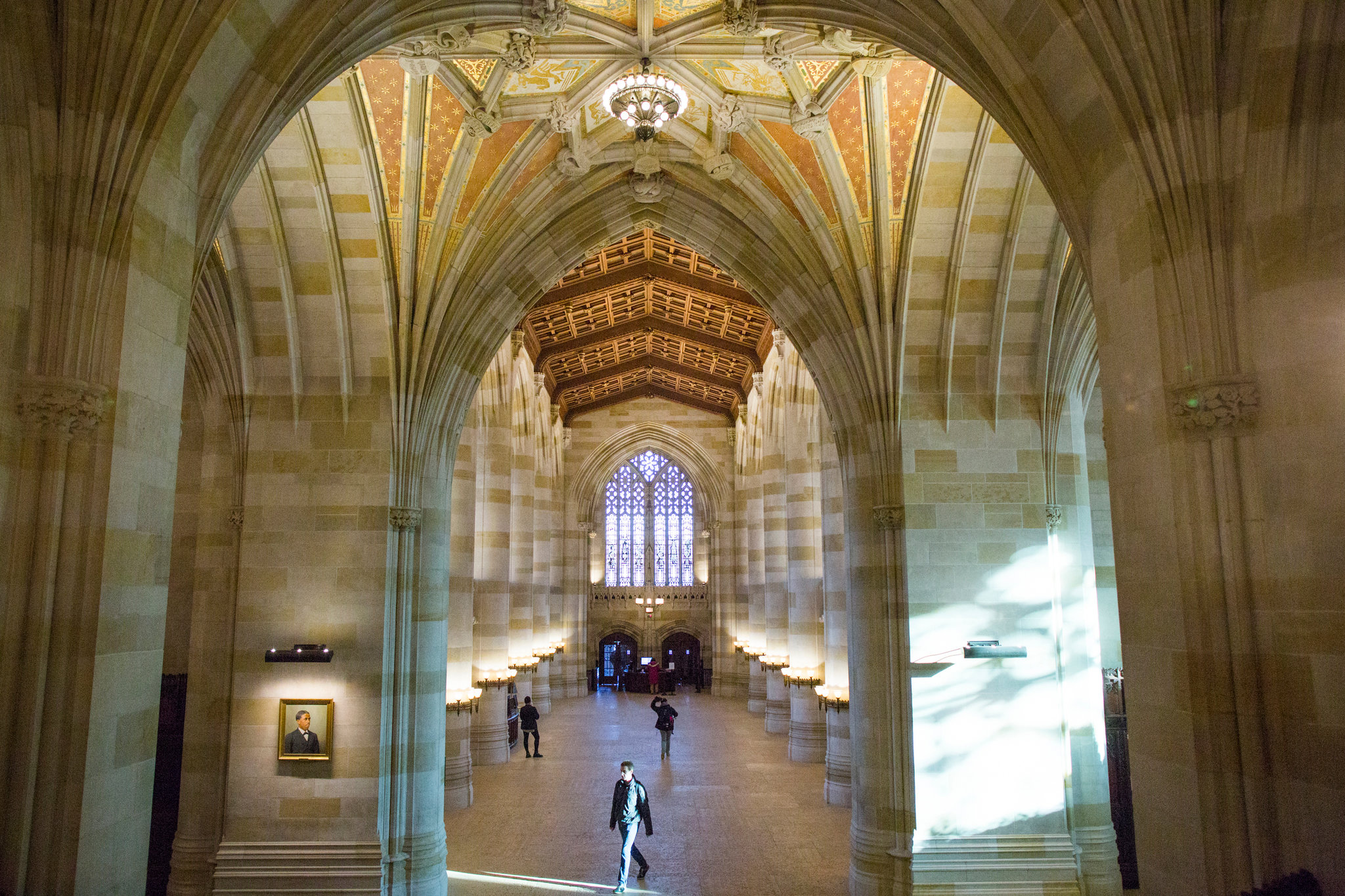
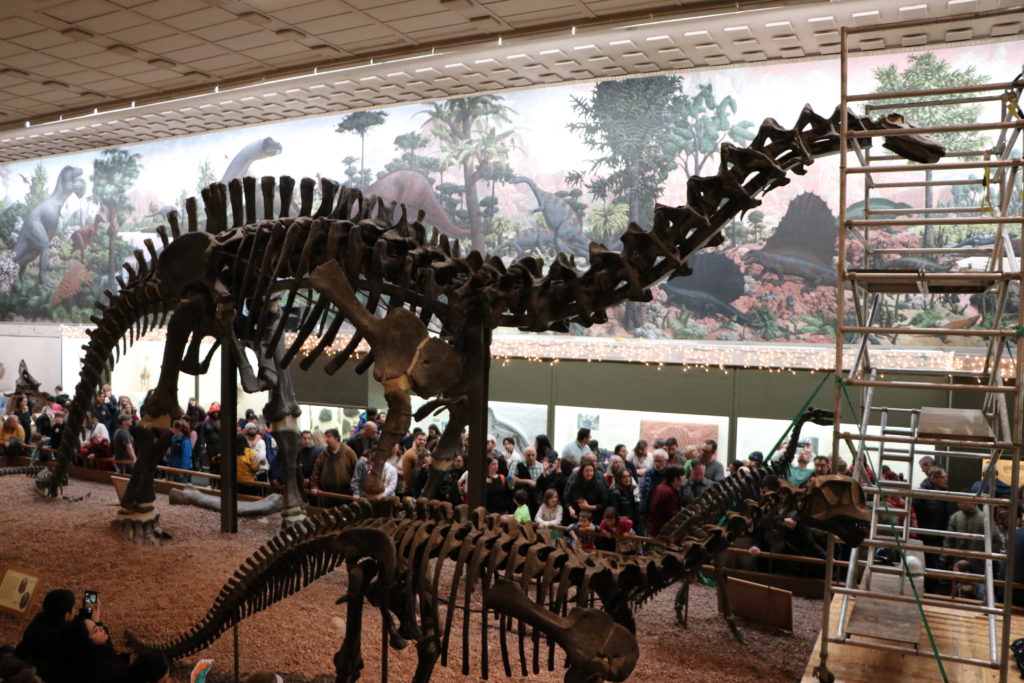
The free new research tool from Yale University called Lux is a fascinating opportunity to be led down a rabbit hole of infinite connections for any subject of interest.  The digital tool works by building relationships between objects users look up, uncovering how it relates to other items within the university’s storied collection no matter how distant it may seem. Lux users are able to dive into the Yale Center for British Art (YCBA), the Yale University Art Gallery, the Yale Peabody Museum, and Yale University Library, which includes the Beinecke Rare Book and Manuscript Library and the Lewis Walpole Library.

Lux  works in some ways like a search engine. However, search engines tend to return hits that then offer you links to travel onwards to a new site. LUX builds relationships between the object you’re searching for and other related objects in the collection. It goes beyond the objects themselves and finds obscure connections. For example, if you were searching for a piece of writing, it would identify other works from the same author, as well as other art created around the same time or in the same location. Or, if you were to search for dinosaus, it would pull up images of actual dinosaurs from the university’s museums, as well as art and books about dinosaurs. Previously you would have to go to different places—a natural history museum for the dinosaurs, and a library for books—or Google separate entries and piece together these different resources.

“Lux is designed to open the breadth of Yale’s cultural and natural history collections, connecting our wide range of extraordinary objects, specimens, and works,” said Susan Gibbons, Vice Provost for Collections and Scholarly Communications.

The core of LUX is a backend data model called a knowledge graph. They are composed of datasets from different sources and are a way of organizing that information into a network of relationships. It’s like the evidence pin-up-board used to visualize the connections between people, objects, places, and events.


Posted in Architecture, Art, Books, History, Libraries, Museums, Tech, USA | Tagged , , | Leave a comment

Books on Maps

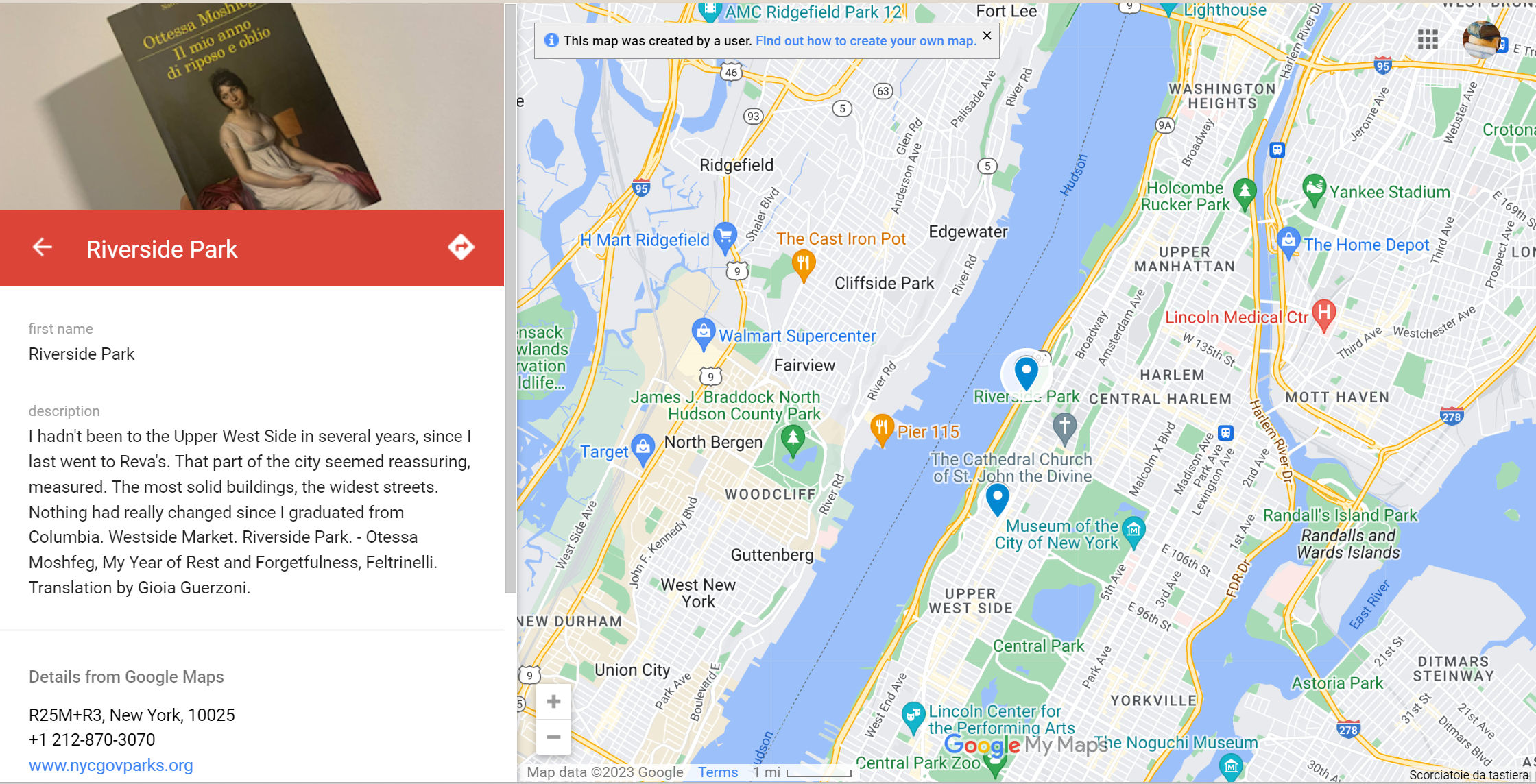
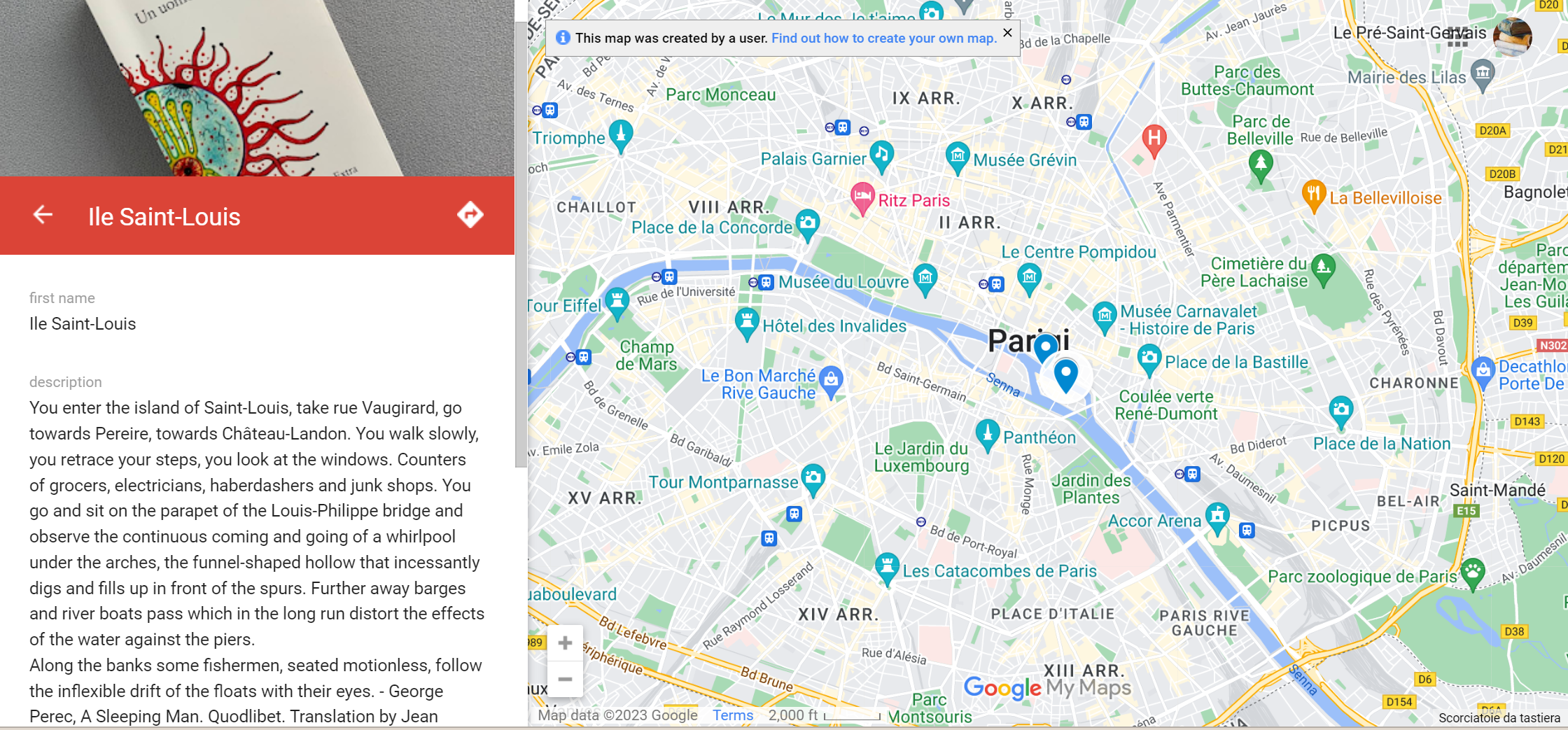
If you stop by TBTP regularly, you probably know how I feel about maps and literary websites that manage to combine books AND maps. Books On Maps: is a new project that is mashing up cartography and novels. You don’t need to understand Italian to get the most out of the website – the account posts shots of pages in books referring to a particular place, alongside shots of that place on a map. This comes from Pietro Minto’s weekly newsletter, which is in Italian but which is easily translatable and is always full of interesting stuff.


Posted in Books, Europe, Maps, Tech, Writing | Tagged , | Leave a comment